
Remora Fish Found Hiding in Manta Ray Anuses, Study Reveals
A new study reveals that remora fish, known for attaching to larger marine animals, have been observed entering manta rays' cloacal openings. This behavior suggests a potentially parasitic relationship, challenging previous symbiotic classifications.

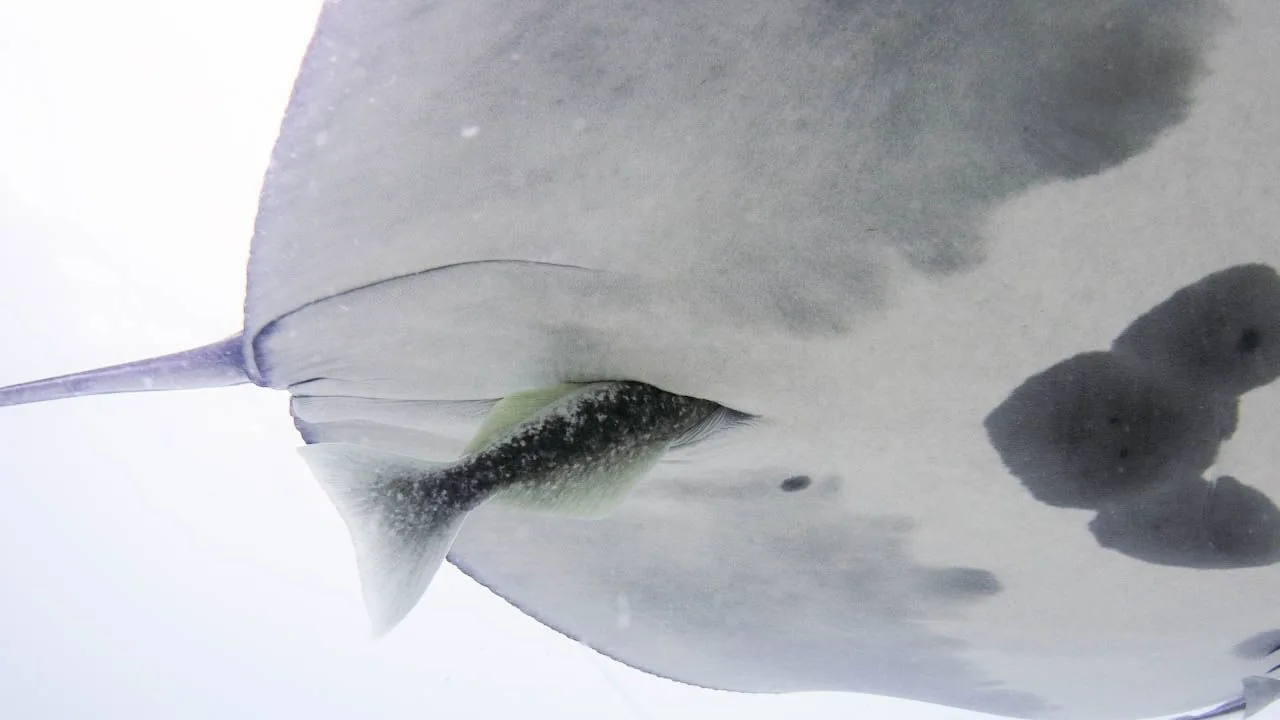
Researchers have uncovered a surprising and rarely observed behavior among remora fish: the small, sucker-mouthed species have been found entering the cloacal openings of manta rays, effectively hiding in their anuses. The study, published in Ecology and Evolution, highlights a previously undocumented aspect of this marine relationship, which has long been considered a form of mutualism or commensalism.
Emily Yeager, a doctoral candidate at the University of Miami's Department of Marine Biology and Ecology and lead author of the study, described the finding as "pretty weird." The unusual behavior was first documented when a free diver observed a common remora (Remora remora) near an Atlantic manta ray (Mobula yarae). Startled by the diver, the remora rapidly entered the manta ray's cloaca. The manta ray appeared disturbed, shuddering briefly before continuing its swim with the remora still inside.
The cloaca, a single opening serving for waste elimination, reproduction, and egg-laying in some species, was an unexpected location for the remoras. "The researchers were surprised to find remoras inside the cloaca," Yeager stated, noting that this behavior could significantly alter scientists' understanding of symbiotic interactions in the ocean.
"Oftentimes they're just sort of seen swimming along with their hosts with no kind of visual negative consequence to their host," Yeager said. "But based on the images and videos of remoras sliding up manta ray behinds, Yeager thinks it may not be a harmless relationship."
Historically, remoras have been known to attach themselves to larger marine animals like sharks, whales, and sea turtles using a specialized suction disc on their heads, formed from modified dorsal fins. The prevailing theory was that remoras acted as 'cleaner fish,' removing parasites from their hosts. However, this new discovery suggests that the relationship may be far more complex, potentially leaning towards parasitism.
A Shift in Symbiotic Understanding
Yeager and her colleagues collected data from marine biologists worldwide, documenting seven instances of remoras entering manta ray cloacae over 15 years. These sightings occurred across different oceans, involving three species of manta ray (M. yarae, M. birostris, and M. alfredi) and affecting both juvenile and adult animals. This suggests the behavior, while rarely observed, is likely widespread.
Previous hints of this behavior include a study suggesting small remoras might inhabit manta ray cloacae and another mentioning a remora within a whale shark's cloaca. Small remoras have also been found in the gill cavities of other fish. The current study, however, provides direct evidence of the remoras' preference for this highly unusual hiding spot.
Symbiosis, defined as a close and long-term interaction between two species, is typically categorized as mutualism (both benefit), commensalism (one benefits, the other is unaffected), or parasitism (one benefits at the other's expense). Yeager argues that the cloacal behavior of remoras, causing potential discomfort, injury, or reproductive interference for the manta ray, provides evidence for a parasitic dynamic.
"I'd argue that this is evidence of more of a parasitic relationship, which is new to our kind of understanding of what these relationships are and how they function in the wild," Yeager explained. She added that manta rays might expend extra energy attempting to dislodge the remoras, with observed attempts including breaching out of the water or rubbing against the seafloor.
Yeager proposes that symbiotic relationships exist on a continuum rather than in discrete categories. She likens it to human family dynamics, which can involve both harmony and conflict. "You guys get along really well, but sometimes you're fighting, right?" she mused. "And those types of relationships likely also exist in these ecological communities." The key, she suggests, is continued observation to fully understand these complex interactions.