
Roman Space Telescope Launches August 30 on SpaceX Falcon Heavy
NASA's Nancy Grace Roman Space Telescope is slated for launch on August 30, 2026, aboard a SpaceX Falcon Heavy rocket from Kennedy Space Center. The observatory will explore exoplanets and dark energy.

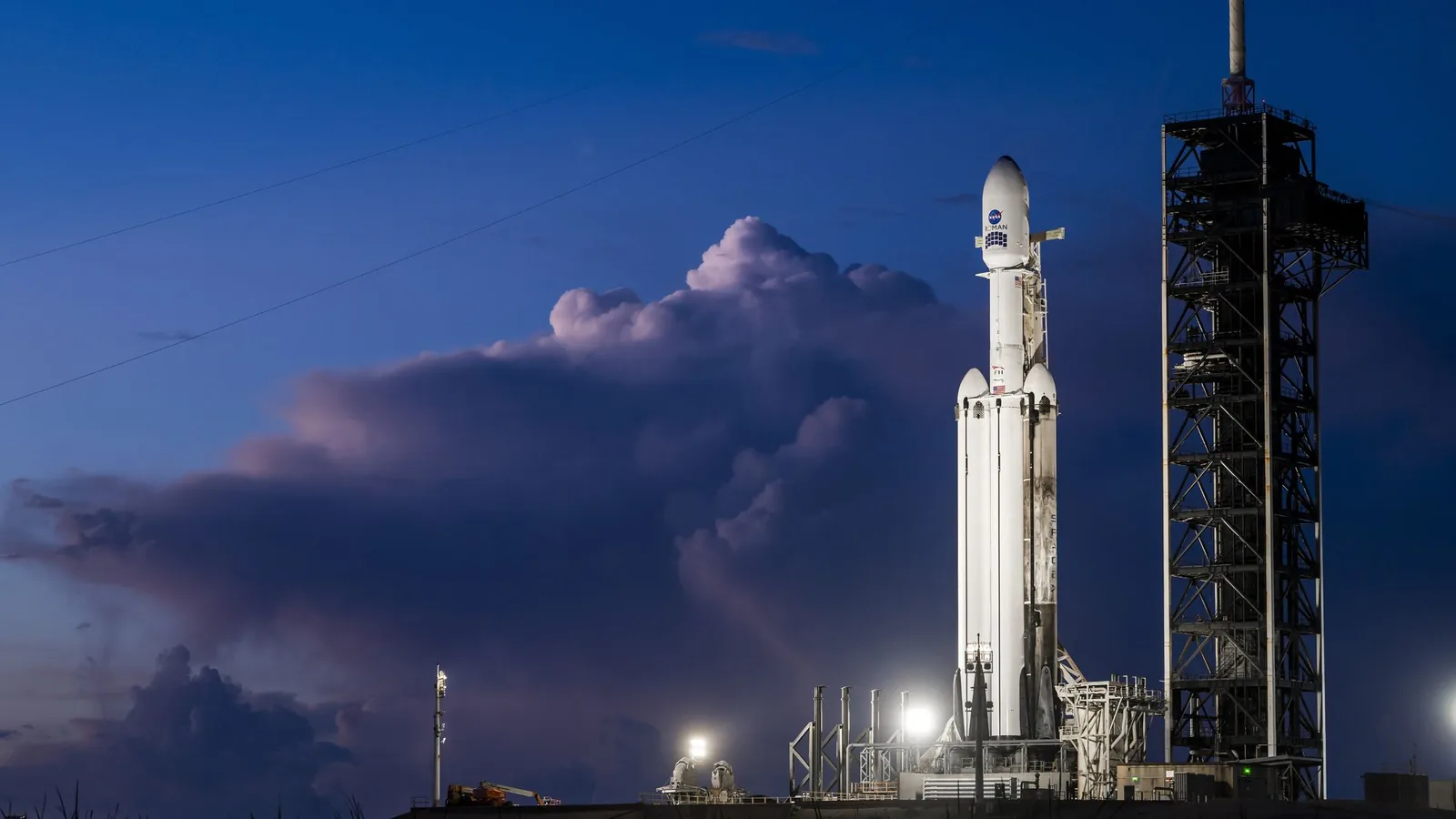
NASA's groundbreaking Nancy Grace Roman Space Telescope is set for its highly anticipated launch on Sunday, August 30, 2026. The observatory will lift off atop a powerful SpaceX Falcon Heavy rocket from Launch Complex-39A at NASA's Kennedy Space Center in Florida, with liftoff scheduled for 7:26 a.m. EDT (1126 GMT). After years of preparation and anticipation, the mission marks a significant step forward in astronomical exploration.
The Roman Space Telescope is designed to conduct wide-field visual surveys of the universe, hunting for exoplanets using novel detection methods and shedding light on the mysteries of dark matter and dark energy. Scientists estimate the telescope will be incredibly prolific. "The scope is extraordinary," said Roman senior scientist Julie Mcenery during live commentary. "We will do a survey of our own Milky Way galaxy and find 20 billion stars. That would make it the largest catalog of astronomical objects that's ever been produced." Once deployed, Roman will travel to the Sun-Earth Lagrange point 2 (L2), a stable orbital point approximately 1 million miles from Earth.
Pre-Launch Preparations and Weather Outlook
The final hours leading up to the launch have seen intensive fueling operations for the Falcon Heavy rocket. SpaceX crews have been loading the rocket's first stage and side boosters with RP-1 rocket-grade kerosene propellant, along with liquid oxygen as an oxidizer. Weather forecasts, which had initially presented some concerns, have improved, with an estimated 70% "go" probability for the Sunday morning launch window. Cloudy conditions that previously lowered the outlook have begun to dissipate, increasing optimism for a smooth liftoff.
The mission's readiness has been thoroughly assessed through multiple reviews. NASA and SpaceX completed the Launch Readiness Review on August 28, formally clearing the observatory and its rocket for flight. Preparations have been ongoing since late July, including fueling the telescope with 290 gallons of hydrazine and encapsulating it within the Falcon Heavy's payload fairing. The observatory was transported to SpaceX's hangar at Launch Complex-39A on August 25, where it was integrated with the rocket before its rollout to the launch pad.
This telescope represents the latest advancement in NASA's fleet of Great Observatories. Its unique capabilities will allow astronomers to map vast regions of the sky with unprecedented detail. The telescope's primary mirror, measuring 7.9 feet (2.4 meters) in diameter, is similar in size to the Hubble Space Telescope's, but Roman's instruments will enable it to survey areas of the sky hundreds of times larger than Hubble can observe in the same amount of time. This wide-field view is crucial for its ambitious science goals, including measuring the expansion of the universe and characterizing the properties of exoplanets. The successful deployment of the Nancy Grace Roman Space Telescope is eagerly awaited by the scientific community worldwide, promising to unlock new secrets of the cosmos.