
Space Mirrors Spark Concerns Over Astronomy, Eye Damage Risks
A California company's plan to launch a satellite mirror capable of beaming sunlight to Earth faces strong opposition from astronomers and safety advocates, who warn of potential damage to scientific observation and human eyes.

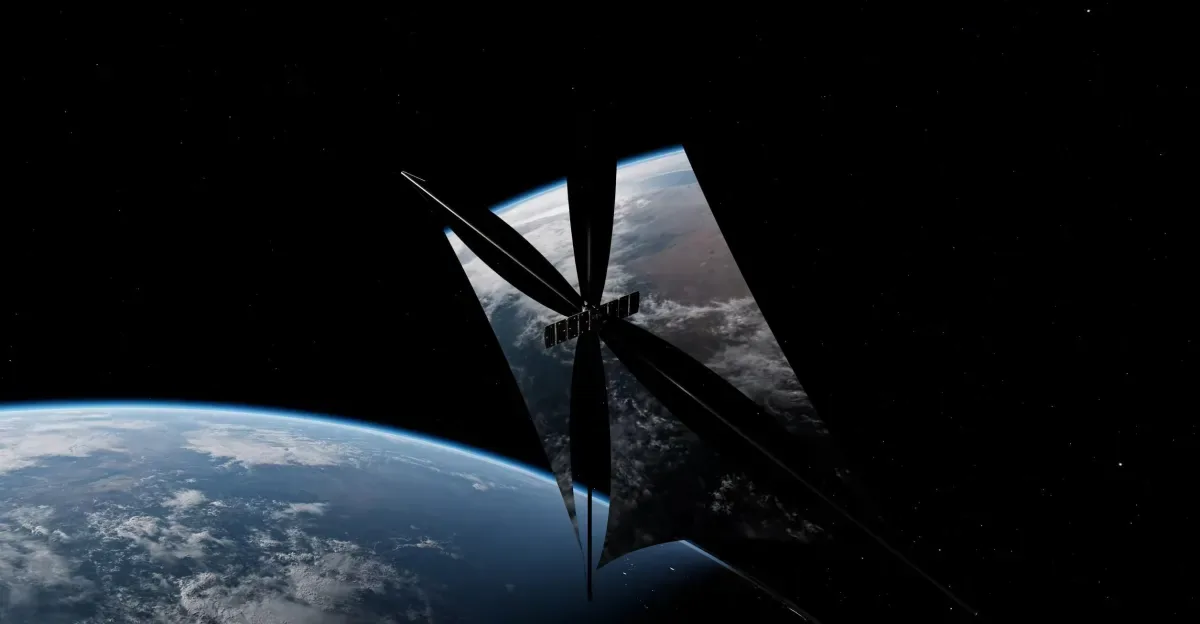
A California-based company, Reflect Orbital, has received Federal Communications Commission (FCC) approval for a test satellite, Eärendil-1, designed to reflect sunlight onto Earth. This initial 18-square-meter mirror is a precursor to a potential fleet of 50,000 space mirrors intended to provide sunlight on demand for various applications, including energy generation, agriculture, and nighttime illumination for emergencies and industrial projects. The proposed system aims to deliver a 5-kilometer-wide beam of light, offering a new source of renewable energy and assistance during critical events. However, the project has ignited significant controversy among astronomers and public safety advocates, who raise alarms about its potential adverse effects.
The prospect of intentionally bright objects in orbit has generated considerable concern. Scientists estimate that the satellite's reflected light could appear as bright as Venus from outside the beam and up to four times brighter than the full Moon when viewed within the illuminated area. This intensity has led to fears of severe disruption to astronomical research and potential harm to human eyesight. Experts, including Roohi Dalal, deputy director for public policy at the American Astronomical Society (AAS), and Robert Massey, deputy executive director of the Royal Astronomical Society (RAS), have voiced strong warnings. They highlight not only the potential for permanent eye damage to individuals using telescopes but also the broader implications for the field of astronomy.
Threats to Observation and Human Safety
Light pollution is already recognized as a threat to human well-being and ecosystems, disrupting circadian rhythms and impacting wildlife. However, the concerns surrounding Reflect Orbital's space mirrors extend beyond general skyglow. The project could create intense light trails, similar to those already observed from other satellites, which can ruin images captured by sensitive telescopes like the Hubble Space Telescope. Furthermore, the collective illumination from a large constellation of mirrors is projected to increase the overall brightness of the night sky by three to four times in affected regions, according to the RAS. This pervasive ambient light could render ground-based optical astronomy, including the observation of distant galaxies and potentially hazardous asteroids, nearly impossible.
Dalal has stated that the planned constellation of 50,000 mirrors "is likely the end of ground-based optical astronomy." The risks are not confined to professional researchers. Amateur astronomers, who often use common 12-inch telescopes in their backyards, face a significant danger. Reflect Orbital itself acknowledged in its FCC filing that even accidental observation of a single satellite beam through such a telescope could cause permanent eye damage. This admission, coupled with the FCC's approval, has drawn criticism. Massey described the company's acknowledgement of the risk as "quite shocking" and the FCC's decision as "extraordinary," particularly given the estimated 100,000 amateur astronomers in the U.S.
Concerns about eye safety have a history, with warnings dating back to the 2000s regarding the Russian Znamya experiment, which posed risks comparable to observing the Sun near a total eclipse. Despite objections raised by organizations like the AAS to the FCC, the commission cited its limited authority over non-communication-related space activities. The FCC's position is that the potential risk to amateur astronomers must be weighed against the benefits of fostering innovation in space technology. The company has also been criticized for a lack of transparency regarding potential operational warnings for the public. Without advance notice of when and where the beams will be active, individuals, including amateur astronomers, pilots, and drivers, may be unaware of the immediate dangers, such as flash blindness during beam slewing.
A spokesperson for Reflect Orbital, Christopher Buscombe, emphasized the company's commitment to safety and stakeholder engagement, stating that feedback has informed their design and operational plans. He also highlighted an incremental, test-and-learn approach, with the Eärendil-1 mission serving as a crucial first step to refine technology and safeguards. However, the company has not provided specific details on design modifications, public warning systems, or the calculation of acceptable brightness thresholds. Advocacy groups, such as DarkSky International, have called the company's responses "cavalier," and criticized the FCC approval as potentially unlawful. The Air Line Pilots Association has also raised concerns about the company's air safety approach being "extremely vague." The prevailing sentiment among critics is that a "move fast and break things" mentality is inappropriate when the potential consequences involve damaging fundamental scientific endeavors and risking public safety.