
SpaceX Careers: Aerospace Jobs and Paths to Innovation
SpaceX is actively recruiting engineers, technicians, and operations staff across multiple divisions. Learn what roles are available, qualifications needed, and how to break into private spaceflight.

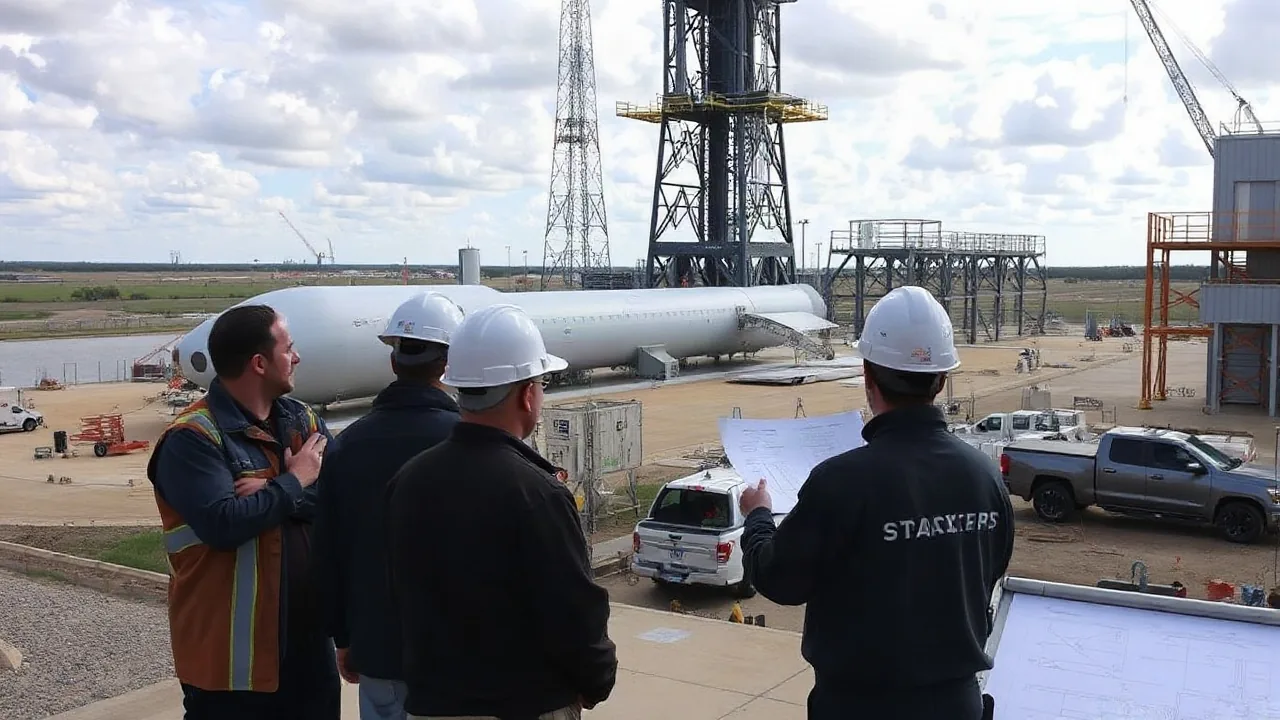
SpaceX's Starbase facility in South Texas is now home to over 9,000 employees, making the company one of the largest employers in commercial aerospace. As of November 2026, the company continues to expand its workforce across engineering, manufacturing, quality assurance, and mission operations roles. For those interested in aerospace jobs, SpaceX represents one of the most accessible entry points into cutting-edge space technology.
The company's rapid growth stems from its ambitious timeline for Starship launches, Falcon 9 reusability improvements, and the Starlink constellation expansion. Each of these programs requires specialists in propulsion systems, software development, structural engineering, and supply chain management. Unlike traditional aerospace contractors bound by decades of legacy processes, SpaceX roles often involve direct impact on live missions within months of joining.
Current Hiring Landscape and Role Types
SpaceX publishes open positions on its careers page, with positions rotating based on project demands. Common categories include:
- Flight software engineers and avionics technicians
- Structural and propulsion systems engineers
- Manufacturing engineers and welders
- Mission operations specialists and flight directors
- Supply chain and quality assurance coordinators
Entry-level positions typically require a bachelor's degree in engineering, physics, or related fields, though some manufacturing and technician roles accept high school diplomas paired with technical certifications. Internship programs run year-round, giving recent graduates a formal pathway into full-time employment.
According to a November 2026 industry report from AerospaceX Analytics, SpaceX leads all private contractors in new aerospace hires, recruiting roughly 1,200 engineers annually across all experience levels. "SpaceX's hiring velocity reflects both their launch cadence and workforce attrition," said Maria Gonzalez, aerospace staffing analyst at AerospaceX Analytics. "They're not just replacing departures; they're scaling production for Starlink deployment and lunar lander support."
Qualifications, Compensation, and Advancement
Technical roles at SpaceX typically demand hands-on experience with CAD software, MATLAB, Python, or C++. Many candidates come from engineering careers at companies like Blue Origin, Relativity Space, or traditional defense contractors. Security clearances are required for positions involving export-controlled technology, a process that can take 3 to 6 months.
Salary data from Glassdoor and Levels.fyi shows that SpaceX pays below Silicon Valley software benchmarks but above traditional aerospace firms. A junior flight software engineer earns $120,000-$160,000 annually; senior propulsion engineers command $200,000-$280,000 plus equity. Stock options vest over four years, and company estimates suggest employees hired in 2023 hold equity worth an average of $8,000-$15,000 as of 2026, though the company remains private.
Career progression at SpaceX moves faster than legacy contractors. Engineers often assume lead roles on subsystems within 18-24 months, and mission success directly ties to performance reviews. Promotion cycles are fluid rather than seniority-based, rewarding technical depth and delivery impact.
SpaceX also offers benefits including health insurance, 401(k) matching, on-site fitness facilities at Starbase, and relocation assistance for roles filled from outside Texas. Flexible work arrangements remain rare; most engineering teams work on-site four days per week minimum, reflecting the hardware-intensive nature of rocket science.
Competing Paths: NASA Contractor Roles and Blue Origin
Candidates weighing SpaceX should also consider related opportunities. NASA jobs through centers like Kennedy Space Center, Johnson Space Center, and Marshall Space Flight Center hire civil service engineers at GS-11 to GS-14 pay grades ($74,000-$140,000). These roles emphasize stability and long-term research over rapid iteration, appealing to engineers prioritizing predictability.
Blue Origin, United Launch Alliance, and Axiom Space also recruit aggressively in 2026. Blue Origin's New Shepard and New Glenn programs mirror SpaceX's growth trajectory, while ULA focuses on heavy-lift government contracts. Axiom, building commercial space station modules, attracts systems engineers interested in habitat design and long-duration operations.
The key differentiator for SpaceX remains rapid launch cadence and visible mission outcomes. An engineer hired in January 2026 could see their subsystem component fly on Starship Flight 34 by August of the same year. At government agencies, equivalent timeline spans 2-3 years from hire to first launch contribution.
Breaking into space exploration careers requires persistence. Applications to SpaceX and peer companies typically yield 5-10 percent interview conversion rates due to volume. Networking at industry conferences like AIAA Space Forum or through university recruiting partnerships increases odds. Internships, even unpaid or low-paid roles at smaller contractors, serve as strong resume signals for SpaceX hiring managers.
For those seriously pursuing aerospace, the 2026 job market favors candidates with hardware experience, internship track records, and willingness to relocate to Texas, California (Hawthorne), or Florida (Cape Canaveral). SpaceX's relentless pace offers unmatched learning and the tangible satisfaction of seeing your work in orbit weeks after development.