
NASA's Swift Telescope Set for Earth Re-entry After Mission End
NASA's Swift space telescope is expected to re-enter Earth's atmosphere soon after 17 years of operation. The aging observatory's orbit has decayed, and while most of it will burn up, some debris may reach the surface.

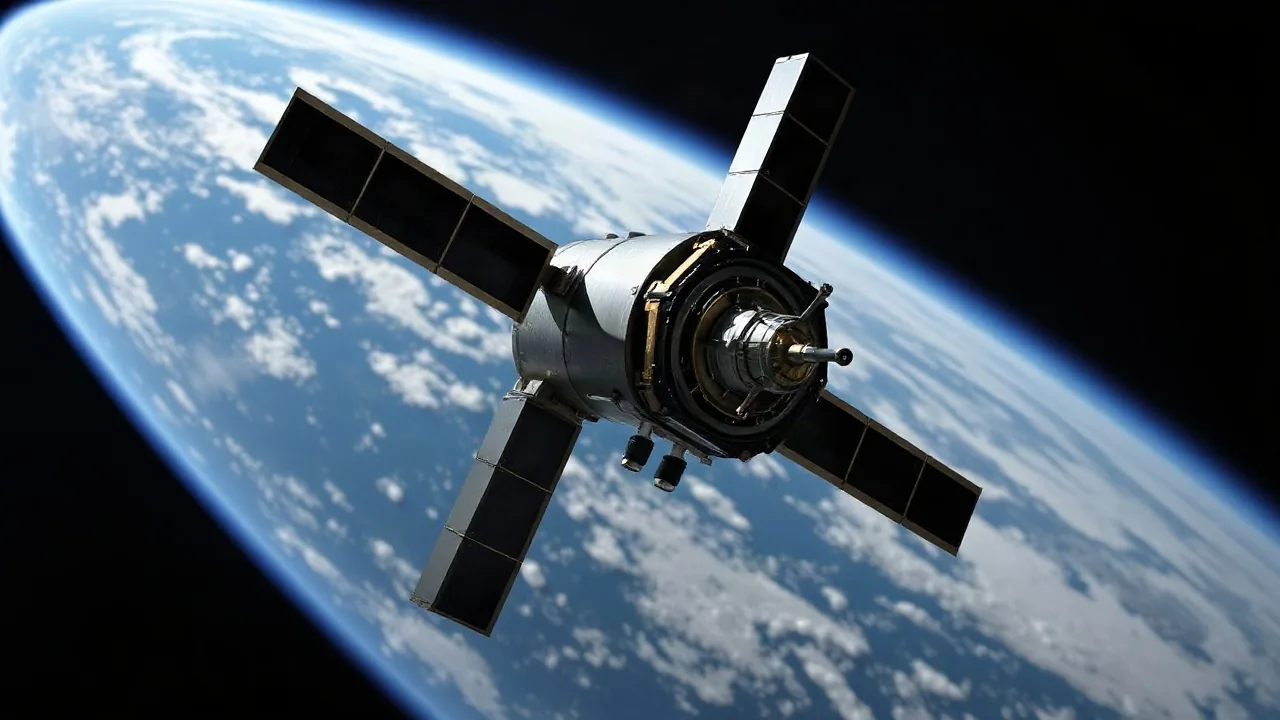
NASA's Swift space telescope, a pioneering observatory that has studied gamma-ray bursts and other high-energy cosmic phenomena for 17 years, is on a trajectory to re-enter Earth's atmosphere within days. The spacecraft's orbit has degraded significantly, making a controlled de-orbit impossible. Mission control is closely monitoring its descent.
Launched in 2004, the Swift observatory has been instrumental in understanding some of the most energetic explosions in the universe. It was designed to detect and observe transient astronomical events, such as gamma-ray bursts (GRBs), which are the most luminous electromagnetic events known to occur in the universe. These bursts are often followed by dimmer emissions across the electromagnetic spectrum, which Swift is equipped to study.
Orbital Decay and Re-entry
The telescope's orbit has naturally decayed over its extended mission, and due to its age and the absence of a propulsion system for controlled orbital adjustments, it will burn up upon re-entry. While the vast majority of the NASA telescope will disintegrate and vaporize in the atmosphere, there is a small probability that some hardened components could survive the fiery plunge and reach the Earth's surface. NASA has stated that the risk to people on the ground is minimal, with the spacecraft's trajectory expected to pass over unpopulated areas.
Swift has played a critical role in astrophysics, contributing to over 1,000 scientific papers. Its groundbreaking work includes identifying the first optical afterglow of a GRB, which allowed astronomers to pinpoint the host galaxies of these distant events. This capability revolutionized the study of GRBs, enabling researchers to determine their distances and probe the early universe.
The observatory's sophisticated instruments—the Burst Alert Telescope (BAT), the X-Ray Telescope (XRT), and the Ultraviolet/Optical Telescope (UVOT)—have worked in tandem to provide comprehensive data on these cosmic explosions. The BAT detects the initial burst, triggering the other instruments to observe the aftermath.
While the end of Swift's operational life marks the conclusion of an era, NASA continues to advance its capabilities in high-energy astrophysics with newer missions. The agency's commitment to exploring the universe's most energetic phenomena remains a priority, with ongoing research and development for future observatories.