
SpaceX Halts Florida Falcon 9 Starlink Flights for Starship Focus
SpaceX is ending its Falcon 9 Starlink launches from Florida to prioritize its Starship program. Future Starlink missions from the East Coast will utilize the Starship rocket.

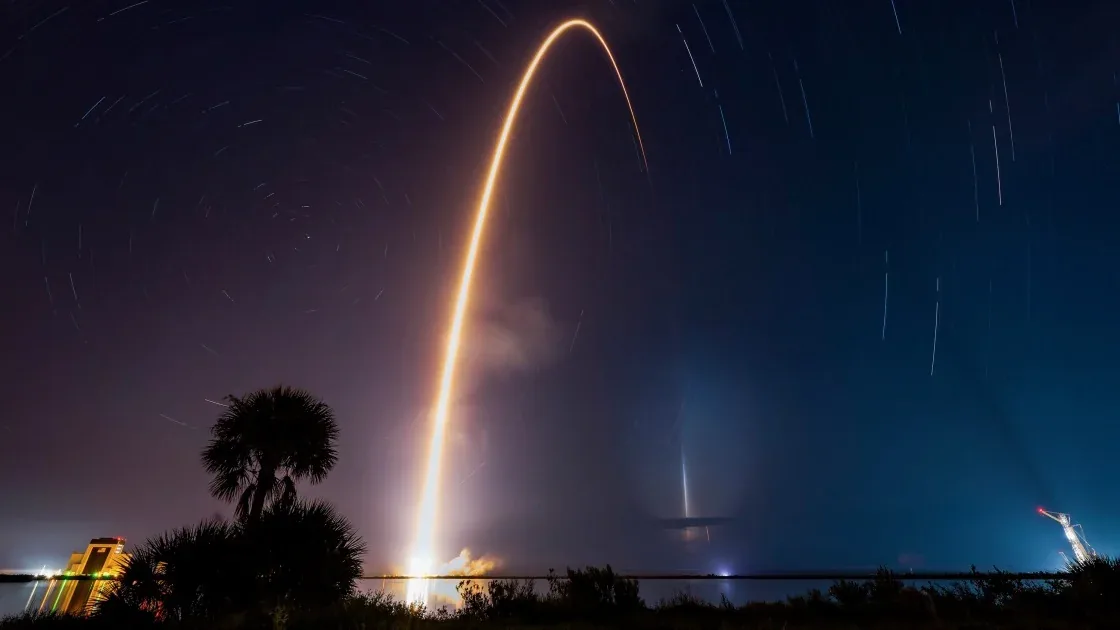
SpaceX conducted its final Falcon 9 launch carrying Starlink satellites from Florida earlier this week, marking the end of an era for the company's East Coast operations. Vice President of Launch Kiko Dontchev announced that all subsequent Starlink missions originating from Florida will transition to the company's more powerful Starship rocket. "From here on, Starlink missions out of Florida will fly on Starship," Dontchev stated via Twitter, emphasizing the shift in strategy. While the reliable Falcon 9 will continue to fly Starlink missions, these will now operate exclusively from Vandenberg Space Force Base in California. This redeployment aims to increase overall launch cadence.
The Falcon 9 rocket has been instrumental in deploying a significant portion of the Starlink constellation, which recently surpassed 11,000 satellites in orbit. Over the past seven years, approximately 260 Starlink missions have been flown from Florida's Cape Canaveral Space Force Station. The company is now redirecting its engineering and production resources towards the development and operation of Starship, a heavy-lift launch vehicle designed to carry larger payloads, including the next-generation V3 gigabit Starlink satellites. SpaceX CEO Elon Musk indicated that this shift is necessary to achieve the ambitious goal of multiple Starship flights per day.
Transitioning to Starship for Future Deployments
SpaceX's decision to prioritize Starship reflects its long-term vision for space exploration and internet deployment. The Starship program is crucial for not only expanding the Starlink network but also for future endeavors, such as deploying a cellular version of Starlink intended to rival traditional mobile carriers. Additionally, the company has announced plans for a new major spaceport, dubbed "Starbase, Louisiana," along the Gulf Coast. Construction is slated to begin in 2027, with initial Starship flights expected to commence in 2029. This new facility is projected to support thousands of Starship flights annually, potentially becoming the world's busiest launch site with over a dozen launch towers enabling more than 30 Starship flights per day.
The transition away from Falcon 9 for Starlink launches from Florida raises questions within the satellite industry about potential short-term shortages of launch opportunities. Some observers also express caution, citing that Starship is still in its developmental stages and has yet to achieve a full orbital mission. Despite these concerns, SpaceX is accelerating its Starship program, aiming to integrate V3 Starlink satellite deployment during upcoming test flights. The company is also exploring plans for orbital data centers, with the Louisiana spaceport serving as a potential hub for these operations. The move signifies a bold step towards a new era of heavy-lift spaceflight and satellite deployment, even as the current operational infrastructure is being reshaped.