
SpaceX Falcon 9 Booster B1067 Marks 35th Mission, Sets Reuse Record
A SpaceX Falcon 9 first-stage booster, B1067, has completed its 35th mission, setting a new reuse record for the company. The milestone flight delivered 29 Starlink satellites to orbit.

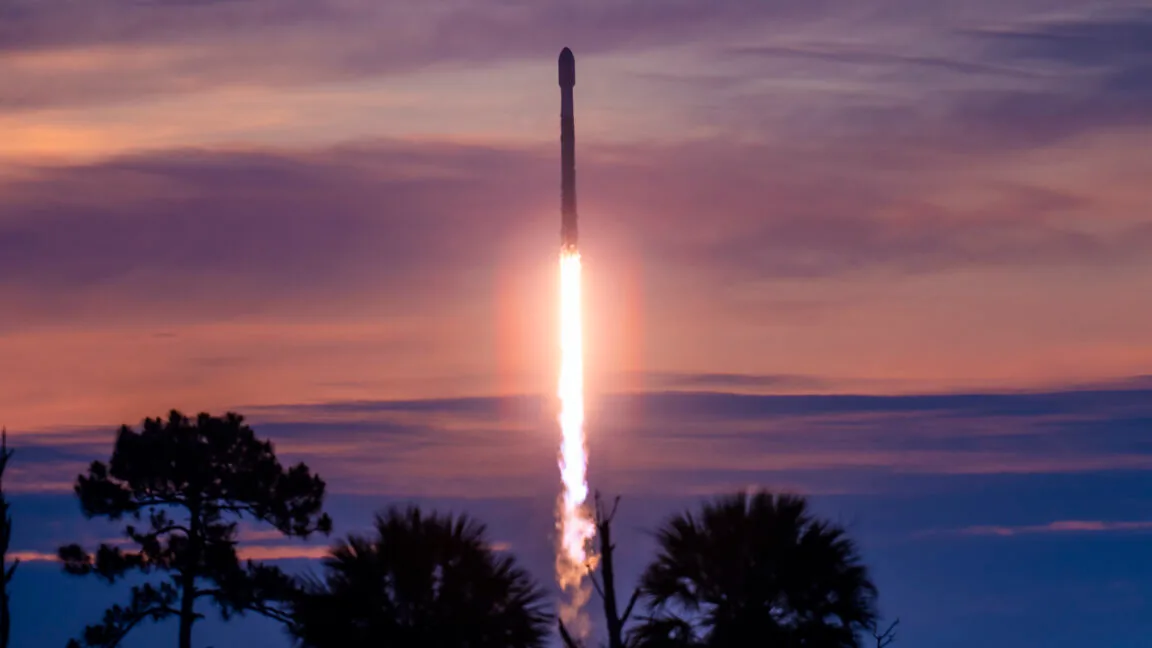
A SpaceX Falcon 9 first-stage booster, designated B1067, achieved a significant milestone on Monday morning, successfully completing its 35th mission by launching 29 Starlink internet satellites into low-Earth orbit from Florida. This achievement marks a new record for booster reuse within the company's fleet. Following its successful return to the drone ship 'A Shortfall of Gravitas' in the Atlantic Ocean, B1067 retained its status as the fleet leader for SpaceX. The booster, which debuted just over five years ago with a flight to the International Space Station, has been instrumental in SpaceX's rapid launch cadence and its dominance in the global launch market.
The relentless pace of B1067's operations highlights SpaceX's pioneering work in rocket reusability. In its five-year operational life, the booster has frequently launched Starlink satellites, often flying multiple missions within a single month. This level of rapid turnaround and repeated success was once a distant dream in the aerospace industry, but it has become the bedrock of SpaceX's operational strategy and financial success. The company is reportedly aiming to qualify its Falcon 9 first-stage vehicles to support 40 missions each, a goal that B1067 is steadily approaching. Given the booster's consistent performance and SpaceX's ongoing success with reuse, it is plausible that the company intends to push this target even higher, further cementing the economic viability of reusable launch systems.
A New Era of Spaceflight Economics
The success of the Falcon 9 program, epitomized by boosters like B1067, has been crucial for SpaceX's growth and its ability to secure major contracts, including those with NASA for cargo and crewed missions to the International Space Station. This reusability has not only drastically reduced launch costs but also enabled the rapid deployment of SpaceX's Starlink constellation, a project that is transforming global internet access. The company's valuation, reportedly targeting $1.75 trillion for its upcoming IPO, is largely predicated on the continued success and scalability of its launch vehicles, including the future Starship program. However, the credibility and financial backing for these ambitious future endeavors are directly tied to the proven track record of the Falcon 9 and its revolutionary reuse capabilities.
In comparison to competitors, the performance of B1067 stands out sharply. Since June 2021, when B1067 first flew, United Launch Alliance (ULA), a key U.S. competitor, has conducted a total of 22 Atlas V launches and four Vulcan missions, with the Delta IV Heavy making its final three flights. This means that in the same timeframe B1067 completed 35 missions, ULA’s combined launches barely reached 29. This stark difference underscores the transformative impact of reusable rockets on the pace and economics of space access. The ability to repeatedly launch and recover a single first-stage booster has allowed SpaceX to outpace established players and accelerate its ambitious satellite deployment and exploration goals. The cumulative effect of B1067's 35 flights represents more payload delivered to orbit than could be achieved with dozens of expendable rockets over the same period.
As SpaceX looks towards future innovations like Starship, the lessons learned and technologies developed with the Falcon 9 are invaluable. The company has proven that rapid, frequent, and cost-effective space launches are achievable. This foundational success provides the necessary confidence and capital for even more audacious projects, such as orbital data centers and interplanetary transport. Without the demonstrated success of the Falcon 9 program, SpaceX's bolder visions might be perceived as little more than speculative fiction. The grizzled, grimy appearance of B1067 after its 35th mission is not a sign of weariness, but a testament to its incredible service and the dawn of a new, more sustainable era in spaceflight.