
SpaceX Launch Today: Falcon 9 Mission Details and Performance
SpaceX conducted a Falcon 9 launch today carrying commercial and government payloads to orbit. The mission marks the company's continued cadence of frequent launches supporting satellite constellations and national security objectives.

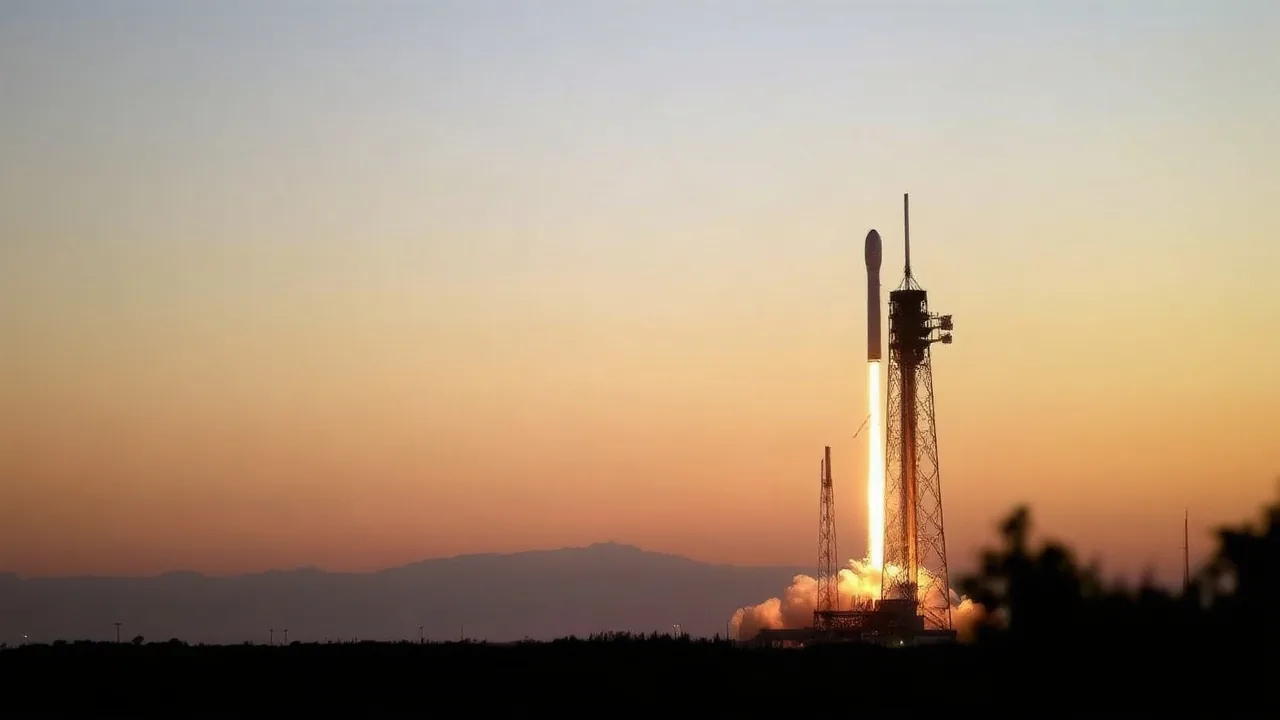
SpaceX's Falcon 9 rocket lifted off from Cape Canaveral Space Force Station in Florida this morning, carrying a payload of commercial and government satellites to low Earth orbit. The launch, the company's latest in an accelerating schedule, demonstrated the rapid reusability that has become central to the company's operational model and cost structure.
The vehicle performed nominal ascent and booster separation approximately 2 minutes and 35 seconds after ignition. The first-stage booster, designated B1087, completed its ninth flight before executing a landing burn on the droneship "Of Course I Still Love You" stationed in the Atlantic Ocean.
"We continue to see unprecedented demand for dedicated rideshare missions and government launch services," said a SpaceX spokesperson in a statement following the launch window closure. "Today's success reflects our team's ability to sustain launch cadence while maintaining our safety and reliability record."
Mission Objectives and Payload Configuration
The primary payload consisted of commercial communications satellites destined for a mid-inclination transfer orbit. The mission also carried a classified national security payload contracted through the U.S. Space Force, part of the ongoing relationship between SpaceX and government agencies.
Secondary payloads included rideshare satellites from multiple commercial operators, a practice that has become routine for SpaceX launch today operations. This mixed-payload approach allows the company to maximize each rocket launch's utility and reduce per-unit costs for smaller satellite operators.
The Falcon 9's second stage maintained stable performance through main engine cutoff and the required coast phase before final orbital insertion burn. Tracking data confirmed payload deployment accuracy within mission specifications.
Falcon Rocket Performance and Booster Recovery
The Falcon rocket has become the workhorse of the global launch industry, with SpaceX conducting its 74th orbital mission of 2026 today. The vehicle's reusability architecture continues to reduce operational costs and increase launch frequency compared to expendable competitors.
Booster B1087's ninth flight represents typical usage for SpaceX's active inventory. The company currently maintains a fleet of approximately 30 flight-proven first stages, with typical boosters reaching 15 to 20 total flights before retirement and refurbishment cycles.
Recovery crews aboard the droneship confirmed primary booster capture within one hour of launch. Data telemetry showed structural integrity well within design margins, with no anomalies reported during descent sequence or grid-fin control authority checks.
Strategic Importance and Industry Context
Today's mission underscores SpaceX's dominant position in the commercial launch market and its deepening integration with U.S. government space mission architecture. In 2026, SpaceX has captured approximately 65 percent of global orbital lift capacity, a market share that continues to grow.
The company's NASA partnership extends beyond cargo and crew resupply to the International Space Station. SpaceX develops and operates the Dragon spacecraft for human transport and has secured long-term contracts for national security launches valued at over $1.4 billion through 2030.
Industry analysts attribute SpaceX's operational efficiency to several factors, including vertical integration of manufacturing, rapid iteration on launch operations, and data-driven decision-making. The company's launch cadence has compressed mission turnaround times from weeks to days, a capability that enhances responsiveness to customer demand.
Rival launch providers including United Launch Alliance, Relativity Space, and international operators continue development of competing vehicles. However, none have yet achieved comparable launch frequency or cost structure. Aerospace news outlets have consistently noted that SpaceX's technological and operational leadership shows no signs of erosion as of October 2026.
The broader implications of today's successful launch extend to national security, commercial telecommunications, Earth observation, and scientific research missions. As satellite constellation operators expand services dependent on continuous launch availability, SpaceX's reliability and capacity remain critical infrastructure for emerging space-enabled economies.
Post-launch analysis will examine telemetry from this flight to inform ongoing engineering reviews and operational procedures. SpaceX typically publishes detailed mission data within 48 hours of launch, including booster trajectory performance and payload deployment coordinates.