
SpaceX Launch Schedule 2026: Starlink and Crewed Missions
SpaceX has packed 2026 with dozens of launches, from routine Starlink deployments to critical crewed missions to the ISS. Here's what to watch.

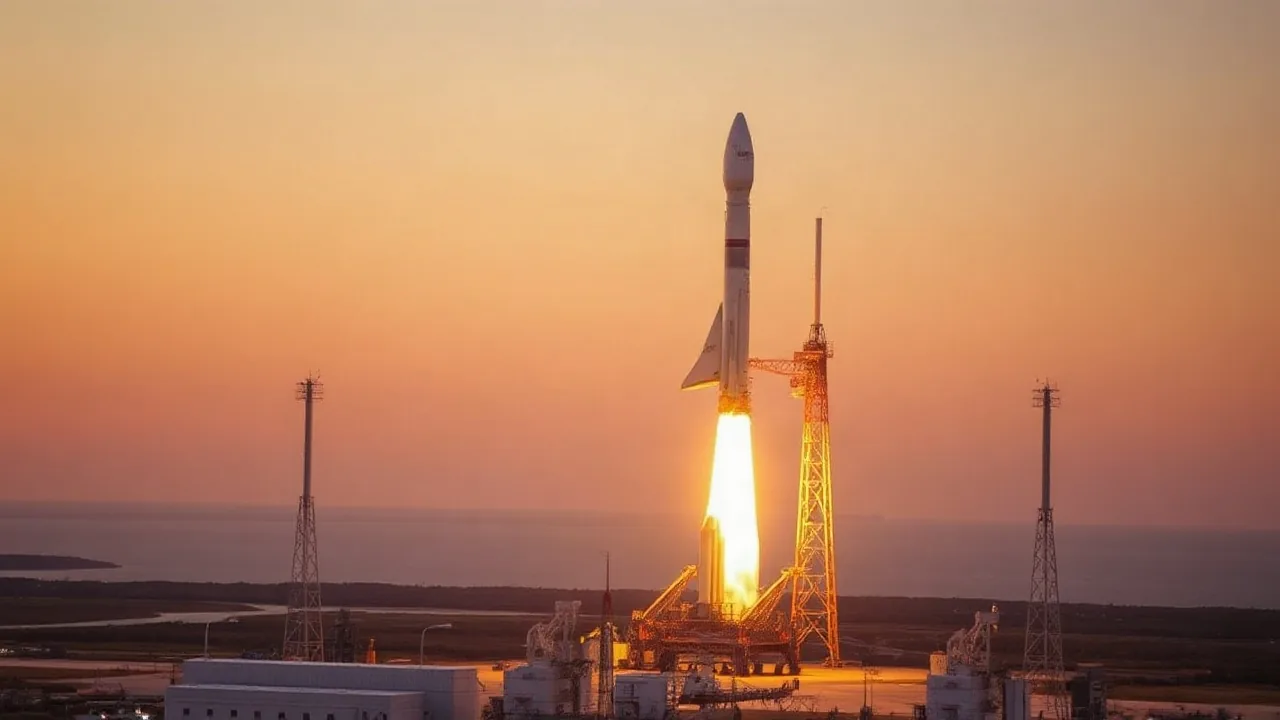
SpaceX is on track to execute over 70 orbital launches in 2026, marking one of the busiest years in the company's operational history. The cadence reflects growing demand for Starlink internet coverage, sustained NASA partnerships for crew transport, and accelerating commercial satellite missions across multiple operators.
The year opened with the first heavy-lift Falcon Heavy mission in January, delivering a classified National Reconnaissance Office payload. By mid-August, SpaceX had already completed 45 launches. Gwynne Shotwell, SpaceX's president and chief operating officer, stated in a July earnings call that the company expects "modest growth" in orbital flight rate through the end of 2026, with margins improving as Starship development progresses.
The breadth of missions reflects SpaceX's diversified customer base. Roughly 60 percent of the 2026 launches deploy Starlink satellites or related constellation maintenance. The remainder split between government contracts, commercial satellite operators, and international customers.
Starlink Expansion and Internet Coverage
Starlink deployment remains the engine of SpaceX's launch tempo. Each Falcon 9 typically carries 60 satellites on dedicated orbital flights, with multiple launches per week during peak periods. By August 2026, the Starlink constellation had grown to approximately 8,400 active satellites in low Earth orbit, providing near-global broadband coverage.
The company is prioritizing polar and mid-latitude coverage to serve rural North America, Europe, and Asia-Pacific regions. SpaceX introduced enhanced second-generation satellites beginning in April 2026, featuring larger phased-array antennas and improved power systems. These upgrades are aimed at reducing latency below 20 milliseconds and increasing per-user throughput on congested beams.
International regulators have cleared spaceflight operations over most jurisdictions through year-end, though occasional delays occur due to licensing disputes in Brazil and India. SpaceX has secured approval for Starlink service in over 100 countries as of mid-August 2026.
Crewed Missions and ISS Support
NASA and SpaceX have maintained a regular cadence of crew rotations under the Commercial Crew Program. Three crewed Dragon missions are scheduled through December 2026, each carrying four NASA astronauts and occasional international partners to the International Space Station.
The most significant crewed milestone came in May when SpaceX launched the Crew-9 mission, carrying a backup crew for an emergency retrieval contingency. SpaceX continues to refine abort procedures and life support systems to meet NASA's stringent reliability standards. Each mission lasts approximately six months on orbit, with crews rotating to maintain continuous U.S. operations aboard the station.
Beyond NASA, SpaceX has contracted privately funded crewed missions for two commercial space stations under development. Axiom Space has booked flights, and a competing venture called Orbital Reef has signed letters of intent for crew transport through the early 2030s.
Rocket Launches and Technical Progress
Rocket launches in 2026 also include test flights and operational missions for Starship, SpaceX's fully reusable super-heavy lift system. Three integrated flight tests occurred in 2026: one in February, one in June, and one planned for late September. Each test pushed envelope limits on booster catch attempts, orbital refueling, and heat shield performance.
The Falcon 9 continues to dominate the manifest, with first-stage boosters now completing 15 or more flights on average. SpaceX has also resumed Falcon Heavy missions after a pause in late 2025, conducting four heavy-lift missions by August 2026 for National Security Space Launch and National Reconnaissance Office customers.
Key achievements in 2026 include:
- First successful catch of Super Heavy booster by launch tower "chopstick" arms in June
- Orbital refueling demonstration using two Starship vehicles in July
- Deployment of SpaceX's Optus global tracking network for improved launch precision
- Introduction of automated booster refurbishment reducing turnaround time to 10 days
These technical milestones support SpaceX's ambition to reduce launch costs further and enable rapid reuse. The company has publicly stated a target of sub-$50 million per Falcon 9 flight by 2028, down from current rates near $65 million for government missions.
Commercial and International Demand
Commercial satellite operators have booked roughly 15 dedicated missions through SpaceX in 2026. Clients include Planet Labs for Earth-imaging constellation replenishment, Intelsat for telecommunications, and smaller operators like Axiom and Relativity Space.
International flights continue to grow. South Korea's military has contracted two launches for reconnaissance satellites. Japan's space agency booked two missions for Earth science payloads. India has deferred Isro-SpaceX arrangements due to domestic regulatory friction, but bilateral discussions remain open.
Government and defense work represents approximately 25 percent of annual revenue. The U.S. Space Force and National Reconnaissance Office maintain steady demand for rapid, responsive launch capabilities, particularly for urgent national security payloads and on-orbit servicing demonstrations.
Looking ahead to the fourth quarter of 2026, SpaceX has disclosed plans for approximately 18 additional launches before year-end, maintaining the current monthly average of six to eight flights. The company has not announced significant delays or schedule slippage, though weather at the Kennedy Space Center and Boca Chica test site continues to compress launch windows seasonally.