
SpaceX Starfall Reentry Vehicles Get FAA Green Light for Test Flights
FAA documents reveal SpaceX's plans for Starfall, uncrewed reentry vehicles designed for in-space manufacturing and cargo delivery. Two test flights are approved for the Pacific Ocean.

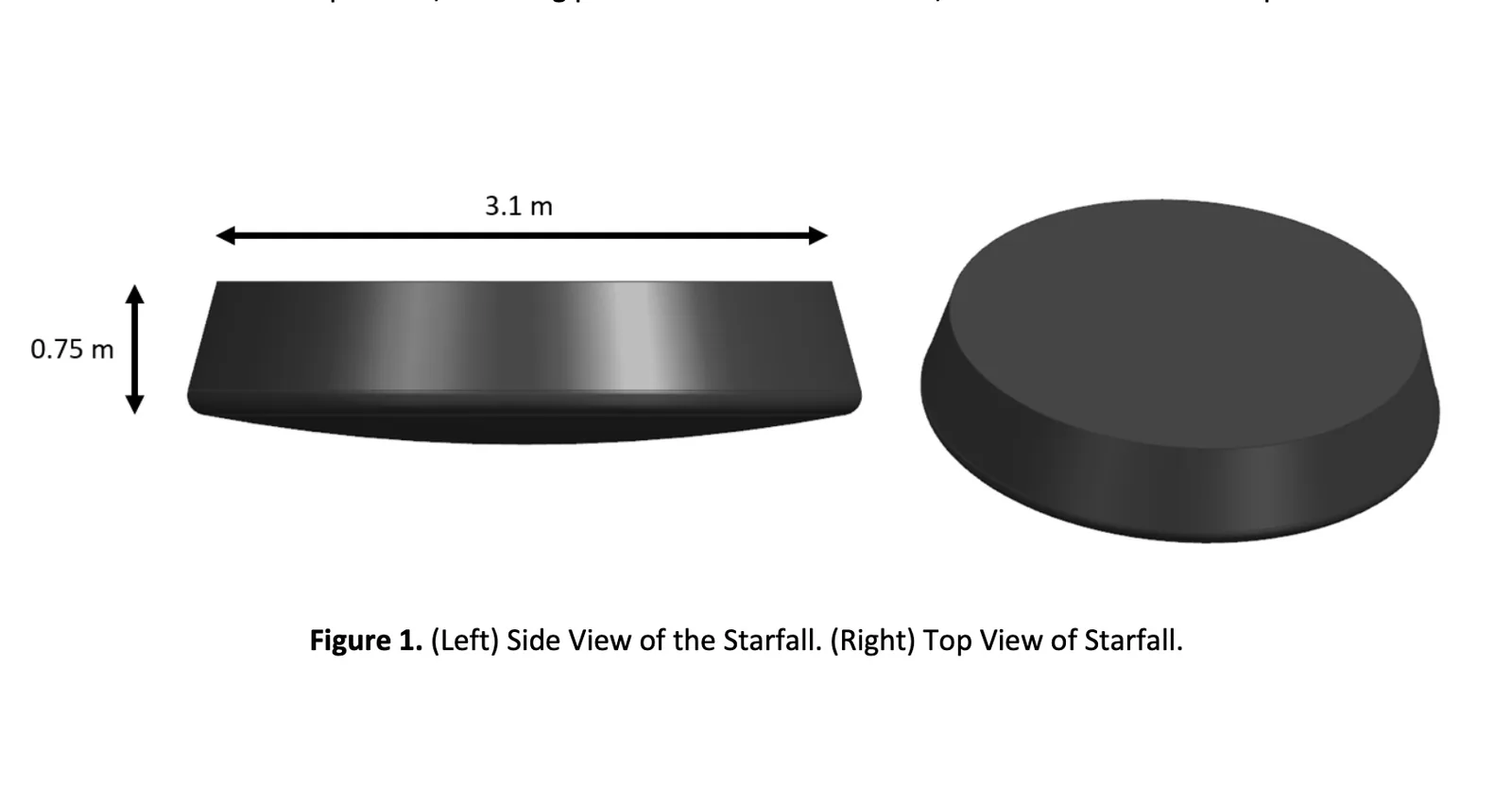
The Federal Aviation Administration (FAA) has cleared the way for SpaceX to conduct test flights of its new Starfall reentry vehicles, according to documents released on May 29. The agency issued an environmental assessment and a record of decision on May 15, approving two test flights of the uncrewed capsules designed to support in-space manufacturing and facilitate rapid cargo delivery. These documents provide the first detailed look at the Starfall project, which SpaceX has kept largely under wraps since it was first reported last July.
The Starfall vehicles are envisioned as a significant step toward establishing a self-sustaining commercial manufacturing economy in space. According to the FAA's record of decision, the project aims to "enable point-to-point delivery of critical cargo through space on rapid timelines and (2) create a self-sustaining commercial in-space manufacturing market by offering access to microgravity and vacuum, loiter on orbit, and safe return from orbit as a service at scale." The vehicles could potentially serve as a "proliferated successor" to the International Space Station, facilitating extensive research and development in microgravity environments before returning materials or products to Earth.
The approved test flights will involve two reentries of the Starfall capsules into the Pacific Ocean, approximately 1,300 kilometers off the coasts of California and Mexico. These capsules are designed to launch on either SpaceX's Falcon 9 or Starship vehicles, entering orbit before their return or following a direct suborbital trajectory. The vehicles themselves are disk-shaped, measuring 0.75 meters in height and 3.1 meters in diameter at the top. They are equipped with cold-gas thrusters for attitude control but lack independent propulsion for deorbiting. Each capsule consists of a 1,400-kilogram top plate made of aluminum and an unspecified thermal protection material, and a 700-kilogram heat shield constructed from carbon-fiber and covered in thermal protection material, also containing nitrogen gas bottles for the thrusters.
Future Competition and Market Impact
SpaceX plans to recover all components of the spacecraft after splashdown using boats. While the FAA documents do not specify a timeline for these initial test flights or grant approval for subsequent missions, they clearly indicate SpaceX's intent to develop these reentry vehicles for mass production. A document from contractor KBR assessing sonic booms from potential Starfall reentries noted that the vehicle is designed to be "mass producible" and capable of precisely delivering cargo from space to various terrestrial locations. These capsules could potentially carry up to 1,000 kilograms of payload within a dedicated internal volume of 2.5 by 1.5 by 0.5 meters.
The development of Starfall could position SpaceX in direct competition with numerous companies that currently rely on its launch services for their own reentry vehicle missions. Companies like Varda Space Industries, which has already conducted multiple microgravity research missions using its W-series spacecraft launched by SpaceX, are developing similar capabilities. Other entities, including Inversion, Atmos Space Cargo, Catalyx Space, Lux Aeterna, and Reditus Space, are also working on reusable spacecraft designed for return to Earth, with many planning to utilize SpaceX launches for their initial test flights and future operations. The emergence of SpaceX's own reentry service could reshape the competitive landscape for in-space manufacturing and rapid cargo delivery services.