
SpaceX's Falcon 9 Rocket Launches Starlink Satellites on Record 37th Flight
SpaceX launched 29 Starlink satellites from Florida early Tuesday, using a Falcon 9 booster for its record 37th mission. This could be the final Starlink launch from Cape Canaveral for some time.

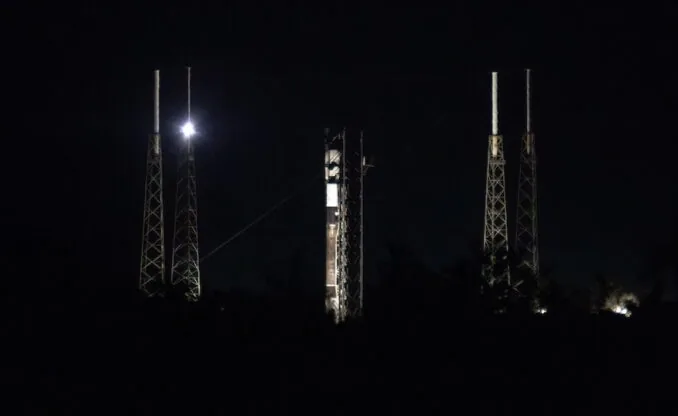
SpaceX successfully launched 29 Starlink internet satellites into low Earth orbit early Tuesday morning, utilizing a Falcon 9 rocket from Cape Canaveral Space Force Station in Florida. The mission, designated Starlink 10-49, is notable for its first-stage booster, tail number B1067, completing its 37th flight, a new record for the company’s reusable rocket technology. Liftoff occurred at 5:33 a.m. EDT from Space Launch Complex 40, with favorable weather conditions reported by the 45th Weather Squadron, forecasting a 90 percent chance of clear skies. The rocket ascended on a north-easterly trajectory, carrying the latest additions to SpaceX’s burgeoning constellation of over 11,000 broadband satellites.
This launch marks a significant milestone for SpaceX’s reusable rocket program. Booster B1067 first entered service in June 2021, and its 37th mission underscores the increasing reliability and cost-efficiency of its Falcon 9 fleet. The reusable booster technology is central to SpaceX's strategy of rapidly expanding its Starlink internet service, which aims to provide high-speed broadband to underserved areas globally. Each successful recovery and relaunch reduces the per-mission cost, allowing for more frequent launches and a faster build-out of the satellite network.
Shift in Launch Focus
The Starlink 10-49 mission may also represent a temporary pause in launches from the East Coast, as SpaceX appears to be shifting its focus. Approximately 44 of the 76 Starlink missions conducted so far in 2026 originated from the company’s West Coast launch site at Vandenberg Space Force Base in California. This strategic redirection suggests that SpaceX’s workforce at Cape Canaveral is increasingly involved in preparations for its next-generation Starship program. The development of Starship, a fully reusable super heavy-lift launch vehicle, is critical for SpaceX’s long-term ambitions, including lunar missions and interplanetary travel.
Spaceflight Now provided live coverage of the launch, commencing an hour before the scheduled liftoff. While weather conditions were largely favorable, launch weather officers monitored a slight possibility of interference from cumulus and anvil clouds. The successful deployment of the Starlink satellites adds to the more than 11,000 spacecraft currently operating in low Earth orbit, forming the backbone of SpaceX’s global internet service. The company continues to innovate in launch cadence and reusability, pushing the boundaries of spaceflight economics and accessibility.