
SpaceX Starlink Mission Continues West Coast Launch Surge in 2026
SpaceX launched another batch of Starlink satellites from California on Saturday, marking its 50th West Coast launch this year. The Falcon 9 rocket successfully deployed 24 satellites.

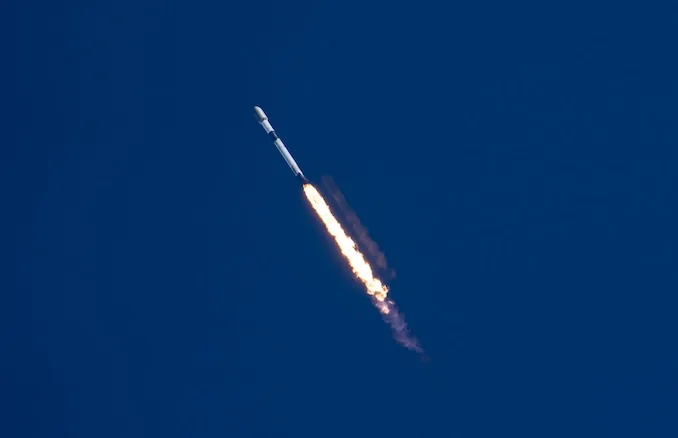
SpaceX continued its rapid launch cadence from the West Coast on Saturday, August 8, 2026, deploying another group of 24 satellites for its Starlink internet constellation. The Starlink 17-38 mission lifted off from Vandenberg Space Force Base in California at 9:35 a.m. PDT (12:35 p.m. EDT). This event signifies SpaceX's 50th launch from its West Coast launch site in 2026, highlighting a strategic shift in operations as the company prioritizes preparations for its Starship program.
The Falcon 9 rocket assigned to this mission, designated B1093, made its 16th flight. This booster, which joined the fleet in April 2025, has previously supported a variety of missions, including deliveries for the Space Development Agency (SDA-T1TL-B and SDA-T1TL-C), the Transporter-16 rideshare mission, and 12 previous Starlink deployments. Following liftoff from Space Launch Complex 4E, the first stage booster executed a south-south-westerly trajectory before successfully landing on the drone ship 'Of Course I Still Love You' stationed in the Pacific Ocean. The precise landing occurred approximately eight minutes and 19 seconds after the rocket's ascent.
Starlink's Growing Reach
The 24 Starlink satellites were successfully deployed into orbit roughly an hour after the mission's launch, contributing to the ever-expanding network designed to provide global broadband internet access. This mission represented the 71st operational Starlink delivery conducted by SpaceX in 2026 alone, underscoring the immense scale of the project. The company has been aggressively expanding its satellite internet service, aiming to reach underserved and remote areas worldwide. As of August 2026, the Starlink constellation comprises thousands of satellites, with SpaceX continuing to deploy new generations of spacecraft to enhance capacity and performance.
The increased launch frequency from Vandenberg is a deliberate strategy by SpaceX. While the East Coast launch sites, primarily Kennedy Space Center in Florida, have seen a reduced flight rate, the company is concentrating resources and launch operations in California. This focus is largely attributed to the ongoing development and testing of the Starship super heavy-lift launch vehicle, which is undergoing rigorous flight tests at SpaceX's Starbase facility in Boca Chica, Texas. Managing multiple launch sites allows SpaceX to optimize its operational tempo and dedicate necessary personnel and hardware to both its established commercial launch services and its ambitious future projects.
The successful deployment of the Starlink satellites on this mission further solidifies SpaceX's position as a dominant player in the commercial launch market. The reliability and cost-effectiveness of the Falcon 9 rocket, coupled with the ambitious goals of the Starlink constellation, have created a powerful synergy. Industry analysts note that this sustained operational tempo is crucial for SpaceX to achieve its long-term objectives, including supporting space tourism, enabling lunar missions, and ultimately, facilitating the colonization of Mars. The ongoing expansion of Starlink is a key component of this broader vision, providing a revenue stream to fund future endeavors.