
SpaceX Starship Completes 6 Earth Orbits in Historic 10-Hour Test
SpaceX's Starship successfully completed a groundbreaking 10-hour test flight, achieving six orbits around Earth. The mission marked a significant step in the development of the super heavy-lift launch vehicle.

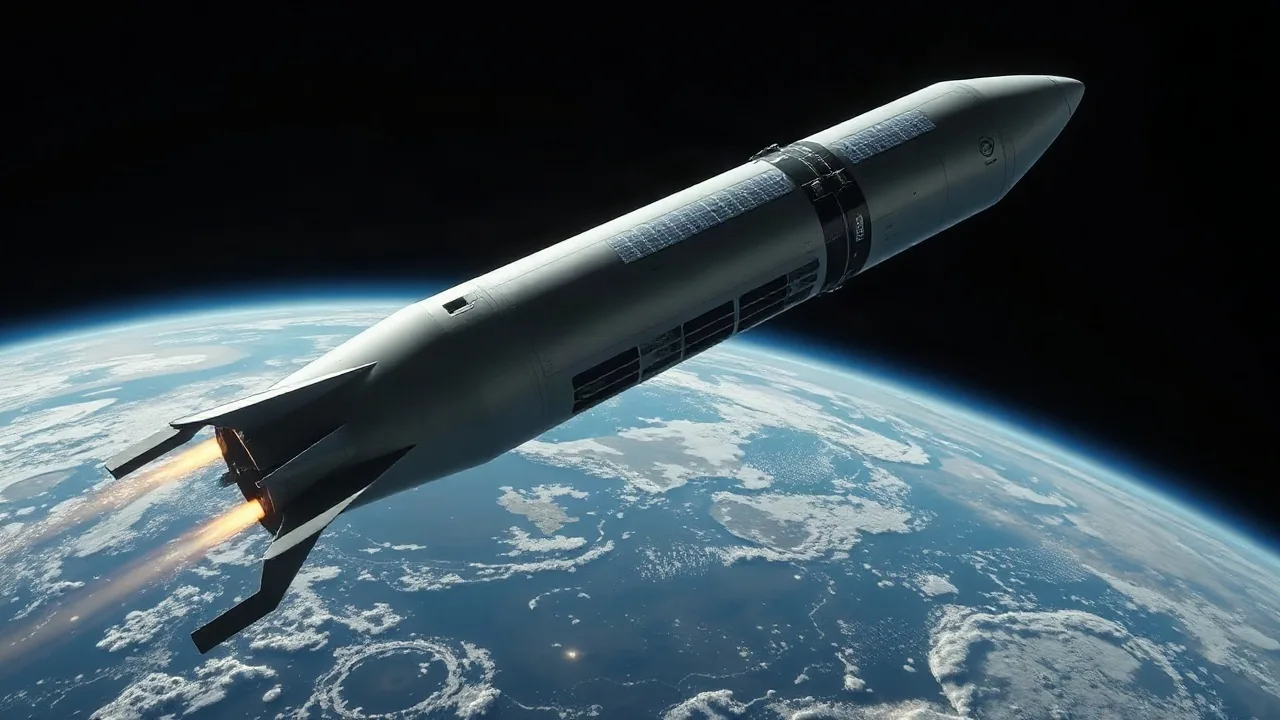
SpaceX successfully launched its Starship vehicle on a critical 10-hour test flight that aimed to place it into Earth orbit six times, marking a monumental achievement for the private space exploration company. The super heavy-lift launch system, developed by SpaceX founder Elon Musk, lifted off from Starbase in Boca Chica, Texas, on September 26, 2026. This flight was designed to test the vehicle's capabilities for deep space missions and potential lunar landings.
The ambitious mission pushed the boundaries of reusable rocket technology, with the primary goal of proving Starship's ability to achieve sustained orbital flight and conduct multiple maneuvers. The successful completion of six orbits demonstrates significant progress in SpaceX's pursuit of rapid reusability and interplanetary travel. Engineers monitored the vehicle's performance closely throughout the flight, gathering crucial data on its thermal protection system, engine performance, and orbital control capabilities.
Starship's Future Applications
This test flight is a pivotal moment for SpaceX and its vision for the future of space exploration. Starship is intended to be a fully reusable transportation system capable of carrying both crew and cargo to Earth orbit, the Moon, Mars, and beyond. The vehicle’s massive capacity and reusability are expected to dramatically reduce the cost of space access, making ambitious missions like establishing a lunar base or colonizing Mars more feasible. The data gathered from this 10-hour orbital flight will be instrumental in refining the rocket for future operational missions, including NASA's Artemis program, which aims to return humans to the Moon.
Previous test flights have focused on suborbital hops and orbital insertion attempts, but this mission represented a significant leap forward in complexity and duration. The ability to maintain orbit for an extended period and execute precise maneuvers is a prerequisite for long-duration spaceflight and complex missions. The successful execution of six orbits is a strong indicator that Starship is moving closer to its operational goals.
Elon Musk has repeatedly stated that Starship is key to humanity becoming a multi-planetary species. This latest Starship flight test provides concrete evidence supporting that ambitious goal. The engineering challenges involved in such a complex vehicle are immense, from the Raptor engines powering its ascent to the sophisticated life support systems and the groundbreaking thermal protection required for re-entry. Each successful test brings SpaceX closer to overcoming these hurdles.
The implications of this successful orbital test extend beyond Mars. Starship is also envisioned for point-to-point Earth travel, potentially revolutionizing global transportation by enabling travel between any two points on Earth in under an hour. While such applications are further in the future, the fundamental technology being proven today is foundational. The successful test flight offers a compelling glimpse into a future where space travel is more routine and accessible.