
SpaceX Starship Aims for First Orbital Flight September 28
SpaceX is preparing for the first-ever orbital launch attempt of its Starship megarocket on September 28, 2026. The ambitious test flight aims to send the fully integrated Starship and Super Heavy booster on a journey beyond Earth's atmosphere.

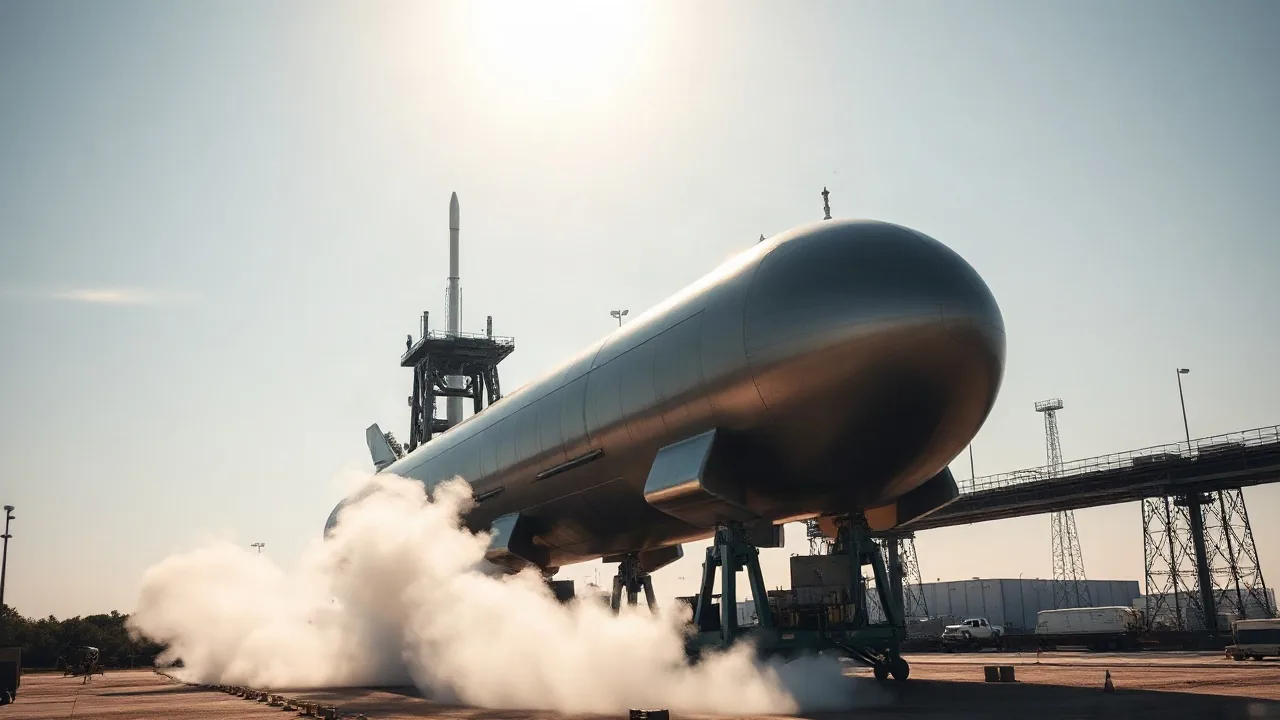
SpaceX is gearing up for a pivotal moment in space exploration as it targets September 28, 2026, for the inaugural orbital launch of its colossal Starship rocket. This mission marks the most ambitious test to date for the fully reusable launch system, designed to carry humans and payloads to the Moon, Mars, and beyond. The integrated Starship spacecraft and Super Heavy booster will attempt a full-duration flight, pushing the boundaries of rocket technology.
The launch window opens at 9:00 AM Central Time from SpaceX's Starbase facility in Boca Chica, Texas. This flight is a critical step in validating the performance and capabilities of the Starship system. Previous test flights have focused on suborbital trajectories and stage separation maneuvers, but this attempt is the first to aim for achieving orbit, a significantly more complex endeavor.
Company founder and CEO Elon Musk has emphasized the iterative nature of Starship's development. "We learn by doing, and every test flight provides invaluable data to improve the vehicle," Musk stated in a recent company update. "Reaching orbit is the next major milestone, and it's essential for proving the system's viability for future deep-space missions." The success of this orbital flight will determine the pace of future development and deployment for missions already planned.
Testing and Preparations Underway
The Super Heavy booster, standing taller than the Statue of Liberty, is equipped with 33 Raptor engines, while the Starship upper stage features six Raptor engines. The combined vehicle represents the most powerful rocket ever constructed. Engineers have been meticulously analyzing data from previous tests, including the recent flight on March 14, 2024, which saw both stages perform successfully before unexpected failures during reentry. Lessons learned from that flight are expected to be incorporated into the latest iteration of the rocket.
The Federal Aviation Administration (FAA) has granted SpaceX the launch license for this mission, following a comprehensive environmental review. The regulatory approval is a significant hurdle for any space launch provider, and its successful navigation underscores the progress SpaceX has made in meeting safety and environmental standards. The public interest in watching this event live is expected to be immense, with SpaceX planning to broadcast the launch on its website.
This orbital flight test is not just about reaching space; it's about demonstrating the entire mission profile, including stage separation in flight, the Starship spacecraft firing its engines in orbit, and controlled reentry. SpaceX aims to eventually recover and reuse both the Super Heavy booster and the Starship spacecraft, a feat that would dramatically reduce the cost of space access. The success of such a reusable system is fundamental to Musk's long-term vision for lunar and Martian colonization.
The stakes are exceptionally high. The 2026 orbital flight test is a culmination of years of design, engineering, and iterative testing at Starbase. While previous flights have achieved significant milestones, the ultimate goal of establishing a reliable, orbital-capable Starship remains the primary objective. The insights gained from this flight will be instrumental in refining the vehicle for future operational missions, including NASA's Artemis program, which intends to use Starship for lunar landings.