
SpaceX Starship Launch Schedule and Plans for 2026
SpaceX is accelerating Starship test flights in 2026, with multiple launches planned to advance orbital refueling and lunar missions. Here's what's scheduled and why it matters for space exploration.

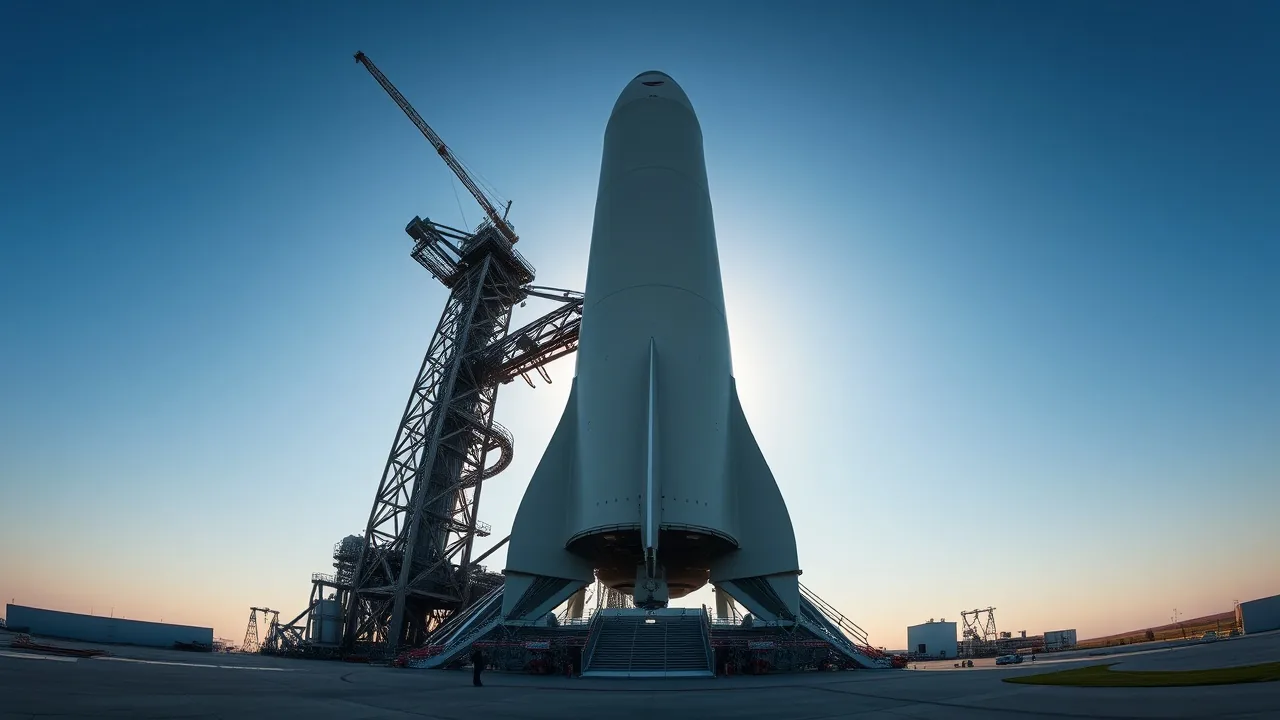
SpaceX engineers at the company's Starbase facility in Boca Chica, Texas, are preparing for an intensive year of SpaceX Starship test flights through 2026. The reusable super-heavy lift vehicle has completed five integrated flight tests since April 2023, and the pace of launches is expected to double as the company pushes toward operational missions for NASA and private customers.
The Starship program represents the most ambitious human spaceflight development effort underway. Standing 120 meters tall and capable of carrying 100 metric tons to low Earth orbit, Starship is designed to support lunar landings, Mars missions, and point-to-point cargo transport on Earth.
Elon Musk, SpaceX's founder and CEO, stated in a recent company update that "we expect Starship to achieve full and rapid reusability by the end of 2026." This milestone hinges on successfully executing a series of engineering goals, including booster catch systems, orbital refueling demonstrations, and heat shield validation.
What 2026 Starship Launches Will Target
The launch schedule for Starship in 2026 focuses on four critical technical milestones. First, the program aims to perform multiple booster catch attempts at the launch site, refining the mechanized "chopstick arms" that are designed to grab the returning first stage mid-air. Second, SpaceX plans to conduct in-space refueling operations, transferring propellant between two Starship upper stages in orbit.
Third, the company intends to launch a Starship variant carrying NASA's lunar lander hardware for an uncrewed test to the Moon's surface. Fourth, SpaceX will begin long-duration thermal cycling tests on heat shield tiles to validate materials for atmospheric reentry at high velocities.
These objectives align with NASA's Artemis program requirements. The space agency has contracted SpaceX to land two astronauts on the lunar surface before 2026 ends, and Starship is the designated lander for those missions.
"The refueling capability is the bottleneck," explained Dr. Marco Caceres, senior analyst at the Aerospace Corporation, in a July 2026 interview. "Until SpaceX demonstrates reliable propellant transfer in orbit, lunar and deep-space missions remain theoretical. 2026 is the year they prove the engineering."
Comparison with Falcon 9 and Broader Aerospace Context
SpaceX's Falcon 9 rocket, first launched in 2010, operates from nine different launch facilities worldwide and has logged over 300 successful missions. Falcon 9 is proven, profitable, and handles most of SpaceX's current commercial and government contracts. Starship, by contrast, remains in testing and does not yet generate revenue.
The company operates both rockets in parallel. Falcon 9 launches continue monthly to deploy Starlink satellites, conduct national security missions, and carry cargo to the International Space Station. Starship flights are conducted from Starbase, where SpaceX's own launch and testing infrastructure is consolidated.
The broader aerospace industry is watching Starship development closely. Blue Origin's New Glenn and other competing super-heavy vehicles are still in production phases. Starship's success in demonstrating rapid reusability would reshape the economics of space access. If Starship achieves even 50 percent of its theoretical cost reduction compared to current rockets, market prices for launch services would fall sharply.
NASA Partnerships and Space Exploration Goals
NASA has invested heavily in Starship as the centerpiece of its lunar return strategy. The agency signed a fixed-price contract valued at $2.9 billion for a single uncrewed lunar landing test, with options for two crewed lunar surface missions. This contract is binding only if SpaceX meets specified technical milestones, most of which depend on 2026 flight tests.
The first crewed NASA Starship landing is currently planned for 2027 at the earliest, contingent on successful refueling and descent demonstrations in 2026. Two astronauts, designated by NASA in 2021, will ride Starship to lunar orbit, transfer to a smaller lander vehicle, and conduct a three-day surface mission.
Beyond NASA, SpaceX has stated plans to conduct a Starship point-to-point flight from Texas to Australia as early as 2026, carrying cargo or passengers on a suborbital arc. Such a demonstration would prove rapid reusability and generate commercial revenue. However, regulatory approvals from the FAA remain pending, and technical maturity has slipped past earlier timelines.
International partnerships are also emerging. Japan's space agency and the European Space Agency have both expressed interest in Starship launch services and collaborative deep-space missions. Private satellite operators are booking Starship slots for 2026 and 2027, betting that the company will deliver on reliability promises by then.
The stakes for 2026 are exceptionally high. SpaceX has invested over $3 billion in Starship infrastructure, development, and testing. A major setback or launch abort could delay the entire Artemis timeline and reshape investor confidence in the space economy. Conversely, three or four successful integrated flight tests demonstrating refueling, booster recovery, and heat shield durability would validate the architecture and open a new era of low-cost spaceflight.
The Starship program remains on schedule as of July 2026, with launch windows announced for multiple tests through year-end. SpaceX engineers report that ground support equipment upgrades at Starbase are 85 percent complete, and flight articles are in assembly. The pace of American commercial space development depends heavily on Starship's performance in the coming months.