
SpaceX Starship orbital flight targets September 28 test
SpaceX is preparing its next Starship orbital flight test for September 28, 2026, marking another critical milestone in developing the fully reusable launch system. The mission will test key systems ahead of planned crewed missions.

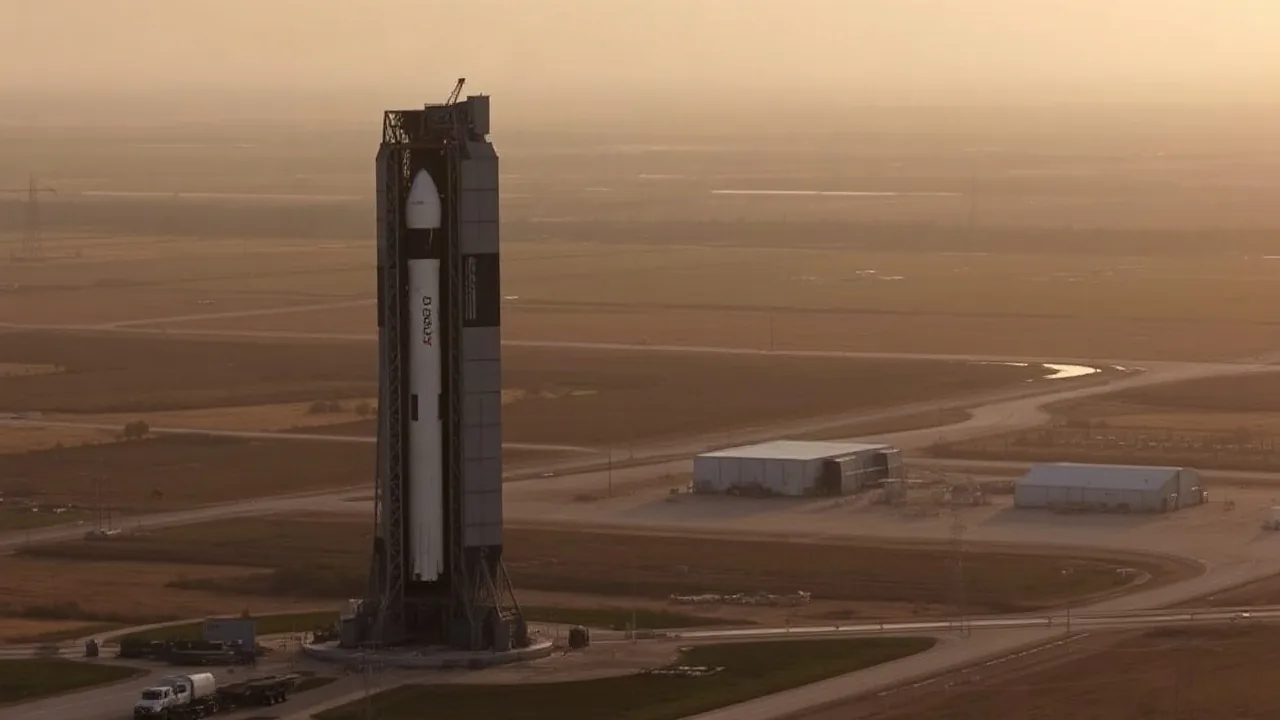
SpaceX has scheduled the next integrated flight test of Starship for September 28, 2026, as the company pushes toward operational orbital flight capability. The test will launch from Starbase in Boca Chica, Texas, and represents the latest phase in validating the world's most powerful operational rocket system.
This mission builds on data collected from five previous integrated flight tests conducted since April 2023. Each test has progressively extended the vehicle's flight envelope, recovered booster segments intact, and gathered telemetry on the integrated Starship stack behavior at altitude and during reentry.
"Each flight test is designed to gather the data we need to make the next one better," said SpaceX Vice President of Starship Test & Reliability Lars Blackmore during a technical briefing in August 2026. "The September test will focus on thermal management during reentry and automated landing systems."
What the test will target
The September 28 mission will continue testing the full-stack configuration: Super Heavy booster and Starship upper stage. Engineers plan to push several subsystems toward operational limits, including heat shield integrity during hypersonic reentry and the raptor engine performance envelope at altitude.
Key objectives include:
- Booster catch and soft landing operations at the launch site
- Starship thermal protection system validation across multiple reentry scenarios
- Autonomous flight termination system redundancy checks
- Propellant transfer operations in orbit
- Raptor engine performance in multiple firing sequences
SpaceX has installed upgraded sensors throughout the stack to capture high-resolution data on temperature, vibration, and structural loads during the critical reentry phase. The company expects to process this telemetry within 72 hours of landing.
Implications for space exploration and NASA partnerships
Success on this test will accelerate SpaceX's timeline for NASA assignments. The space agency has contracted SpaceX to use Starship for lunar cargo delivery under the Commercial Lunar Payload Services program, with initial missions expected in 2027 and 2028.
NASA administrator Bill Nelson stated in July 2026 that Starship's development cadence "exceeds our expectations and strengthens American leadership in space exploration." The agency relies on Starship's payload capacity of 150 tons to low Earth orbit to support both lunar and eventual Mars missions.
Beyond lunar work, SpaceX has discussed using Starship for crewed missions. The company has stated internally that five to seven additional uncrewed test flights should occur before carrying humans, though no firm timeline has been announced publicly.
The rocket launch cadence reflects broader industry competition. Blue Origin's New Glenn booster remains in final assembly, while Relativity Space is scaling 3D-printed rocket production. SpaceX's ability to rapidly iterate and fly frequently gives it a significant advantage in validating new aerospace technology at scale.
Industry analyst firm Space Capital projects that Starship will capture 40 percent of the heavy-lift launch market by 2030 if the vehicle achieves reliability targets of 95 percent mission success within the next 24 months. The September test is a measured step toward that threshold.
Weather conditions permitting, SpaceX will livestream the test on its website starting at 8:00 a.m. CDT. The launch window extends through October 5 if September 28 encounters unfavorable conditions.