
Total Solar Eclipse August 12: Europe Views Lunar Shadow
On August 12, 2026, a total solar eclipse will grace Europe, with the moon's shadow crossing Greenland, Iceland, and northern Spain. Millions more will witness a partial eclipse across Europe and parts of North America.

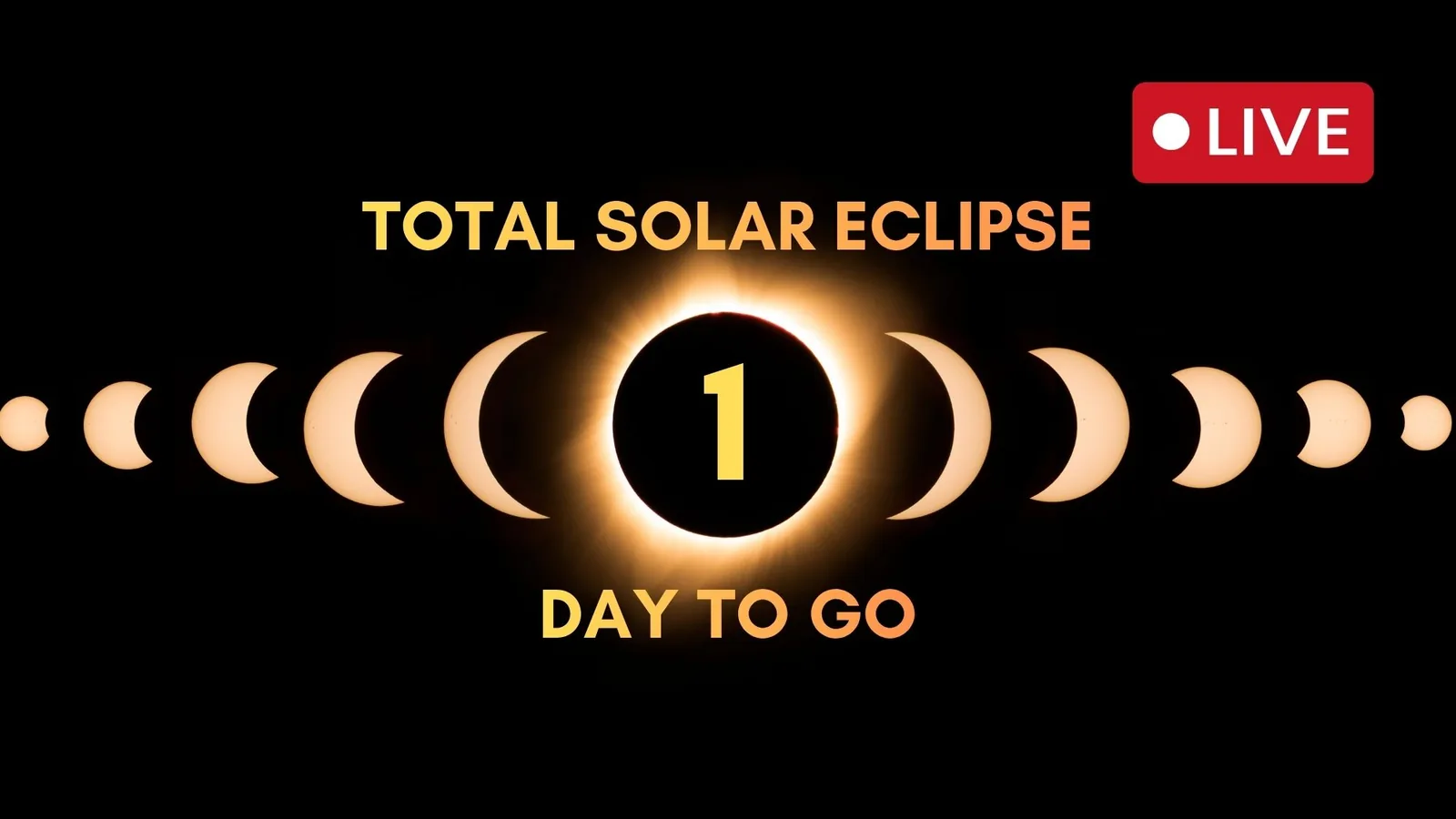
On August 12, 2026, Europe is set to witness its first total solar eclipse since 1999, as the moon's shadow traces a path across Greenland, Iceland, northern Spain, and the Balearic Islands. This celestial event will briefly plunge areas within the narrow path of totality into twilight as the moon perfectly aligns to obscure the sun, revealing its ethereal corona. Millions of additional skywatchers across Europe, and in portions of the northeastern United States and eastern Canada, will have the opportunity to observe a partial solar eclipse, experiencing a distinct 'bite' taken out of the sun.
Reporting live from the front lines of this astronomical spectacle are two dedicated skywatching journalists. Daisy Dobrijevic is currently aboard the HX Expeditions' MS Spitsbergen, navigating the dramatic coastlines of Greenland. Her vantage point in Scoresby Sund, the world's most extensive fjord system, offers a prime location to observe totality, though she hopes for clearer skies than a previous eclipse attempt. Meanwhile, Anthony Wood is in Valoria la Buena, Spain, participating with the Distributed Eclipse Broadcast (DEB) initiative. His experience will be his first total solar eclipse, with the eclipsed sun expected to hang low on the western horizon shortly before sunset.
Anticipation and Preparations Build for August 12 Eclipse
The anticipation for the August 12 total solar eclipse has been building for years, with the wait now down to its final hours. For those in the direct path, the experience promises a brief but profound transition from day to twilight. Beyond the path of totality, the broader visibility of a partial eclipse still offers a compelling astronomical sight. Preparations for viewing are crucial, ranging from ensuring adequate eye protection with certified eclipse glasses to checking the latest weather forecasts. For those traveling to viewing locations, arriving early is recommended to secure a good spot. The event will be tracked live from both Greenland and Spain, following the moon's shadow's swift journey across the Earth.
The possibility of witnessing the northern lights during the eclipse has also sparked curiosity, particularly for observers situated above the Arctic Circle. While an exceptionally rare occurrence, the brief period of twilight during totality could theoretically coincide with auroral displays, adding another layer of wonder to an already remarkable event. For skywatchers, the event also serves as a reminder of the importance of solar safety. Direct viewing of the sun, even during a partial eclipse, requires certified eye protection to prevent permanent eye damage. Projection methods offer a safe alternative for those without specialized glasses.
Even if clouds obscure the view, the dramatic effects of totality may still be perceptible. Thin cloud cover does not necessarily diminish the core experience of a total solar eclipse, as key phenomena like the corona remain visible. The DEB initiative, involving volunteers and professional astronomers from Southern Illinois University Carbondale, aims to capture valuable data on the sun's atmosphere during the event. This citizen science effort, partially funded by NASA, seeks to enhance scientific understanding while simultaneously bringing the public closer to solar science.
The total solar eclipse on August 12 will unfold in distinct stages. From the initial 'first contact' as the moon begins to cover the sun, through the dramatic 'diamond ring' effect just before and after totality, to the full reveal of the sun's corona during the minutes of totality, each phase presents unique visual and scientific opportunities. Understanding these stages can enhance the viewing experience for both seasoned astronomers and casual observers alike.