
Vera C. Rubin Observatory Begins 10-Year Universe Survey
The Vera C. Rubin Observatory in Chile has officially launched its Legacy Survey of Space and Time (LSST). The observatory's powerful camera will capture the southern sky for a decade, creating a detailed movie of the universe and its changes.

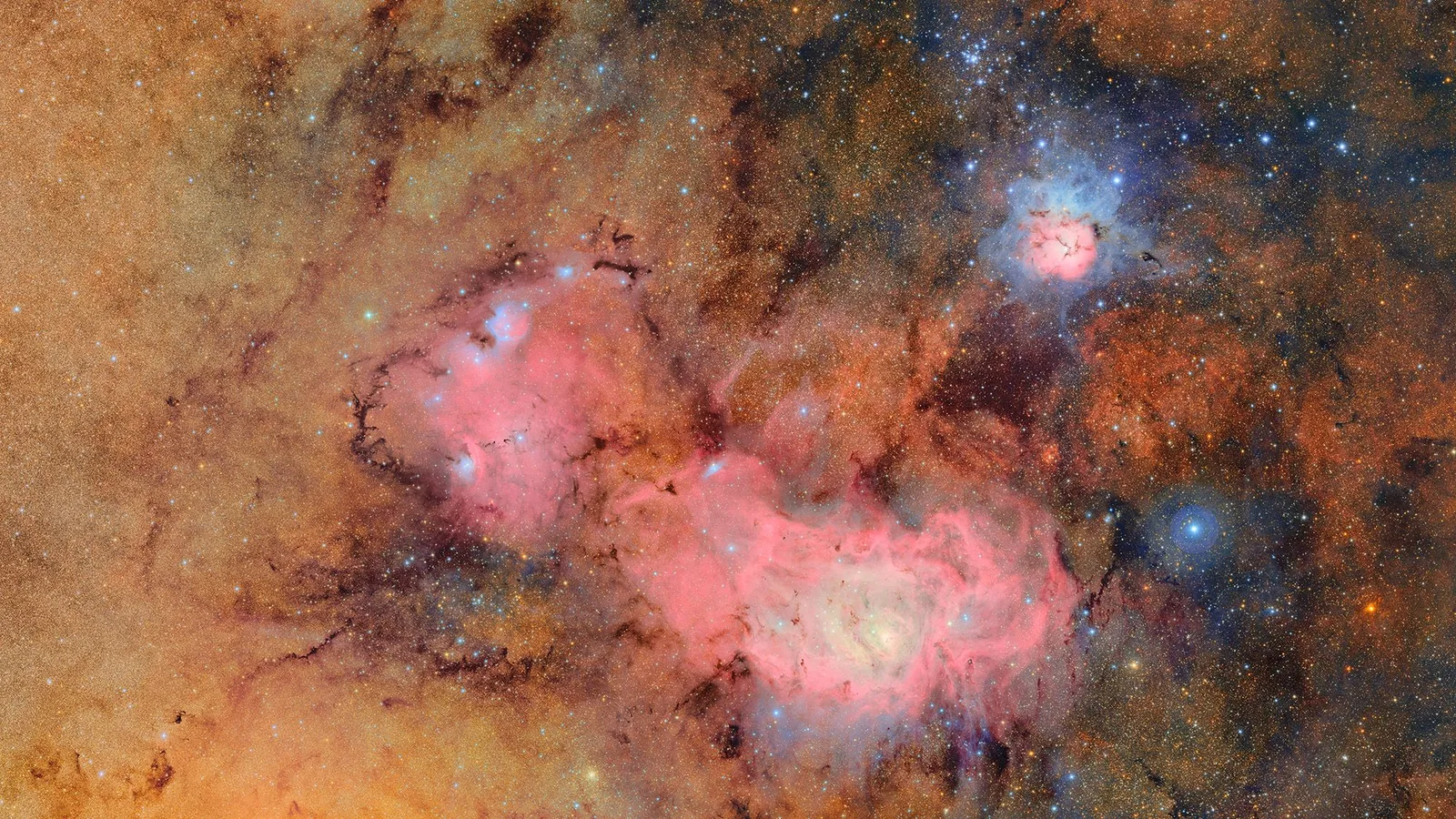
In the remote Andes Mountains of Chile, the Vera C. Rubin Observatory has embarked on an unprecedented 10-year mission to map the universe in unprecedented detail. On Tuesday, June 30, scientists announced the official commencement of the observatory's ambitious Legacy Survey of Space and Time (LSST). For the next decade, the observatory's colossal LSST Camera, roughly the size of a car, will dedicate each night to capturing the southern sky. It will produce a continuous mosaic of the cosmos, with images taken just 30 seconds apart, effectively creating a dynamic, digital motion picture of the universe.
The LSST Camera, boasting an astounding 3,200 megapixels, is designed to capture millions of celestial events nightly. Scientists anticipate observing between 7 million and 8 million changes among stars and other celestial bodies every 24 hours. These changes will range from the dramatic flares of supernovas and the swift passage of comets to the immense collisions of galaxies and the subtle movements of asteroids. Crucially, alerts detailing any unusual cosmic activity will be made available to astronomers and space enthusiasts worldwide within minutes of each observation, fostering a global effort in astronomical discovery.
Tony Tyson, a professor of cosmology at the University of California, Davis, and the LSST's chief scientist, described the survey's scope: "In a sense, we're taking a digital color motion picture of the universe." He emphasized the accessibility of the data, noting, "Rubin is an automated facility, so scientists don't come here to use it. But tens of trillions of observations is enough data for everybody in the world." This vast influx of information is expected to shed light on some of the universe's deepest mysteries, including the enigmatic nature of dark matter and dark energy, which together constitute approximately 95% of the cosmos.
Challenges and Future Discoveries
While the LSST is now operational, scientists are aware of ongoing technical hurdles and a significant environmental concern. The proliferation of ultra-bright corporate satellites in low Earth orbit poses a substantial threat to the observatory's sensitive observations. These satellites can outshine faint astronomical signals, rendering them undetectable and compromising the integrity of the LSST's data. Tyson and his team are actively engaging with satellite companies, regulatory bodies like the FCC, and lawmakers to mitigate this interference. "We've met with all these companies. They say that they feel our pain, but their board of directors or their investors say that they're going to go forward," Tyson explained, though he remains optimistic about finding solutions.
Despite these challenges, the optimism surrounding the LSST's potential is palpable. Tyson expressed a strong conviction that the survey will yield groundbreaking discoveries. "My hope at this time is that we will discover something unexpected that will revolutionize astronomy. I think it's more than a hope, I'm sure it's a guarantee," he stated. The primary scientific goals include furthering our understanding of dark energy and dark matter, mapping the history of the universe's expansion, and studying star formation within our own galaxy. The survey will also identify new asteroids, including potentially hazardous ones, and monitor variable stars.
The LSST is not only expected to advance fundamental cosmology but also to uncover entirely new phenomena. Tyson pointed to the discovery of fast radio bursts (FRBs) in radio astronomy as an example of how new observational capabilities can lead to unforeseen breakthroughs. "I think that's how we will be remembered," he said, referring to the potential for discovering unexpected cosmic objects or events. The observatory will also investigate faint, short-lived bursting objects, a class of phenomena hinted at by recent Japanese research, which could reveal novel astrophysical processes.
After more than two decades of advocacy and development, seeing the LSST operational is a profound achievement for Tyson and the entire scientific community. "It's quite gratifying, after all this time, to have something that actually works," Tyson remarked. "It's a hugely complicated system, and nothing so complicated as that works perfectly all the time." He acknowledged the daily challenges in managing such a complex instrument but affirmed its successful operation, stating, "It's working, and it's working quite well. And so that's quite gratifying." The data generated by the Vera C. Rubin Observatory promises to reshape our understanding of the cosmos for years to come.