
Webb Telescope Detects Unknown Molecule on Pluto and Titan
The James Webb Space Telescope has detected an unknown molecule in the atmospheres of Pluto and Titan, sparking scientific curiosity. Meanwhile, China's 'Great Green Wall' project shows trees growing faster than natural forests.

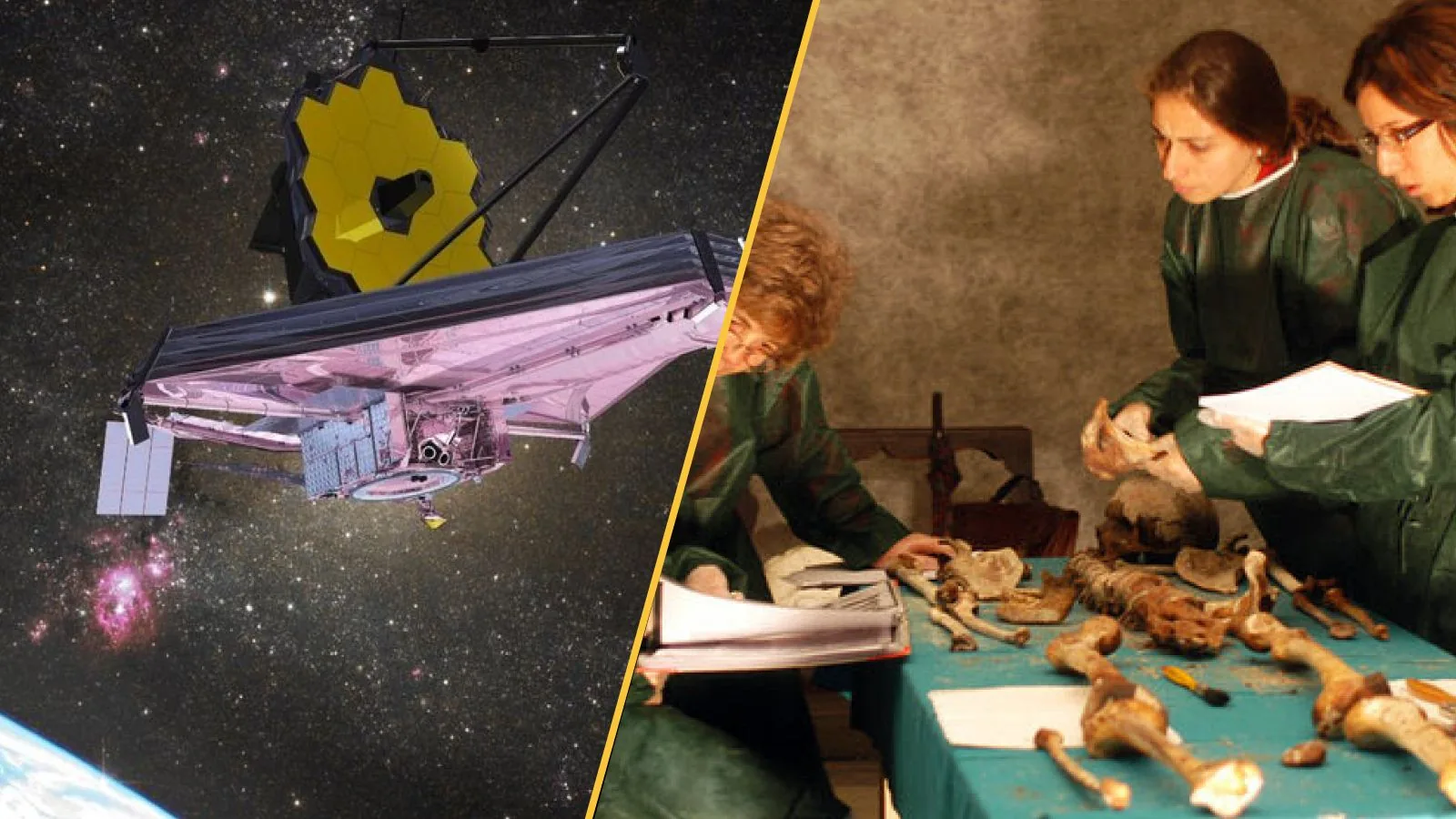
The James Webb Space Telescope (JWST) has detected a never-before-seen substance in the atmospheres of Pluto and Titan, the space agency announced this week. The telescope identified a unique absorption line in the spectra of these distant worlds, indicating the presence of an unknown molecule. Scientists are puzzled, as Pluto and Titan possess vastly different environments, making the shared spectral signature particularly intriguing.
The discovery adds to a series of recent astronomical observations. The JWST's predecessor, the Hubble Space Telescope, previously observed light from a distant galaxy that defied current astrophysical models. Additionally, proposals are being developed for an "airbag" to shield Earth from solar storms, and missions are being planned to orbit and protect other space telescopes. Scientists are also investigating the behavior of metals in space.
Great Green Wall's Rapid Growth Surprises Researchers
In a development closer to home, China's ambitious "Great Green Wall" project, aimed at combating desertification, has revealed that its planted trees are growing at a rate exceeding that of natural forests. Over 66 billion trees have been planted along China's northern borders to halt the expansion of the Gobi and Taklamakan deserts. New research suggests these trees might be responding more robustly to rising atmospheric carbon dioxide levels than their wild counterparts, though the exact reasons remain under investigation.
This initiative is part of a larger trend of large-scale environmental engineering projects in China. The country has previously undertaken efforts such as creating artificial atmospheric rivers and implementing massive water transfer systems. The success and rapid growth observed in the Great Green Wall highlight innovative approaches to ecological restoration and land management, though the long-term implications are still being assessed.
The mystery surrounding the unknown molecule detected by the JWST underscores the vastness of the cosmos and the potential for novel discoveries. Understanding such molecules could provide new insights into planetary formation and atmospheric chemistry. As the JWST continues its mission, it promises to unravel more cosmic secrets, pushing the boundaries of our scientific knowledge.