
OpenAI Rolls Out Codex Chrome Extension for Web App Tools
OpenAI has released a new Chrome extension for its Codex AI coding assistant. The plugin enhances web app testing, context gathering from tabs, and integration with Chrome DevTools.

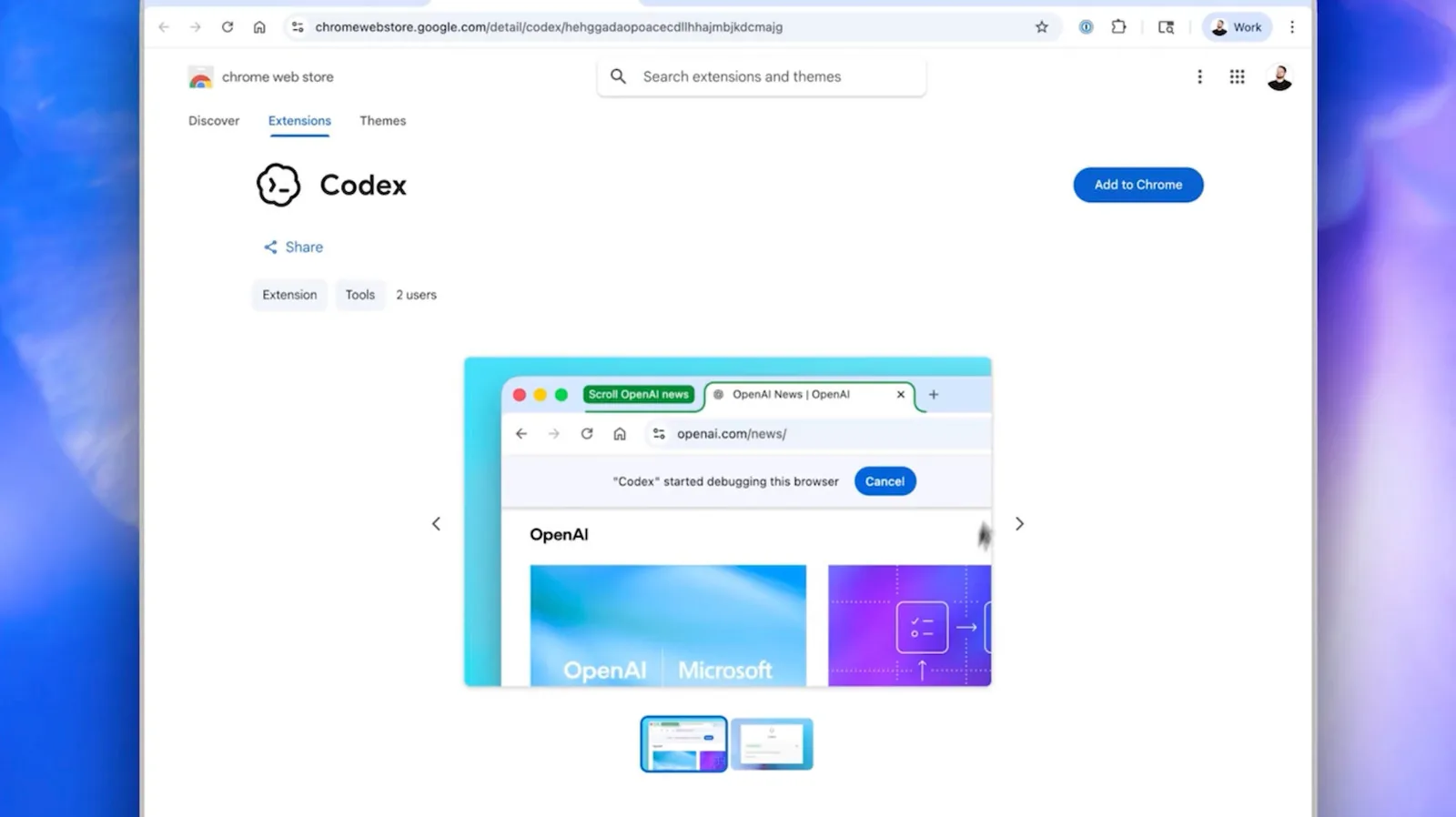
OpenAI has launched a new Chrome extension for its Codex AI platform, bringing advanced coding assistance directly into the web browser. This development allows users to test web applications, gather context from multiple open tabs, and utilize Chrome DevTools simultaneously with other tasks. The extension aims to make Codex more accessible to a wider audience beyond professional developers, recognizing that many daily computing activities occur within web browsers.
First introduced as a macOS application in February, Codex has seen continuous feature enhancements from OpenAI. The company has previously announced plans for a unified application that will integrate Codex with its popular ChatGPT chatbot and its proprietary web browser, Atlas. The new Chrome extension is compatible with both Windows and macOS operating systems, broadening its potential user base.
Expanding AI's Role in Everyday Computing
The introduction of the Codex Chrome extension signifies a strategic move by OpenAI to embed its powerful AI tools into the fabric of everyday digital workflows. While Codex has primarily been known for its capabilities in generating code and assisting developers, this browser integration could unlock new use cases. Imagine marketing professionals analyzing website performance, content creators testing interactive elements, or even students learning to debug web pages directly within their browser environment. This democratization of AI-powered development tools has the potential to lower the barrier to entry for technical tasks and foster innovation across various professions.
According to OpenAI, the extension is designed to seamlessly integrate with existing browser functionalities. This means users can continue browsing, researching, or working on other tasks while Codex operates in the background or assists with specific coding challenges. The ability to pull context from various tabs is particularly noteworthy, as it allows the AI to understand the broader user intent and provide more relevant suggestions or analyses. This feature could significantly streamline the process of debugging complex web applications or developing new features by providing the AI with a comprehensive understanding of the user's current project.
The move also highlights the growing importance of browser-based development environments. As web applications become increasingly sophisticated, the need for integrated tools that can operate within the browser has become paramount. OpenAI's Codex extension positions itself as a key player in this evolving landscape, offering a glimpse into a future where AI assistants are not just standalone applications but integral components of our digital tools. The company’s ongoing efforts to combine Codex with ChatGPT and its own browser, Atlas, suggest a larger vision for a cohesive AI-powered ecosystem that supports users across a wide spectrum of digital activities.