
New Proposal: Fold Ancient Hominins into Genus Homo
An anthropologist proposes merging Australopithecus and Paranthropus into the Homo genus, arguing that distinct traits are no longer valid for classification. The change aims for a more stable representation of human evolution.

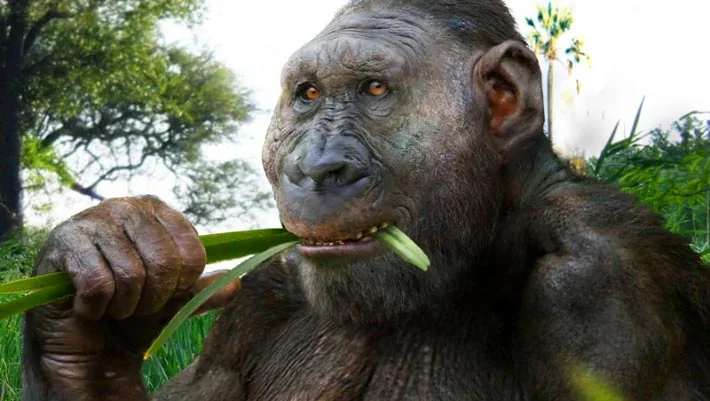
A new proposal from Monash University researcher Dr. Ian Towle suggests a significant reorganization of human evolutionary history, recommending the integration of ancient hominin fossils from the genera Australopithecus and Paranthropus into the existing genus Homo. Dr. Towle, affiliated with the Biomedicine Discovery Institute, argues that traditional classifications based on traits like brain size and tool use are becoming obsolete with recent fossil discoveries. He posits that a more accurate and stable representation of our complex evolutionary lineage can be achieved by expanding the genus Homo to encompass these earlier groups.
The current textbook understanding divides early hominins into three distinct genera: Homo, Australopithecus, and Paranthropus. However, Dr. Towle contends that this system no longer aligns with the growing body of fossil evidence and evolutionary analysis. "Recent discoveries are eroding the usefulness and accuracy of current classification," Dr. Towle stated in his research, published this week in the American Journal of Biological Anthropology. He further explained that the differences in behavior and ecology once used to separate these groups are proving increasingly difficult to maintain, suggesting they may not represent entirely distinct evolutionary branches.
Rethinking Evolutionary Boundaries
Dr. Towle's proposal challenges long-held assumptions about what defines our genus. For instance, the presence of tool use and larger brain sizes were once considered hallmarks of Homo. Yet, the discoveries of species like Homo naledi and Homo floresiensis, both characterized by smaller brains, have blurred these lines. Conversely, fossils such as Australopithecus garhi exhibit dental features more robust than some Paranthropus specimens, further complicating clear distinctions. "I propose expanding Homo to include these other groups to provide a more accurate and stable way to represent the complex evolutionary relationships revealed by the growing fossil record," Dr. Towle said.
The researcher also highlights that Australopithecus has often functioned as a taxonomic 'wastebasket' – a grouping that phylogenetic studies have shown to be non-monophyletic. This means it does not exclusively contain a single ancestor and all of its descendants, a key principle in modern biological classification. By consolidating these genera, Dr. Towle aims to eliminate the need for constant reclassification as new fossils emerge and our understanding deepens.
Drawing parallels with primate populations, Dr. Towle points to genetic studies of baboons and their relatives, which reveal extensive interbreeding between closely related genera. He suggests that hominin genera defined too narrowly in time, particularly within the last few million years, are susceptible to similar instability. His expanded Homo genus would stretch back approximately 4 to 5 million years, originating around the divergence point of Australopithecus anamensis. This redefinition also entails redefining the tribe Hominini as the pan-Homo clade, which includes both chimpanzees and humans' lineage, with a new subtribe, Hominina, designated specifically for the human branch. This approach seeks to encapsulate the dynamic and often non-linear nature of human evolution, acknowledging gene flow and shared ancestry more broadly.
While this classification shift may erase distinctions some researchers deem significant, particularly concerning the divergent evolutionary and dietary paths of Homo and Paranthropus, Dr. Towle believes it offers a clearer picture. "Reclassifying Australopithecus and Paranthropus species under the category of Homo will provide a more coherent understanding of our evolutionary history and avoid continual redefinition as we discover new fossils and learn more about our ancestors," he stated. The integration aims to create a more robust framework for understanding the intricate human family tree, acknowledging its complexities rather than relying on potentially arbitrary divisions. This shift, if adopted, could reshape how paleoanthropology interprets our species' deep past.