
Hibernation Study Challenges Memory Formation Theories
New research on mice in artificial hibernation suggests long-term memories rely on network connectivity patterns rather than strong individual neuron links, challenging established neuroscience principles.

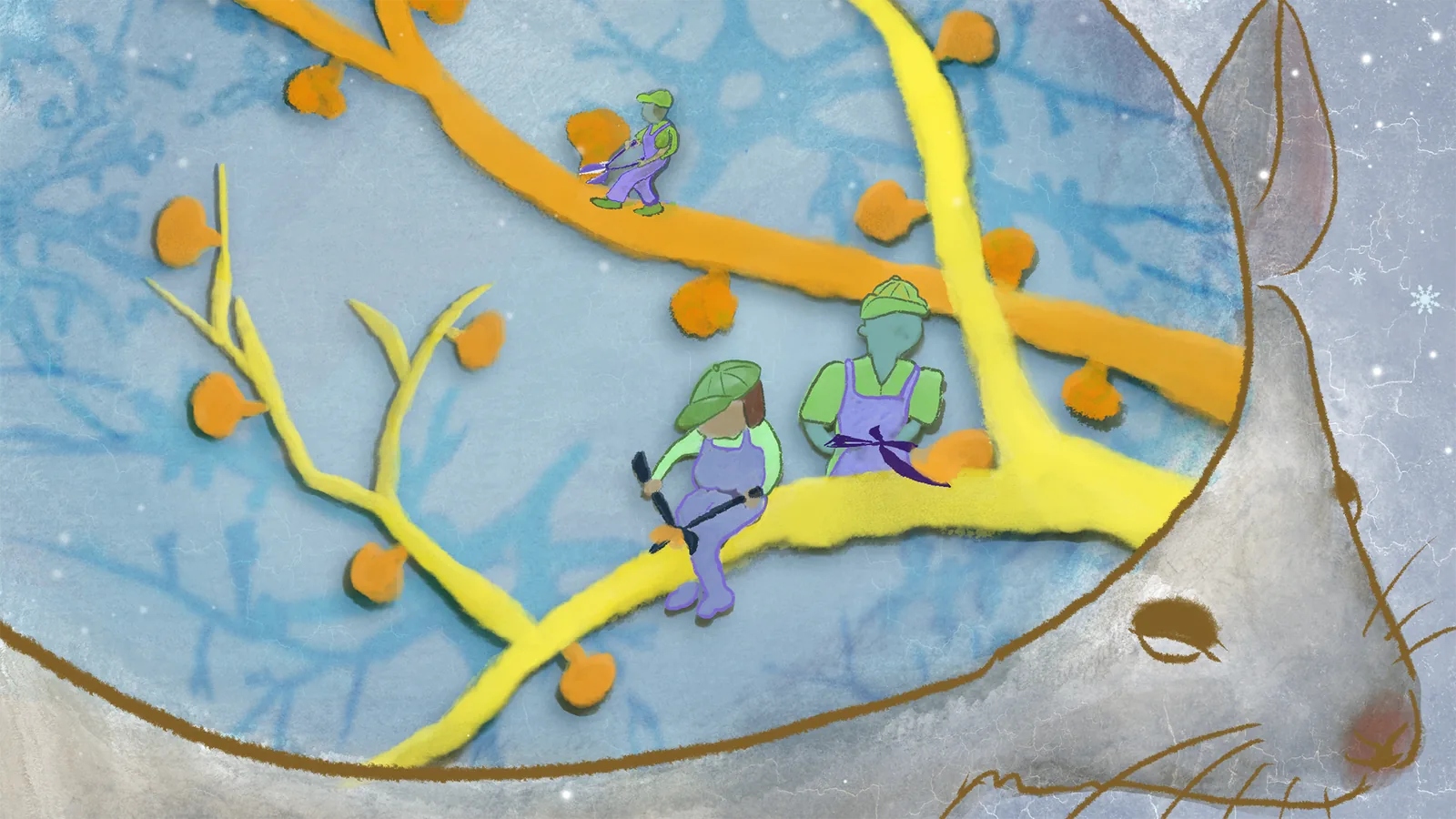
Long-term memories may be retained through a different brain mechanism than previously understood, according to a new study involving mice induced into artificial hibernation. Researchers discovered that lasting memories appear to depend on broader patterns of neural connectivity rather than the strength of individual synaptic connections, a finding that could reshape our understanding of memory storage.
The study, published on August 13, 2026, in the journal Science, investigated how memories persist in the brain despite significant structural changes. Scientists have long observed that during hibernation, animals' brains undergo shrinkage and a reduction in cell-to-cell connections as a metabolic energy-saving strategy. Despite this pruning, hibernating species such as alpine marmots and European ground squirrels are known to retain memories formed before their dormant periods, including recognition of familiar individuals and food locations.
Kazumasa Tanaka, head of the Memory Research Unit at the Okinawa Institute of Science and Technology and a co-author of the study, explained the significance of these observations. "This topological architecture of the broader network seems to be more important" for memory retention than the robust, individual connections typically emphasized in memory formation, Tanaka stated. He noted that while many studies support the idea that long-term potentiation (LTP) – the strengthening of synaptic connections – is crucial for forging new memories, its role in long-term retention might be less critical.
Rethinking Memory Consolidation
The traditional neuroscience model suggests that memories are consolidated through LTP, a process where frequently communicating neurons form stronger bonds. This is often summarized by the adage, "Neurons that fire together, wire together." However, recent research indicates that the physical representation of memories in the brain is dynamic and can "drift" over time, with original LTP-enhanced connections potentially weakening while the memory itself remains intact. The new study sought to clarify how this persistence is achieved.
Researchers focused on the hippocampus, a key brain region for memory processing, and specifically examined episodic memories—those tied to specific events and personal experiences. These memories are initially formed in the hippocampus before being transferred to other brain areas for long-term storage, a process that can take weeks or months. Some theories propose that the contextual details of memories remain embedded in the hippocampus indefinitely.
In their experiments, the research team first conditioned laboratory mice to associate a specific environment with a mild electric shock and to locate sugar pellets in a maze. Subsequently, they induced a state of artificial hibernation in these mice for two days by activating specific neural pathways. Within minutes of entering this state, significant remodeling of the brain began. Tanaka reported that "more than half of the synapses were already gone" within 24 hours, indicating a dramatic reduction in neural connections.
Remarkably, despite this extensive synapse loss, the mice demonstrated intact memories of their prior learning experiences. Upon re-entering normal conditions, they exhibited the learned fear response in the shock-associated environment and navigated the maze to find the food pellets with the same proficiency as before hibernation. "To compare the animals with or without hibernation, their behaviors are not different whatsoever," Tanaka confirmed.
To understand this preservation, the team contrasted the hibernating mice with a control group subjected to long-term anesthesia and a drug that inhibits synaptic strengthening. This control group also experienced substantial synapse loss, but critically, their memories did not endure. The key difference, scientists found, lay in the resilient clusters of synapses that survived the pruning process during hibernation. These spared connections often served as hubs, where a single neuron connected to multiple neighboring cells, or where multiple neurons converged on a single dendritic spine, indicating a preserved network architecture.
"That unique structure is preserved during hibernation," Tanaka stated. "Under anesthesia, we found they're completely disrupted." The size of individual dendritic spines did not appear to be a determining factor; rather, it was the pattern of clustering and broad connectivity that seemed to be preserved.
This research opens new avenues for exploring how memories are stored and retrieved. Future work by the scientists aims to characterize these resilient synaptic clusters at a molecular level and to investigate methods for manipulating their structure to observe subsequent effects on memory. Understanding how the brain preferentially preserves these network patterns while eliminating numerous other connections is a primary goal. Beyond neuroscience, these findings could inform the design of more robust data storage systems in artificial intelligence and computing. Ultimately, the study offers a significant advancement in comprehending the dynamic nature of memory traces within the brain and how they can adapt without compromising essential recollections.