
Scientists Explore How Chemistry Became Biology and the Origin of Life
Researchers are investigating the transition from chemistry to biology, revisiting historical experiments and modern theories on how life began on Earth.

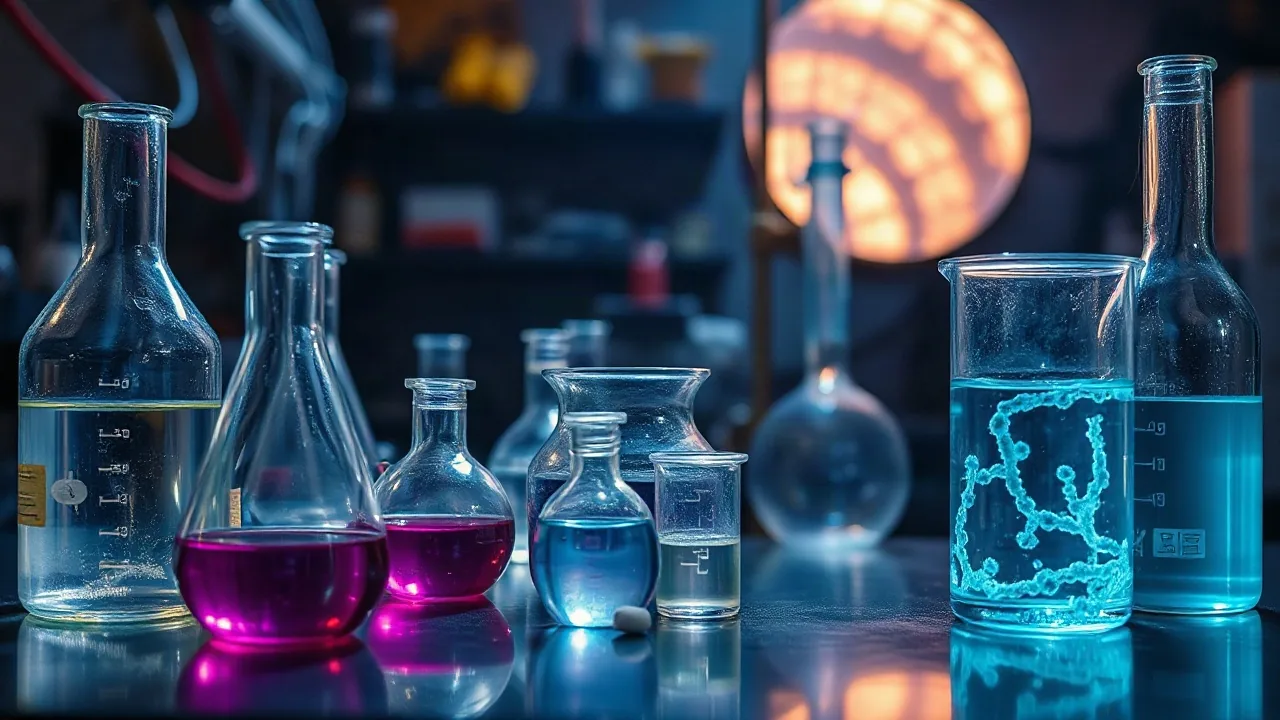
Researchers are taking a fresh look at the profound transition from chemical compounds to living systems, exploring the roughly 200-million-year window after Earth became habitable. Around 4.6 billion years ago, a cloud of gas and dust collapsed to form our solar system. Following a period of heavy meteorite bombardment, Earth cooled, and water pooled into vast, acidic oceans beneath carbon dioxide skies. Eventually, molecules formed self-sustaining loops, paving the way for cellular life to emerge, persist, and diversify across the planet.
For decades, scholars across philosophy, religion, and science have probed these beginnings. By the mid-20th century, the rise of molecular biology and genetics led experts to clash over which specific molecules initiated life, prompting some to describe the field as experiencing a productive crisis. “There’s nothing more exciting for a scientific field than a moment of crisis,” said Betül Kaçar, an astrobiologist and evolutionary biologist at the University of Wisconsin, Madison. “That’s when I think breakthroughs happen.”
The Groundbreaking 1952 Miller-Urey Experiment
A major turning point occurred in 1952, when Stanley Miller, then a graduate student at the University of Chicago, built a glass apparatus to simulate primitive planetary conditions. Inspired by a lecture given by Nobel Prize–winning chemist Harold Urey, Miller tested the hypothesis that early atmospheric gases combined with energy sources like lightning could produce organic building blocks. His setup used water to simulate an ocean and a mixture of methane, ammonia, water vapor, and hydrogen to represent the atmosphere. Electric sparks and heat produced a dark brown liquid containing amino acids.
The experiment demonstrated that life’s fundamental ingredients could form under early planetary conditions. “It was paradigm-shifting,” said Ramanarayanan Krishnamurthy, an organic chemist at Scripps Research. “It really changed the field and gave rise to what we call prebiotic chemistry.” Christophe Danelon, a synthetic biologist at the Toulouse Biotechnology Institute in France, added, “This is the first experiment in the field showing that these deep questions on the origins of life were not only the realm of metaphysics, philosophy, and religion.”
Following the discovery of the helical structure of DNA by Francis Crick and James Watson in 1953, scientific focus heavily favored genetics. Today, modern investigators are combining synthetic biology, chemistry, and evolutionary tracing to better understand how ancient molecules organized into genomes, metabolisms, and cellular compartments.