
Homo Erectus Teeth Proteins Reveal Evolutionary Links to Modern Humans
New analysis of ancient Homo erectus teeth from China has uncovered protein evidence linking the early human species to Denisovans and, indirectly, to modern Homo sapiens. This breakthrough sheds light on a complex human evolutionary tree.

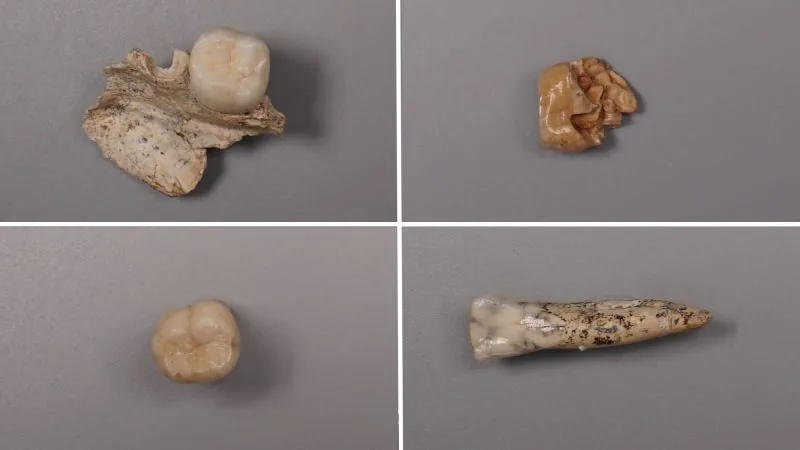
Scientists have successfully extracted ancient proteins from six Homo erectus teeth found in China, dating back approximately 400,000 years. This groundbreaking analysis, published in the journal Nature, provides the first molecular evidence connecting Homo erectus with later human species, including our own, Homo sapiens, and offers crucial insights into human origins. The findings help untangle the evolutionary relationships of early humans, a group long characterized by scarce genetic material.
Homo erectus, an ancient human relative known for being the first to venture out of Africa, roamed across continents for nearly two million years. Despite their widespread presence, the limited preservation of their fossils has made obtaining informative molecular data, such as DNA, exceedingly difficult. "This is a major step forward in tying together the broken branches of our human evolutionary tree," said Ryan McRae, a paleoanthropologist at the Smithsonian National Museum of Natural History, who was not involved in the study. He added, "Homo erectus has long been a bit of an enigma."
The research team, led by Chinese geneticist Fu Qiaomei from the Chinese Academy of Sciences, utilized a novel, less invasive technique involving acid etching to sample the enamel from the unearthed teeth. Previous attempts to extract DNA from animal fossils of the same age and location proved unsuccessful, prompting the focus on more robust protein analysis. Proteins, composed of amino acid sequences, are significantly more durable than DNA and, while containing less detailed information, can still illuminate an organism's evolutionary history.
Uncovering Genetic Connections
The analysis revealed that the six teeth shared two distinct amino acid variants, one of which was previously unknown. This shared characteristic suggested the teeth belonged to the same species. More significantly, the second variant was also found in Denisovans, an enigmatic group of ancient humans, and in some present-day human populations. This overlap suggests that Denisovans may have interbred with Homo erectus, and later, Denisovans interbred with Homo sapiens. This process, known as admixture, explains the traces of Denisovan DNA found in some modern humans today, a phenomenon similar to the Neanderthal ancestry present in many contemporary populations.
Eduard Pop, a research scientist at Naturalis Biodiversity Center, noted that geneticists had theorized Denisovans possessed ancestry from an unidentified "ghost lineage." "This study strengthens that link," Pop stated via email, suggesting that populations related to East Asian Homo erectus may have genetically contributed to Denisovans and, consequently, indirectly to some modern humans. "It fits with a view of human evolution in Asia as a network of populations that sometimes overlapped and interbred, rather than a set of clean, isolated branches," he added.
The protein analysis also allowed researchers to determine the sex of the fossils, identifying five males and one female based on a sex-specific marker on the Y chromosome within a tooth enamel gene. While previous work in 2020 extracted proteins from a Homo erectus fossil in Georgia, it did not provide the same level of detail regarding its relationship to other hominins.
The fossils originated from three key sites in China: Zhoukoudian, Hexian, and Sunjiadong. China has a rich history of Homo erectus discoveries, including the famed "Peking Man" fossils excavated in the early 20th century. The specific tooth from Zhoukoudian used in this study was recovered during excavations between 1949 and 1951.
Homo erectus possessed body proportions similar to modern humans, standing upright with a large face and prominent brow ridge. Fossil evidence indicates their existence spanned over 1.5 million years, making them the longest-surviving human relative. However, some researchers, like McRae, propose an alternative to the interbreeding hypothesis. Given the 100,000-year gap between the oldest known Denisovan fossil and the Chinese Homo erectus specimens, he suggests an ancestor-descendant relationship might be possible, with Denisovans potentially evolving directly from Homo erectus. "Transmission of the amino acid variant through interbreeding is certainly possible, I would even say plausible, but archaeological evidence could help confirm a closer connection between the two groups," McRae commented.
Ultimately, Fu acknowledged that the information derived from tooth enamel proteins is not granular enough to definitively establish the precise relationship between Homo erectus and other human species. "Only DNA would really provide that granular information," she stated. Nonetheless, Fu described the study's findings as a significant advancement, opening new avenues for future research into our complex human evolution.