
Pigeon Navigation: Study Suggests Liver Cells Guide Flight
New research indicates pigeons may rely on specialized cells in their livers, rich in iron, to detect Earth's magnetic field and navigate long distances. The findings challenge previous theories on avian navigation.

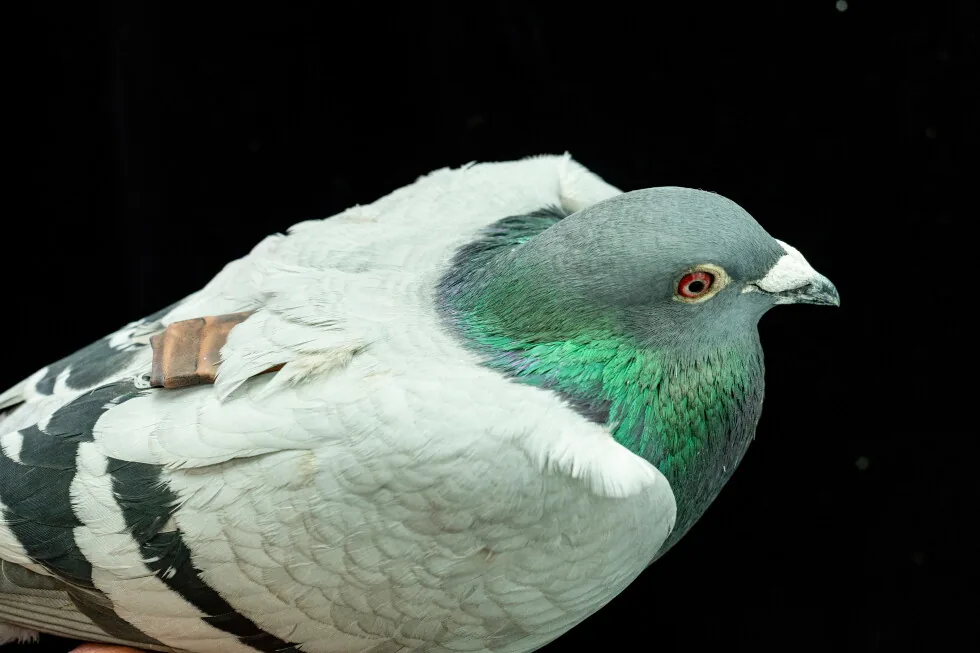
A groundbreaking study published in the journal Science suggests that the remarkable navigational abilities of pigeons might be linked to their liver, specifically to specialized immune cells containing iron. For centuries, humans have relied on pigeons for communication, and scientists have long sought to understand how these birds achieve such precise long-distance flights. This new research, led by scientists at the Max Planck Institute of Animal Behavior and the University of Bonn, points to a surprising organ playing a crucial role in their internal compass.
Previous theories about pigeon navigation have focused on various mechanisms, including light-sensitive molecules in their eyes or sensory organs in their beaks and inner ears that detect magnetic fields. However, the exact biological basis for this magnetic sense has remained elusive for nearly a century. The latest findings introduce a novel hypothesis: that macrophages, a type of immune cell abundant in the pigeon's liver and known for processing iron from red blood cells, are key to sensing direction.
Researchers observed that when these specific iron-rich immune cells were temporarily removed from pigeons, the birds struggled significantly to find their way home. This observation was particularly pronounced on overcast days, suggesting that the magnetic sense is complemented by solar navigation when the sun is visible. "The magnetic sense has been this mystery for almost 100 years," stated Martin Wikelski, a researcher at the Max Planck Institute, highlighting the long-standing scientific puzzle.
Unraveling the Liver's Magnetic Role
The study's co-author, Clivia Lisowski from the University of Bonn, explained that these immune cells are situated near nerve fibers within the liver. This proximity is hypothesized to be the pathway through which magnetic field information is transmitted to the pigeon's brain, effectively creating a biological GPS. "I would never have guessed it, but once it was explained to me, it makes sense," commented Albert Kao, a behavioral ecologist at the University of Massachusetts Boston, who was not involved in the study but found the findings compelling.
The implications of this discovery could extend beyond pigeons. Scientists speculate that other animals, such as mice and various bird species, might employ similar iron-dependent mechanisms for magnetic sensing. However, independent experts urge caution, emphasizing the need for further research to definitively confirm how these signals are transmitted and utilized for navigation in different species. The study identified the strongest magnetic signal in the liver, but similar immune cells are also present in other organs like the beak and spleen, hinting at a more complex system.
An accompanying editorial by Simon Spiro and Hal Drakesmith raised the possibility that pigeons may not rely on a single navigational method. They proposed that birds might utilize a repertoire of sensing techniques, switching between magnetic cues and celestial navigation based on environmental conditions and the specific demands of their journey. This redundancy would offer a significant survival advantage, ensuring birds can always find their way, even in challenging circumstances. The integration of these findings with existing knowledge of avian biology opens new avenues for understanding animal migration and sensory perception. The research highlights the intricate biological adaptations that enable animals to thrive in diverse environments.