
Rethinking Human Family Tree: New Fossils Challenge Old Classifications
New fossil discoveries and genetic analysis suggest the traditional classification of human ancestors into genera like Homo, Australopithecus, and Paranthropus may no longer accurately reflect evolutionary relationships.

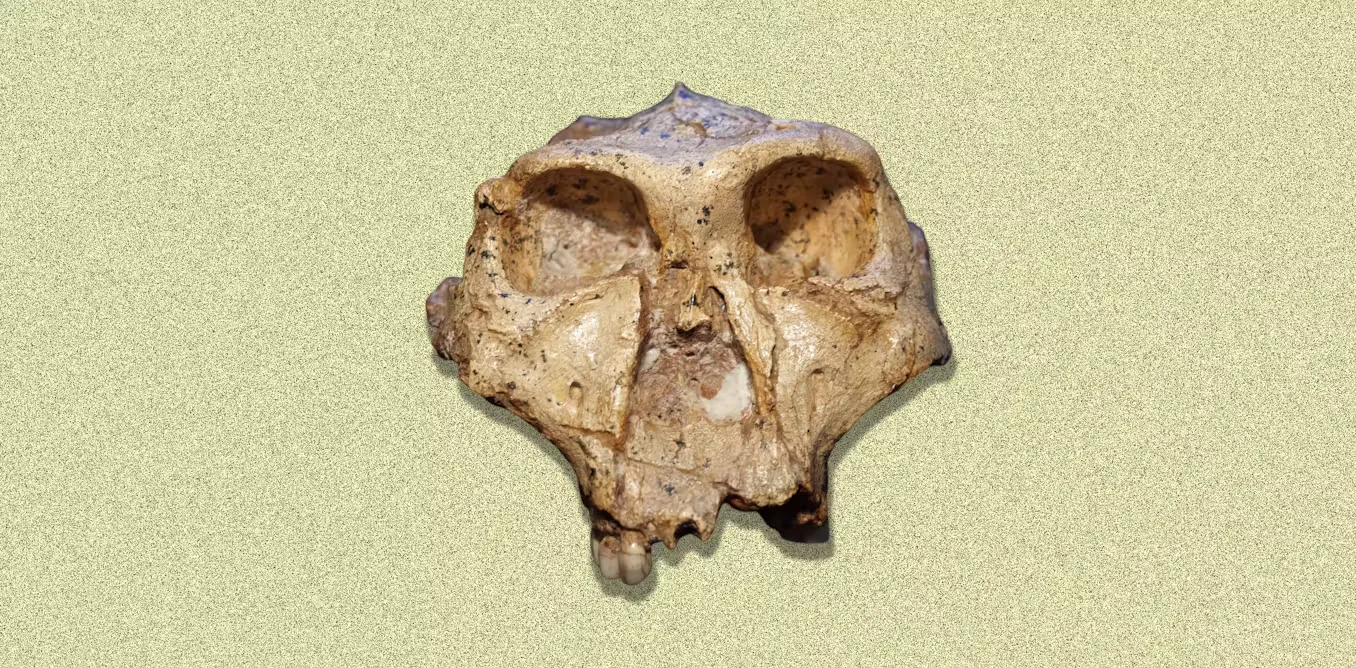
A re-evaluation of human evolutionary classification is underway, spurred by new fossil finds and advancements in genetic analysis. The long-accepted division of our ancient relatives into three main genera—Homo, Australopithecus, and Paranthropus—is being challenged as current evidence suggests these groupings may not represent true evolutionary lineages, or "clades." This potential revision, detailed in a new paper in the American Journal of Biological Anthropology, argues that the established system is due for an overhaul to better reflect the complex reality of hominin origins.
For decades, scientists have organized human ancestors using these genera, the taxonomic rank directly above species. For instance, in Homo sapiens, Homo represents the genus and sapiens the species. However, recent discoveries are blurring the lines that once defined these categories. The genus Australopithecus, which famously includes the "Lucy" skeleton, is a prime example. Large-scale analyses increasingly indicate that it does not form a single, coherent evolutionary branch. Instead, its definition appears rooted more in shared lifestyle or physical traits than in common ancestry. Modern fossils reveal that characteristics such as brain size, gait, diet, and behavior do not align neatly with the proposed family tree structure.
Similarly, the defining traits once attributed to the Homo genus are also being questioned. Features like larger brains, tool use, dietary shifts, and full-time bipedalism are proving less exclusive than previously believed. Species such as Homo naledi and Homo floresiensis (often called the "hobbit" species) exhibit smaller brain sizes and other characteristics typically considered "primitive," alongside traits more commonly associated with other Homo species. This phenomenon, known as mosaic evolution, describes how different parts of the body can evolve at varying rates and directions. Traits can also reappear independently in different lineages facing similar environmental pressures. Consequently, identifying a single feature exclusive to all Homo species that isn't also found in some Paranthropus or Australopithecus species has become increasingly difficult. Early members of the Homo genus, as currently defined, include small-brained species that may have originated from distinct Australopithecus lineages, further complicating the picture.
Challenges to Traditional Genus Definitions
Even Paranthropus, often considered the most physically distinct of the three genera due to its robust jaws and large molars, faces scrutiny. These features were once interpreted as adaptations for cracking hard foods like nuts. However, emerging evidence suggests that the eastern and southern African species within this group had differing diets and did not heavily rely on such foods. Some researchers propose that Paranthropus might not represent a single lineage but rather two independent regional groups that independently evolved enlarged teeth, meaning it too might not be a true clade, though many scientists still consider it the most likely candidate for a genuine group among the three. The cumulative evidence from anatomical, behavioral, and ecological perspectives offers little justification for maintaining these three distinct genera.
The implications of this potential reclassification extend beyond academic semantics. When genus names do not accurately reflect evolutionary relationships, they can obscure patterns of descent, exaggerate differences between groups, and perpetuate outdated notions of "primitive versus advanced." As the fossil record expands and methods for reconstructing evolutionary histories improve, this discrepancy between classification and reality becomes harder to ignore. One proposed solution involves consolidating Australopithecus and Paranthropus into a single, larger Homo genus. This would create a classification that aligns with a complete evolutionary branch, resolve the "not a real clade" issue, and better accommodate the history of interbreeding between closely related lineages over the past few million years. Such a change, however, would mean sacrificing some of the intuitive distinctions researchers currently rely on, particularly the ecological and physical uniqueness attributed to Paranthropus and later, large-brained Homo species.
The fossil evidence increasingly points to a significant evolutionary radiation beginning around 4 million years ago, characterized by substantial variation in diet, brain size, locomotion, and tooth morphology among groups. This complex period, marked by migration and recurrent bursts of trait evolution, might be best understood within a single, encompassing genus. Our everyday language also reflects a transition in understanding our place within the primate family. Humans were recognized as great apes (belonging to the family Hominidae) only in recent decades, yet the common term "ape" often excludes humans in casual conversation. Similarly, "monkey" is frequently perceived as a distinct evolutionary group, when in reality, New World monkeys are more distantly related to Old World monkeys and apes than the latter two are to each other. The common grouping of "monkeys, apes, and humans" can lead to misconceptions about our evolutionary connections. As science embraces taxonomy that more accurately reflects genuine evolutionary relationships, it may be time for our language and our self-perception to catch up.