
Scientist Discovers New Amoeba Species in Budget Motel Lab
A biologist transformed a modest motel room into a functional laboratory, leading to the groundbreaking discovery of two previously unknown species of microscopic amoebae.

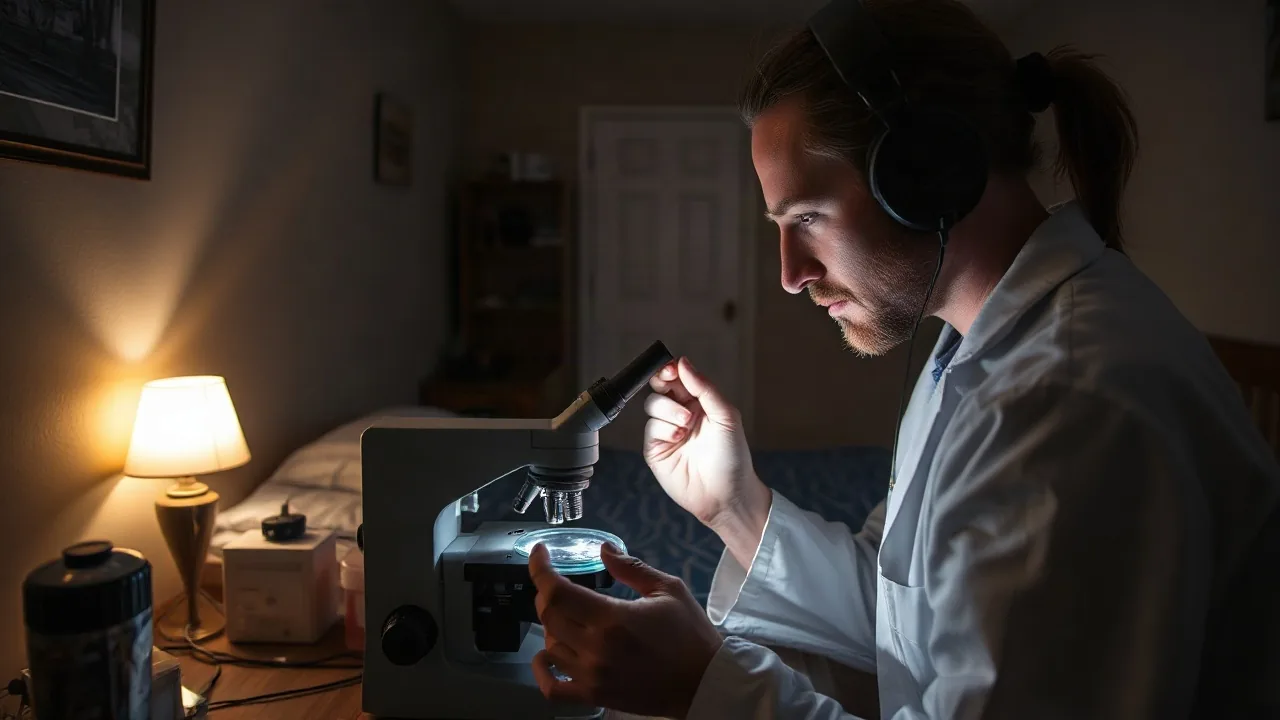
In an unexpected twist on scientific exploration, a dedicated biologist has successfully identified two new species of microscopic amoebae, with her research conducted not in a high-tech facility, but within the confines of an $80 motel room. The remarkable discovery highlights a resourceful approach to scientific fieldwork and underscores that groundbreaking findings can emerge from unconventional settings.
Dr. Lena Hansen, a postdoctoral researcher specializing in protistology, found herself in need of a temporary base of operations during an extended fieldwork expedition in the Pacific Northwest in late 2025. Facing logistical challenges and budget constraints, she opted to rent an affordable motel, which she then ingeniously repurposed as a makeshift laboratory. Equipped with essential tools such as a portable microscope, sterile collection vials, and nutrient agar, Dr. Hansen began analyzing samples collected from local soil and water sources.
The initial findings were promising, but it was through meticulous observation and culturing that she identified two distinct organisms that did not match any known species in existing scientific databases. "It was exhilarating," Dr. Hansen stated in an interview. "You dedicate so much time to searching for the unknown, and to find not one, but two new species in such a humble setting felt truly surreal. It proves that passion and perseverance can overcome significant resource limitations." The species, tentatively named *Amoeba motelensis* and *Amoeba pacificus*, exhibit unique morphological characteristics and genetic markers. *Amoeba motelensis* is distinguished by its unusually rapid pseudopod formation, while *Amoeba pacificus* displays a distinctive feeding appendage not observed in related genera. Further analysis, including genetic sequencing, was conducted using portable equipment and later confirmed through collaboration with a university research lab. This discovery is particularly significant for the field of biotech and health, as understanding microbial diversity is crucial for developing new treatments and biotechnological applications.
Resourcefulness in Scientific Research
Dr. Hansen's experience brings to light the often-overlooked challenges faced by field scientists, particularly those working with limited funding. Traditional laboratory setups can be prohibitively expensive, requiring specialized infrastructure and maintenance. However, innovations in portable scientific equipment have made it increasingly feasible to conduct sophisticated analyses outside of established institutions. This trend is also seen in other scientific disciplines, from astronomy with portable telescopes to environmental science with mobile sensor networks.
The discovery has drawn praise from the scientific community, with many commending Dr. Hansen's ingenuity and dedication. Dr. Alistair Finch, a senior biologist at the National Science Foundation, commented, "Dr. Hansen's work is an inspiration. It's a powerful reminder that groundbreaking discoveries often stem from scientific curiosity and a deep commitment to the research, rather than solely from state-of-the-art facilities. This case could pave the way for more flexible and cost-effective approaches to specimen collection and preliminary analysis in various fields."
Moving forward, Dr. Hansen plans to publish her findings in a peer-reviewed journal and hopes her story encourages other researchers to pursue their scientific passions, regardless of their immediate resources. She is also seeking further funding to conduct more in-depth studies on the ecological roles and potential applications of the newly discovered amoeba species. The implications for biotechnology and our understanding of microbial ecosystems are substantial, potentially leading to new insights in areas ranging from environmental remediation to medical research. The discovery of these new species underscores the vast, unexplored biodiversity that still exists on Earth.