
New Patterns Fool Cameras, Block Surveillance Detection
A cybersecurity professional has developed 'adversarial' patterns designed to prevent surveillance cameras and license plate readers from detecting objects and people. Demonstrated at Def Con, these patterns aim to restore privacy in an era of widespread algorithmic surveillance.

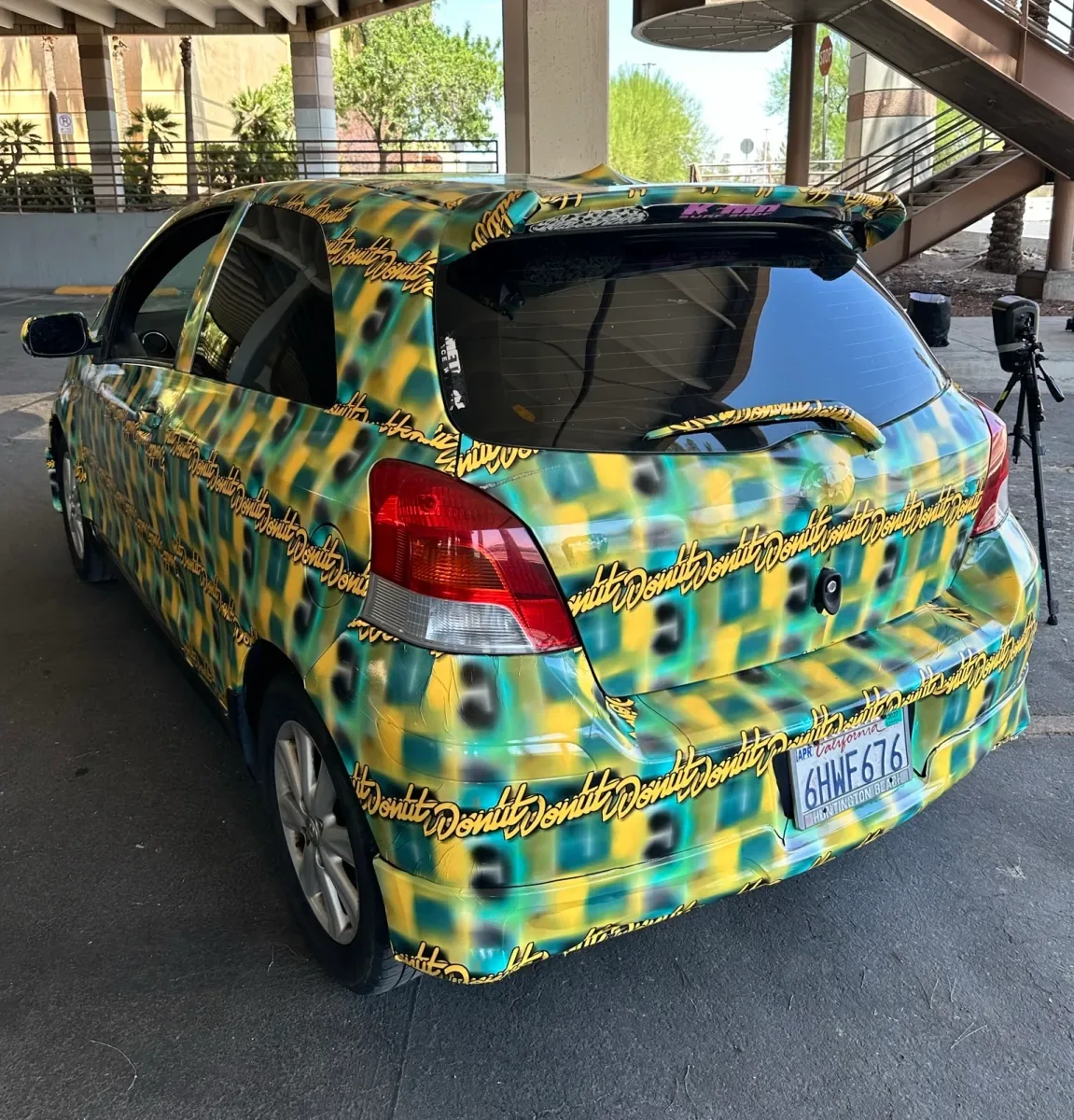
In an effort to counter the pervasive reach of automated surveillance, cybersecurity professional Bill Swearingen has developed a series of computer-generated patterns capable of fooling common detection algorithms. These patterns, when applied to clothing or objects, can prevent license plate readers and surveillance cameras from identifying what they cover, effectively making them invisible to algorithmic detection systems.
Swearingen's project, dubbed 'noRecognition,' represents a significant step in personal privacy technology. Unlike systems that merely block recording, these patterns actively scramble the object recognition capabilities of cameras. This means that while a camera might still capture footage, the underlying algorithms will not flag or identify the patterned subject, rendering it a 'needle in a haystack' for automated analysis. Swearingen presented his findings and a successful real-world test at the Def Con cybersecurity conference in Las Vegas on Friday.
"Privacy is a fundamental right," Swearingen stated in a recent interview. He views these patterns as a means for individuals to 'opt-out of being tracked' in public spaces where surveillance is increasingly common. The inspiration for the project stemmed from Swearingen's personal unease about the dense network of cameras in his hometown and concerns that such widespread surveillance could deter citizens from exercising their rights to free expression, such as attending protests.
Developing a Digital Camouflage
Swearingen, who co-founded the cybersecurity meet-up SecKC in Kansas City, explained that his work builds upon existing research into countering facial recognition and other detection technologies. He began by creating a test lab designed to incrementally defeat various open-source video camera detection algorithms. Over the past year, he leveraged increased computing power and community hardware contributions to refine these patterns.
The project evolved into a reinforcement learning model, a self-training system that continuously tested and improved patterns against specific algorithms. "In simple terms, I essentially taught my model 'how to paint'," Swearingen explained. The model iteratively learned from failures, repeatedly adjusting patterns until they successfully evaded detection. This iterative process allowed the system to generate patterns that effectively fool 11 different open-source detection algorithms, including those used by Flock license plate readers, Axon body-worn cameras, and potentially Clearview AI systems.
The efficacy of Swearingen's 'adversarial' patterns was demonstrated at Def Con. In a collaboration with Donut Media, a 2009 Toyota Yaris was covered in one of the latest patterns. The test aimed to see if the vehicle would be undetected by a Flock camera. Swearingen confirmed the pattern's effectiveness, noting that while the wheels presented a minor challenge, the overall demonstration proved the concept. A video of this demonstration is expected to be released soon.
The success at Def Con marks a significant milestone, proving that evading algorithmic detection in public spaces is achievable. Swearingen plans to make these patterns accessible to the public, with initial merchandise like T-shirts and hoodies planned through a crowdsourcing campaign. Future applications could include vehicle wraps. He emphasized that the patterns are designed for high resolution and aesthetic appeal, working effectively from a distance. To prevent camera manufacturers from quickly developing countermeasures, Swearingen is withholding his most advanced patterns from public release online, while his models continue to generate new, improved designs.