
EV Charging Infrastructure Shapes Urban Mobility Strategy
Rapid expansion of EV charging networks is reshaping how cities plan transportation. In 2026, infrastructure investment and smart technology integration are becoming decisive factors in urban mobility.

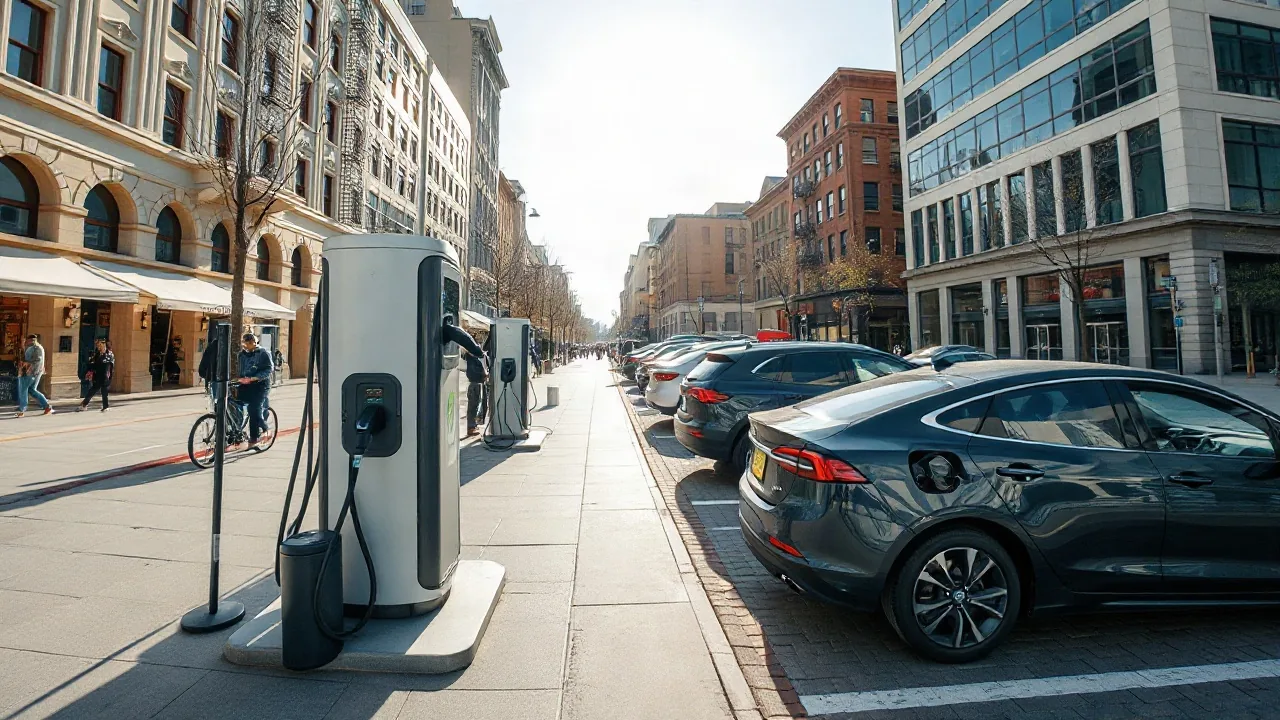
Los Angeles approved a plan in August 2026 to install 10,000 new public charging stations by 2030, marking a watershed moment for American urban infrastructure. The announcement signals that EV charging infrastructure has moved from a niche concern to a central pillar of city planning, forcing municipalities nationwide to reckon with the hardware demands of transportation electrification.
The shift reflects a hard reality: without adequate charging networks, electric vehicles cannot become the dominant mode of transport in cities. Apartment dwellers, delivery fleets, and commuters without private garages all depend on public charging to make EV ownership viable. This bottleneck has become one of the most tangible barriers to rapid adoption across the United States.
According to data from the U.S. Department of Energy, the nation has approximately 58,000 public charging outlets as of September 2026, up from 42,000 in 2024. Despite this growth, demand continues to outpace supply in dense urban corridors, where a single charger may serve hundreds of vehicles daily.
Technology and Integration Drive the Next Phase
Cities are moving beyond simple plug-and-charge stations toward integrated smart cities infrastructure. Real-time availability mapping, dynamic pricing, and grid-balancing software now connect chargers to broader energy networks, allowing utilities to manage peak demand and stabilize the electrical grid.
Dr. Sarah Chen, senior analyst at the Transportation Research Institute, observed that "the charging network is becoming a distributed energy asset, not just a consumer convenience. Cities that treat it as part of their grid architecture will have enormous advantages in managing renewable energy integration and peak capacity." This dual purpose—transportation enabler and grid stabilizer—has attracted substantial municipal and private investment.
Major innovations now appearing in city deployments include:
- Ultra-fast charging hubs capable of delivering 80 percent charge in 20 minutes, enabling taxi and delivery fleets to stay operational
- Integrated solar canopies and battery storage at charging stations, reducing grid strain during peak hours
- AI-powered predictive systems that route vehicles to available chargers based on real-time congestion data
- Subscription and pay-per-use models that bundle charging with parking, reducing administrative friction
San Francisco and Miami have launched pilot programs combining chargers with autonomous vehicle hubs, creating coordinated mobility ecosystems. These experiments test whether charging infrastructure can anchor broader urban mobility strategies rather than function in isolation.
Equity and Access Remain Persistent Challenges
The rapid buildout of chargers in affluent neighborhoods has widened equity gaps. Lower-income residents, who depend more heavily on public transportation and shared vehicles, often lack reliable charging access in their areas. Federal funding mechanisms, including grants from the Inflation Reduction Act, now attempt to prioritize underserved communities, but implementation remains uneven.
Philadelphia's Office of Transportation and Infrastructure released a report in July 2026 highlighting that charging stations are clustered in downtown and high-income residential zones, while outer neighborhoods have minimal coverage. This spatial inequality directly correlates with EV adoption rates: affluent zip codes show 12 percent EV market share, versus 2 percent in lower-income areas.
Several cities are testing solutions. Houston is installing 500 chargers in rental apartment complexes at no cost to residents through a municipal subsidy program. Denver has mandated that all new parking structures include charger-ready electrical conduit, reducing future retrofit costs. These approaches suggest that policy design, not just capital availability, shapes equitable access.
The challenge extends to commercial fleets. Sustainable transport adoption for delivery and logistics companies requires depot-level charging infrastructure that many municipalities have yet to develop. Companies like Amazon and UPS are building private charging networks, but coordinating public and private investment remains fragmented.
Grid Readiness and Power Capacity
As charging networks expand, utilities face a parallel crisis: aging electrical infrastructure cannot always support the new load. A widespread charger installation campaign can overload neighborhood substations, requiring costly grid upgrades that fall outside traditional charging operator budgets.
The National Renewable Energy Laboratory published analysis in June 2026 estimating that the U.S. electrical grid will require approximately $35 billion in upgrades by 2030 to support widespread EV charging at current growth rates. This cost is not trivial and has slowed municipal deployment in areas with aging infrastructure, particularly in the Northeast and Midwest.
Forward-thinking municipalities are bundling charging buildouts with grid modernization projects. Austin, Texas coordinated its recent charger expansion with smart-meter installation and demand-response programs, securing utility cost-sharing and reducing net taxpayer burden. The model has drawn interest from similar-sized cities nationwide.
Future of transport outcomes will depend partly on whether cities can solve this coordination problem. Chargers without reliable power supply, or power infrastructure without charging density, represent incomplete solutions that undermine each other's effectiveness.
By 2026, the debate has shifted from whether EV charging infrastructure matters to how quickly cities can deploy it equitably and how effectively they can integrate it with energy systems. The Los Angeles decision to commit to 10,000 new stations reflects a growing consensus that infrastructure is no longer optional—it is foundational to urban mobility strategy.