
Antarctic Sea Ice Decline Linked to 'Triple Whammy' of Climate Chaos
Scientists have identified a 'triple whammy' of intensifying winds and warming ocean waters as the cause behind Antarctica's dramatic sea ice decline since 2015. The phenomenon has significant implications for global climate stability.

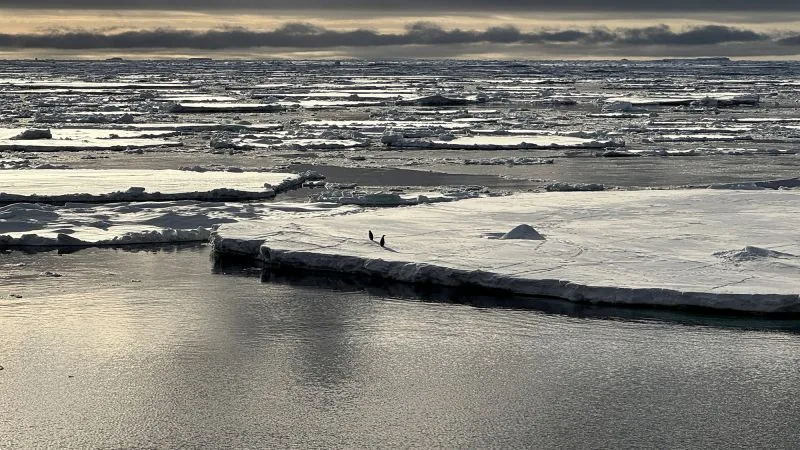
Scientists have pinpointed a combination of intensifying winds and warming ocean waters as the primary drivers behind the significant decline in Antarctic sea ice, a phenomenon they describe as a 'triple whammy' of climate chaos. The dramatic shift, which began around 2015, has seen the continent's sea ice move from a state of relative stability to a steep downward trend, reaching record lows in recent years and potentially impacting global climate regulation.
The study, published in the journal Science Advances, reveals a cascading series of events that have destabilized the ocean surrounding Antarctica. This region, once thought to be insulated from rapid ice melt, has experienced unprecedented losses. In 2023, sea ice extent dropped to just 691,000 square miles, an area larger than Greenland compared to historical averages. While early 2024 saw a slight rebound, overall levels remain among the lowest in nearly five decades of record-keeping.
Aditya Narayanan, a research fellow in physical oceanography at the University of Southampton and a study author, explained that the chain of events began decades ago with strengthening westerly winds. "These winds have been linked, in part, to the increase of planet-heating pollution from burning fossil fuels, as well as the hole in the ozone layer above the continent," Narayanan said. Initially, these winds helped cool the surface ocean, but over time, a slower, deeper response took hold.
A Cascade of Warming Processes
Around 2015, the intensified winds began pulling relatively warm, salty water from the ocean depths to the surface. This influx of heat directly contributed to the melting of sea ice. Simultaneously, the increased salt content at the surface made the water denser, altering ocean stratification and facilitating further heat transfer upward. This marked the second phase of the 'triple whammy'.
The third phase emerged around 2018, trapping the region in a detrimental cycle. Less sea ice meant that the surface ocean waters remained warmer and saltier, hindering the formation of new ice. "These three phases show how long-term changes driven by climate change can trigger a cascade of processes that push the system toward a prolonged state of low sea ice," Narayanan added.
The research also highlighted regional differences, noting that while East Antarctica's sea ice retreat is largely driven by deep ocean heat, West Antarctica sees a greater atmospheric influence, with warm air carrying clouds that trap heat near the ocean surface. This complex interplay of atmospheric and oceanic factors underscores the intricate nature of climate change impacts.
The consequences of this declining sea ice extend far beyond Antarctica. As the ice vanishes, it exposes coastal ice sheets and glaciers to warmer ocean waters and wave action, accelerating their melt and increasing the risk of calving. Sea ice plays a critical role in regulating Earth's temperature by reflecting solar radiation back into space. Its disappearance exposes darker ocean waters, which absorb more solar energy, leading to further warming—a phenomenon known as the albedo effect.
Oscar Schofield, a biological oceanographer at Rutgers University not involved in the study, commented on the significance of the findings. "Clarifying the drivers of sea ice loss will help us understand why things are changing and potentially forecast the future with more confidence," Schofield told CNN. He described the observed declines as "stunning."
Ted Scambos, a senior research scientist at the University of Colorado Boulder, added that the study offers a "more coherent story for the past 10 years of Antarctic sea ice extent changes." He expressed skepticism about the potential for recovery, stating, "I agree that it is unlikely that Antarctic sea ice can recover."
Alberto Naveira Garabato, a report author and physical oceanographer at the University of Southampton, warned of dire future implications if low sea ice conditions persist into the next decade. "The ocean may transition from a stabilizer of the world’s climate to a powerful new driver of global warming," he cautioned, emphasizing the critical role of Antarctic sea ice in maintaining global warming stability.