
Earth's Rotation Slowing Unprecedentedly Due to Climate Change
Earth's rotation is slowing at a rate not seen in 3.6 million years, primarily driven by melting ice sheets and glaciers caused by climate change. This "unprecedented" shift impacts global systems and highlights humanity's profound influence on the planet.

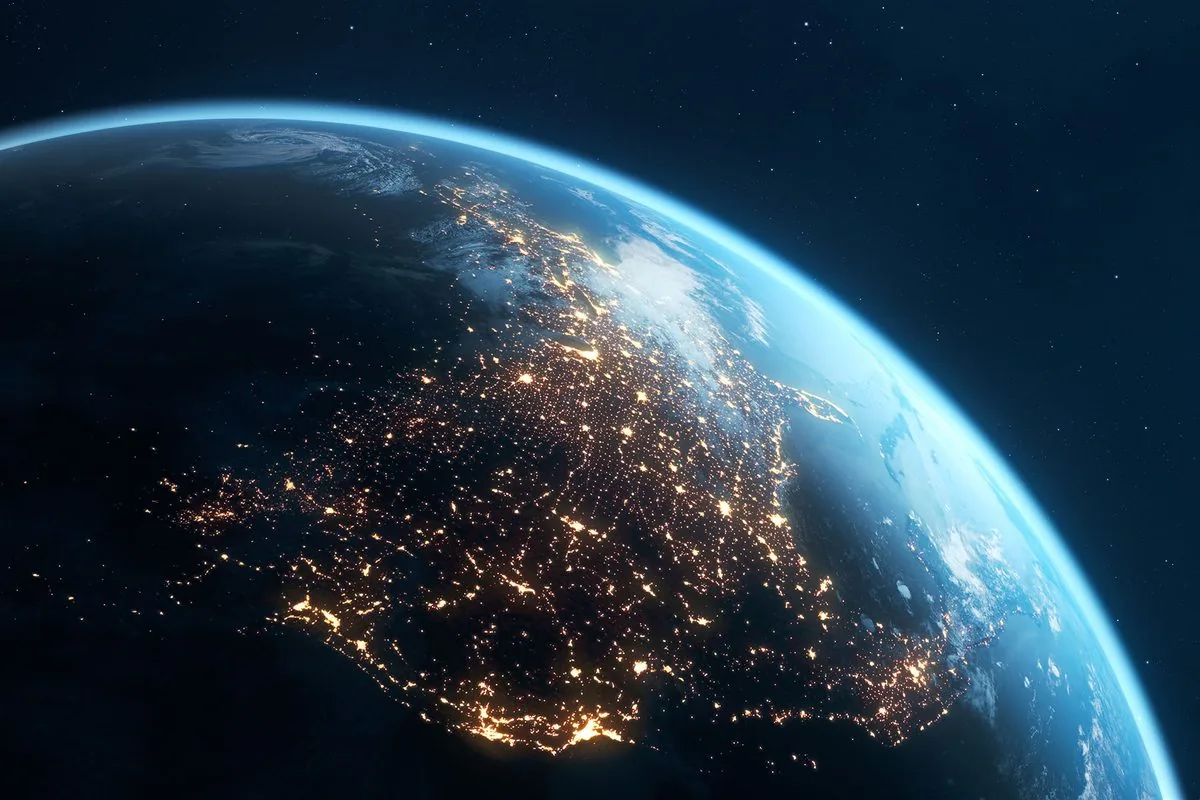
Earth's daily rotation is lengthening at an "unprecedented" rate, a phenomenon scientists attribute to the significant melting of polar ice sheets and glaciers. This climatic shift is causing water to flow from the poles toward the equator, altering the planet's mass distribution and consequently slowing its spin, a process not observed in 3.6 million years of geological history, according to a new study.
The research, conducted by scientists from the University of Vienna and ETH Zurich, utilized the fossilized shells of benthic foraminifera to reconstruct ancient sea levels and infer changes in Earth's rotation. The chemistry within these ancient marine organisms' shells provided a detailed record stretching back to the Late Pliocene epoch, approximately 3.6 million years ago. A specially developed machine learning algorithm was employed to analyze this ancient data, accounting for inherent uncertainties.
Earth's rotation has never been constant, influenced by gravitational pulls from the Moon, internal planetary processes, and atmospheric shifts. However, the current rate of change, measured at approximately 1.33 milliseconds per century, is now being driven by human-induced climate change to a degree that may eventually surpass these natural forces. "Such a shift in the length of day requires a staggering redistribution of mass: on the order of 1,000 gigatonnes moving from the poles to the oceans," explained Professor Benedikt Soja of ETH Zurich, a co-author of the study. He added that this mass redistribution is equivalent to a solid cube of ice 10 kilometers high placed over New York City.
Massive Scale of Planetary Change
The energy involved in inducing this change in Earth's rotational energy is comparable to a magnitude 9.0 earthquake, not in destructive power but in sheer planetary-scale force. Dr. Mostafa Kiani Shahvandi of the University of Vienna, the study's lead author, highlighted the immense scale of this impact.
While scientists identified a period roughly two million years ago where the rate of change approached current levels, it was attributed to a rare natural event involving fragile ice sheets and a spike in CO₂. "This rare event has not been repeated naturally since, yet human activity is now matching that same planetary-scale force in just over a century," Professor Soja noted. This comparison underscores the profound and rapid influence of human actions on Earth's systems.
Looking ahead, projections under high emissions scenarios suggest that climate change will become the dominant factor influencing Earth's day length by the end of the century, even exceeding the Moon's gravitational influence. The subtle yet significant consequences of this slowing rotation are critical for technologies like GPS navigation, which rely on ultra-precise timing. Furthermore, these planetary-scale shifts serve as a stark indicator of broader environmental impacts, including more extreme weather events and rising sea levels, which will reshape human habitation patterns globally.
"The most important takeaway is that human influence on the Earth system has become so profound that we are now changing the very way our Earth spins," Professor Soja concluded. The research team is now investigating other human-driven mass shifts, such as groundwater depletion and alterations in the water cycle, to refine our understanding of how rapidly humanity is reshaping the planet's rotation.