
Green hydrogen production advances with ultra stainless steel
A breakthrough in ultra stainless steel is accelerating green hydrogen production, offering a cost-effective path to clean energy and reducing manufacturing barriers for hydrogen fuel systems.

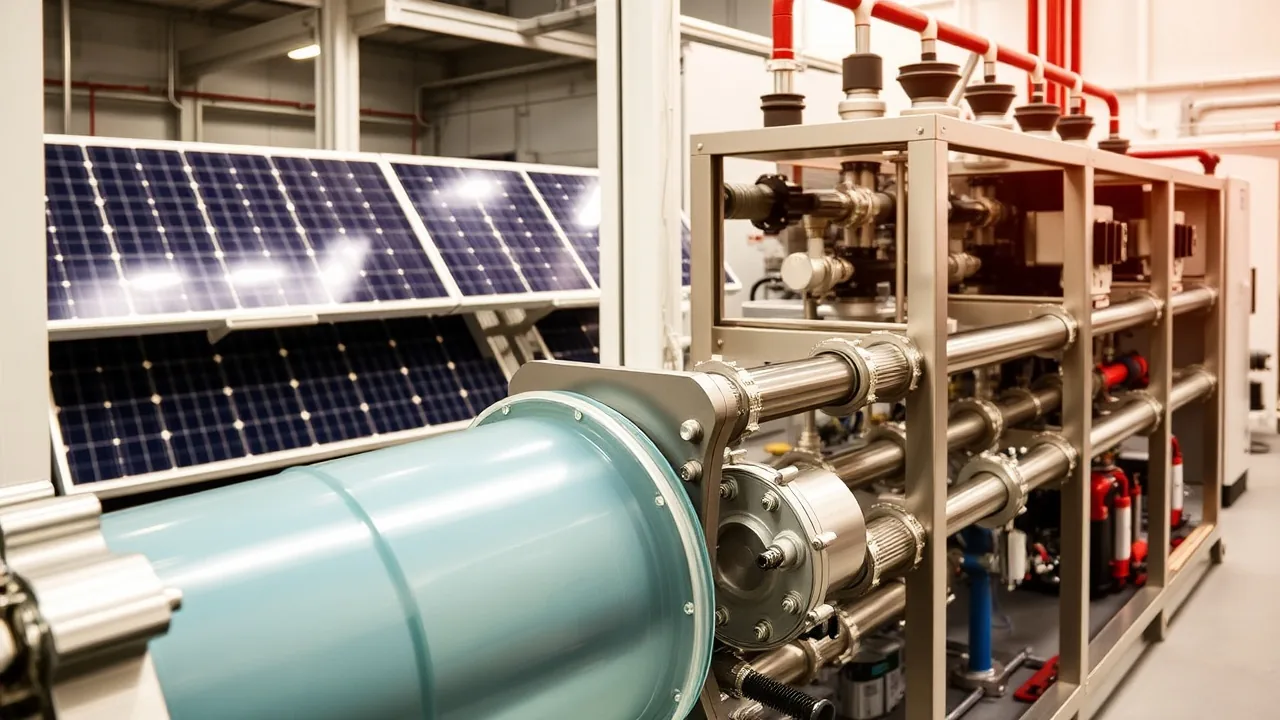
Researchers and manufacturers have found that ultra stainless steel formulations are dramatically improving the efficiency and durability of electrolyzers used in green hydrogen production. The material innovation addresses one of the sector's most persistent challenges: the corrosion and degradation of electrolyzer components exposed to harsh chemical environments during hydrogen generation from renewable electricity and water.
The electrolyzer market has long struggled with material costs and longevity. Traditional stainless steel alloys corrode under the intense acidic or alkaline conditions inside electrolysis cells, forcing manufacturers to rely on expensive noble metals or titanium. Ultra stainless steel variants, engineered with higher molybdenum and nitrogen content, resist this corrosion while maintaining structural integrity over decades of continuous operation.
"This development changes the economics of the hydrogen value chain," said Dr. Elena Rodriguez, senior materials scientist at the International Clean Energy Institute, in a statement released May 2026. "By using advanced stainless steel instead of precious metals, manufacturers can reduce electrolyzer capital costs by 15 to 25 percent while extending operational life beyond 50,000 hours."
Scaling production and cost reduction
Several industrial manufacturers have begun integrating ultra stainless steel into their electrolyzer designs. Siemens Energy and Nel Hydrogen announced pilot production runs in April 2026 incorporating the new materials, with plans to deploy units across hydrogen hubs in the US, Europe, and Asia by late 2026.
The cost savings are substantial. A typical alkaline electrolyzer using the improved ultra stainless steel formulations now costs between $400 and $550 per kilowatt of capacity, compared to $600 to $800 for conventional designs. Over a 20-year lifespan, operators avoid frequent replacement and repair cycles that previously inflated total ownership expenses.
- Reduced maintenance frequency from annual to every three years
- Extended electrolyzer operational life to 50,000 to 70,000 hours
- Lower procurement costs through domestic steel supply chains
- Improved efficiency ratings reaching 72 percent for alkaline systems
Why materials matter for the energy transition
Clean energy and sustainability goals depend on hydrogen as a bridging fuel for hard-to-decarbonize sectors including steel manufacturing, chemicals, and aviation. To meet net-zero targets, the US and EU must scale hydrogen production from roughly 70 million metric tons annually today to over 500 million metric tons by 2050.
Current hydrogen production relies almost entirely on fossil fuels, primarily natural gas. Green hydrogen, made by splitting water using renewable electricity, represents only 1 percent of global hydrogen output as of May 2026. Material breakthroughs that lower capital barriers and operational costs are essential to flipping this ratio.
The ultra stainless steel innovation sits at the intersection of climate tech and industrial manufacturing. It demonstrates how incremental advances in materials science can compound into sector-wide transformation, much like earlier cost reductions in photovoltaic silicon or lithium-ion battery chemistry.
The US Department of Energy has awarded $200 million to regional hydrogen hubs across the country, with projects in Kentucky, Louisiana, and California scheduled to activate by mid-2027. Many hub operators are specifying the new ultra stainless steel materials in procurement documents, signaling confidence in the technology's reliability at commercial scale.
Academic institutions and private labs are continuing to refine the alloy composition. Research teams at MIT and the National Renewable Energy Laboratory are exploring whether further nitrogen doping could push electrolyzer efficiency above 75 percent, a threshold that would make green hydrogen cost-competitive with fossil-derived hydrogen in most markets without subsidies.
Market outlook and challenges ahead
The electrolyzer industry, currently valued at roughly $800 million globally, is projected to reach $10 billion by 2032 according to BloombergNEF. Ultra stainless steel adoption is expected to capture a significant share of this growth.
Supply constraints remain a concern. Global stainless steel production totals around 35 million metric tons annually, with molybdenum and nitrogen supplies tight in some regions. Manufacturers and steel mills are ramping capacity, but several analysts warn that shortages could emerge if hydrogen electrolyzer demand accelerates faster than anticipated.
Regulatory harmonization is also underway. The International Standards Organization is finalizing material specifications for electrolyzer components, which should reduce fragmentation and enable cross-border deployment of hydrogen systems.
The breakthrough in ultra stainless steel represents a practical step forward in the broader energy transition. By lowering the engineering and economic barriers to green hydrogen production, the material innovation broadens the toolkit available to industries and utilities seeking reliable, sustainable alternatives to fossil fuels.