
Antarctic Sea Ice Decline Accelerates Global Sea Level Rise in 2026
New satellite data reveals Antarctic sea ice loss is outpacing earlier predictions, driving measurable increases in global sea levels. Scientists warn the trend will reshape coastal regions worldwide.

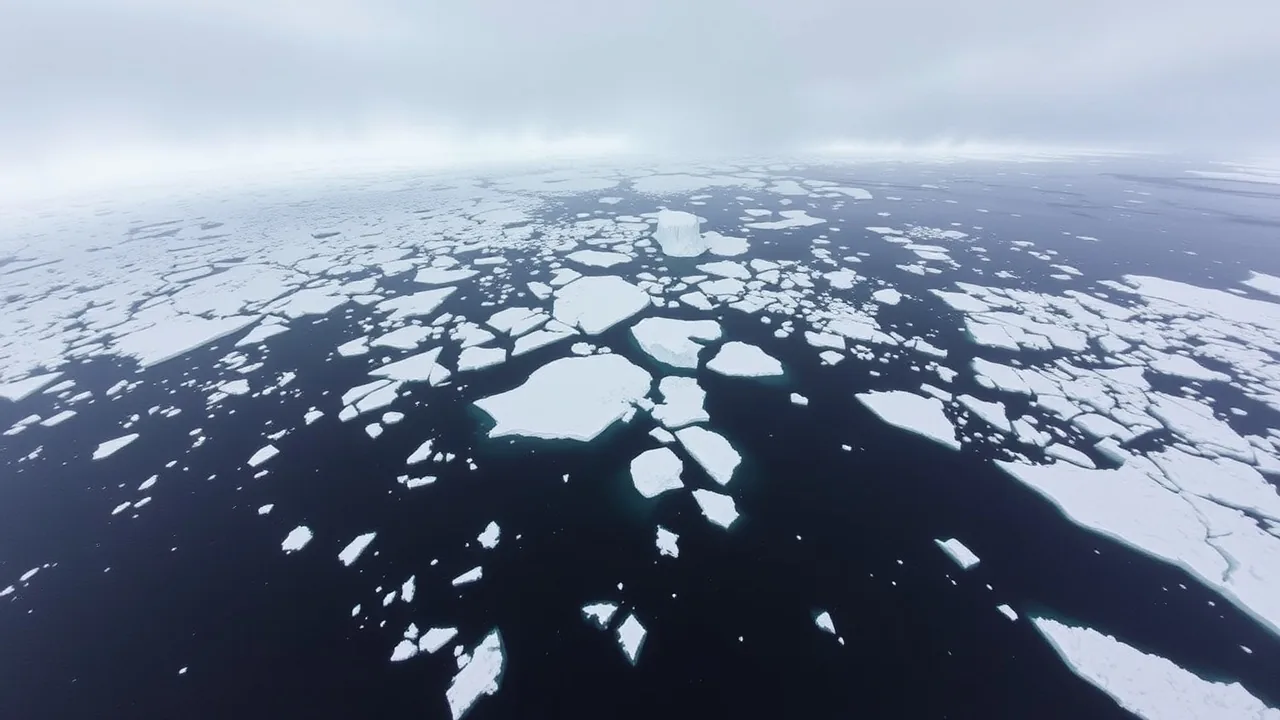
Satellite measurements taken over the past six months show Antarctic sea ice extent has fallen to 1.95 million square kilometers, the lowest recorded level for this time of year since records began in 1978. This collapse in late autumn ice coverage comes as researchers intensify monitoring of the continent's role in accelerating sea level rise across the planet.
The decline marks a sharp departure from the previous decade's trends. While Antarctic ice historically rebounded during winter months, the 2026 data reveals sustained melting even as temperatures drop. Coastal communities from Bangladesh to Florida now face measurable increases in "nuisance flooding" and saltwater intrusion into freshwater aquifers.
Dr. Petra Huybers, a polar oceanographer at Harvard University, noted in a recent briefing that the current rate of ice loss represents a fundamental shift in Southern Ocean dynamics. "What we're seeing is not cyclical variability," Huybers stated. "The Antarctic system appears to have crossed a threshold where warm water is penetrating deeper into ice shelves, and that process now self-reinforces."
How Antarctic Ice Melting Drives Ocean Levels Upward
Antarctic sea ice differs from Arctic ice in one critical way: most of it floats on water rather than resting on land. When floating ice melts, it does not directly raise sea level since the ice is already displacing its weight in water. However, the real threat lies beneath the ice shelves and in the massive ice sheets anchored to the continent itself.
The Pine Island and Thwaites glaciers, which drain roughly 10 percent of the Antarctic Ice Sheet, have accelerated their flow toward the ocean by up to 50 percent since 2000. As warm ocean currents erode their undersides, these glaciers release icebergs and meltwater that do add volume to the ocean. The combined effect has contributed approximately 14 millimeters of sea level rise over the past two decades.
Global sea levels have risen roughly 21 centimeters since 1880, with the rate doubling in the past three decades. Antarctica's contribution now accounts for nearly 25 percent of all sea level rise, a proportion that has grown as climate change amplifies warming in the Southern Ocean.
2026 Data and Projections for Coastal Impact
The National Oceanic and Atmospheric Administration released updated projections in March 2026 showing that U.S. coastal communities will experience an additional 10 to 12 inches of sea level rise by 2050, compared to the 6 to 8 inches predicted just three years ago. The revision reflects accelerated melting from both Antarctic and Greenland ice sheets.
Several U.S. cities are already implementing adaptation measures:
- Miami-Dade County has invested $500 million in pump systems and elevated roadways since 2020.
- Norfolk, Virginia, home to the world's largest naval base, has spent $250 million on flood resilience since 2022.
- New Orleans is upgrading hurricane levee systems and studying managed retreat from the lowest-lying neighborhoods.
The economic implications extend beyond infrastructure. Insurance premiums for coastal properties in vulnerable zones have risen 15 to 30 percent since 2024, and mortgage lenders are increasingly reluctant to finance long-term purchases in areas designated as high-risk for chronic flooding.
Dr. Michael Oppenheimer, a environmental science professor at Princeton University, emphasized in a May 2026 report that the window for limiting Antarctic ice loss has narrowed considerably. "If we reach a 2-degree Celsius warming above pre-industrial levels, we likely trigger irreversible collapse of key Antarctic ice shelves," Oppenheimer wrote. "We are now on track for 1.7 degrees by 2050 under current emission scenarios."
The Feedback Loop: Warming Accelerates Melting
Ocean temperatures around Antarctica have risen approximately 0.13 degrees Celsius per decade over the past forty years, a rate nearly three times faster than the global ocean average. Warmer water reduces sea ice formation and simultaneously weakens the protective ice shelves that buttress inland glaciers.
The process creates a vicious cycle. As sea ice retreats, the ocean's surface reflects less sunlight back to space, allowing more solar energy to be absorbed. This added heat further reduces ice formation and accelerates the discharge of glaciers into the ocean.
Current oceanography models suggest that without steep emission reductions, Antarctic ice loss could contribute up to one meter of sea level rise by 2100. Such a rise would displace tens of millions of people globally and render many island nations uninhabitable.
National governments and the scientific community are responding with increased funding for Antarctic research stations and satellite monitoring systems. The U.S. National Science Foundation approved a $180 million renewal of its Antarctic research program in 2026, focusing on real-time ice-shelf dynamics and ocean heat transfer mechanisms.
The data arriving in May 2026 from Antarctic monitoring networks confirms what climate models have predicted: the Antarctic system is not stable, and global warming is driving changes faster than many policymakers anticipated. Coastal regions worldwide are now racing to upgrade defenses while the window for emissions reductions remains barely open.