
Aurora Borealis Viewing Guide for North America This Weekend
A geomagnetic storm is intensifying aurora visibility across northern regions this weekend in May 2026. Here's where and when to catch the northern lights.

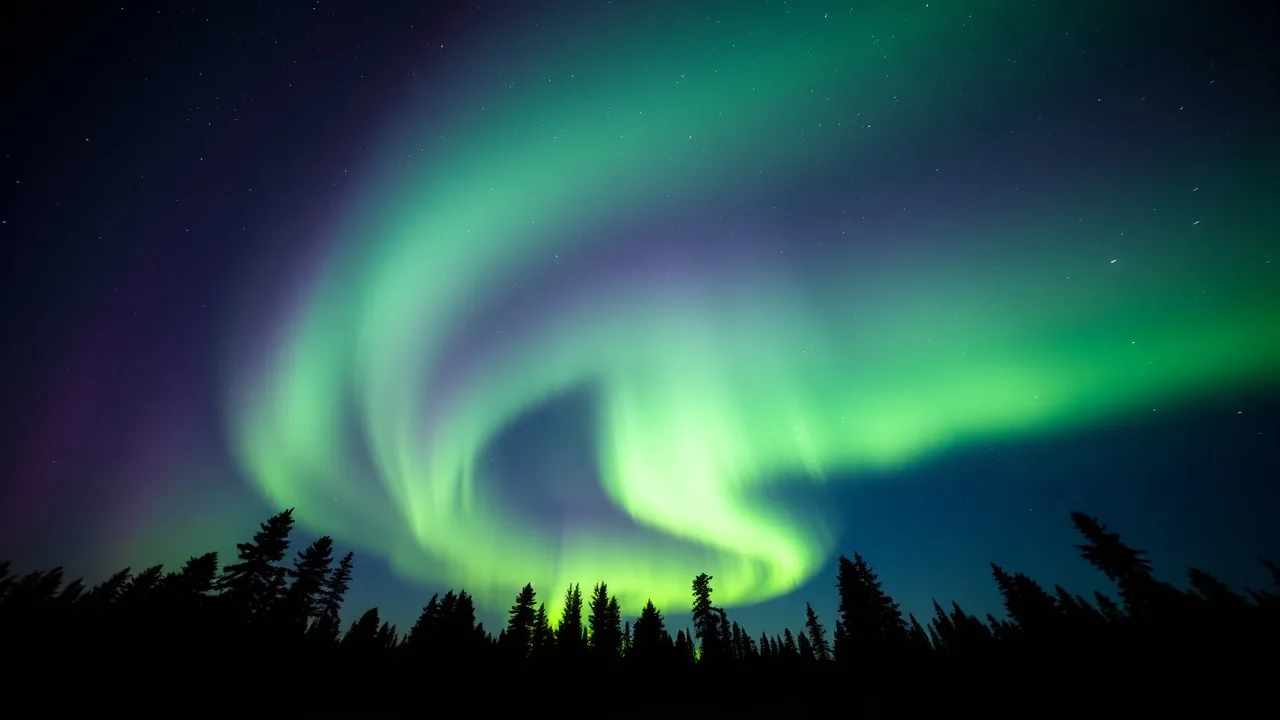
Stargazers across North America are preparing for an exceptional viewing window this weekend as a moderate geomagnetic storm pushes the Aurora Borealis farther south than typical for mid-May. The National Oceanic and Atmospheric Administration (NOAA) Space Weather Prediction Center reported a K-index forecast of 7 on the 0-9 scale for May 17-19, 2026, making conditions favorable for sightings across much of the northern United States and southern Canada.
The aurora's visibility this weekend extends opportunities beyond the Arctic Circle and Alaska. States including Montana, Minnesota, Wisconsin, and Michigan are positioned in the prime viewing zone, while northern New England could also witness faint green glows on the northern horizon after midnight.
Best Locations and Timing for Weekend Viewing
Optimal viewing begins after local midnight and peaks between 2 a.m. and 4 a.m. on Saturday and Sunday mornings. Aurora borealis activity tends to cluster in two-hour windows, so patience and multiple observation periods maximize your chances of witnessing the display.
For northern lights chasers planning weekend travel, the following locations offer strong positioning:
- Yellowstone National Park, Wyoming (dark skies, minimal light pollution)
- Superior National Forest, Minnesota (established northern lights tourism infrastructure)
- Lake Superior shoreline near Marquette, Michigan (open water reduces cloud obstruction)
- Jasper National Park, Alberta (consistently rated among North America's top aurora venues)
- Whitehorse, Yukon (highest statistical probability of sightings year-round)
Light pollution dramatically reduces aurora visibility. Urban and suburban observers should travel at least 30-50 miles north of major metropolitan areas. The International Dark Sky Association maintains a searchable database of certified dark-sky parks across North America, many of which lie directly in this weekend's optimal viewing corridor.
Dress heavily for predawn temperatures. Even in May, northern regions drop to freezing or below during overnight hours. Bring a sleeping bag, thermals, and hand warmers. Clear skies are essential; cloud cover will completely obscure the display regardless of geomagnetic activity.
Why This Weekend's Aurora is Exceptionally Visible
Solar coronal mass ejections (CMEs) ejected from the sun on May 14-15 are now interacting with Earth's magnetosphere. According to space weather analyst Dr. Robert Patterson at the University of Alaska Fairbanks, "This particular CME stream is arriving at an angle that enhances the southward magnetic field component, which is the primary driver of auroral expansion into lower latitudes." His forecast models place the visible aurora boundary as far south as the 45th parallel this weekend, roughly the latitude of Minneapolis and Portland.
The sun's 11-year cycle is currently approaching solar maximum, expected in late 2026. This means frequency and intensity of geomagnetic storms will remain elevated throughout the year, but this weekend's event represents one of the more significant opportunities for temperate-zone observers before summer atmospheric conditions reduce visibility in June and July.
Cloud cover remains the primary limiting factor. Friday evening satellite forecasts indicated clearing across the Upper Midwest and Northern Plains by Saturday night, while British Columbia and Alberta showed a 60-70 percent probability of clear skies. Check weather.gov and Environment Canada forecasts within 12 hours of your planned observation window.
Preparation and Practical Tips
Celestial events like aurora displays cannot be predicted with perfect certainty. However, real-time monitoring tools can help optimize your viewing session. The NOAA Space Weather Prediction Center updates aurora forecasts every 30 minutes. The iPhone app "My Aurora Forecast" and the website "AuroraAlert.com" provide push notifications when geomagnetic activity spikes in your region.
Bring a camera capable of manual exposure settings if you hope to photograph the display. Standard smartphone cameras perform poorly in low light; a DSLR or mirrorless camera with a wide-angle lens (14-24mm), high ISO sensitivity (3200 and above), and a 15-25 second exposure time will capture the aurora's detail and color. Tripods are non-negotiable.
Scout your location during daylight if possible. Know where power lines, trees, and buildings will intrude on your northern horizon. Cloudy skies during the day do not guarantee cloud cover at midnight; conditions often change dramatically. Position yourself with an unobstructed view to the north and slightly east.
Join an organized aurora viewing tour if traveling alone feels uncomfortable. Many outfitters in Montana, Minnesota, and Canada offer guided excursions this weekend, complete with heated lodges, meteorological updates, and experienced spotters. Prices typically range from $150-$400 per person, depending on location and amenities.
This 2026 forecast window represents a genuine opportunity for North American observers. Unlike aurora activity in deep winter, May storms deliver longer twilight windows and less extreme cold. Plan your travel early Saturday morning if cloud forecasts remain favorable. The next significant southward auroral expansion may not occur until August or later.