
Antarctica's Hidden Channels Accelerate Ice Melt, Threaten Sea Level Rise
New research reveals hidden channels beneath Antarctica's Fimbulisen Ice Shelf can trap warm water, significantly accelerating melting and potentially increasing global sea level rise.

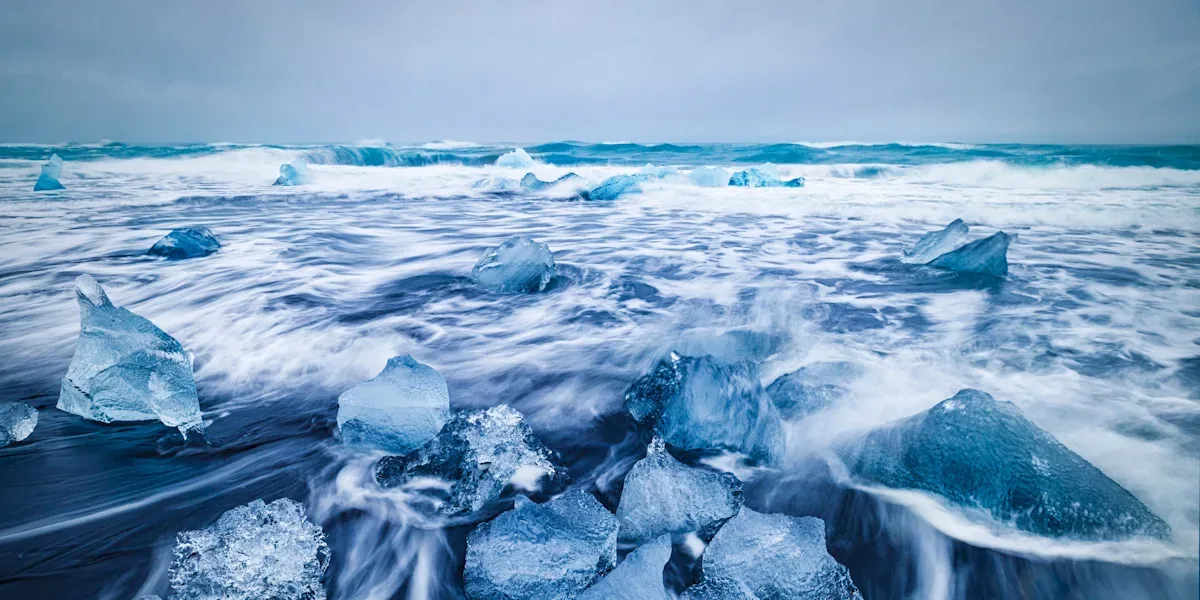
Scientists have uncovered a critical vulnerability beneath Antarctica's Fimbulisen Ice Shelf, where previously unknown channels are actively trapping warm ocean water. This phenomenon significantly accelerates ice melt and could lead to a faster-than-anticipated rise in global sea levels, according to a study published in Nature Communications. The findings highlight the need to incorporate such small-scale processes into future climate models.
The research, conducted by scientists from the iC3 Polar Research Hub in Tromsø, Norway, focused on the Fimbulisen Ice Shelf in East Antarctica. Unlike the more volatile Thwaites Glacier in West Antarctica, Fimbulisen is situated in a colder region, generally considered less susceptible to rapid change. However, the study revealed that the underside of this ice shelf is not merely a passive surface but can actively concentrate heat in crucial areas.
Tore Hatterman, the lead author of the study, explained the significance of these findings. "We found that the shape of the ice shelf underside is not just a passive feature," Hatterman stated in a press release. "It can actively trap ocean heat in exactly the places where extra melting matters most." This active trapping mechanism creates circulation systems within the channels, holding warmer water directly against the glacier's base. This process can amplify melting rates substantially, potentially by an order of magnitude, and contribute to destabilizing the ice shelf.
Instability and Future Projections
The implications of these channeled warming processes are profound. If these channels widen and deepen, they could weaken the structural integrity of the entire ice shelf, making it more prone to collapse. Such a failure would allow vast amounts of land-based ice to flow unimpeded into the ocean, directly contributing to global sea level rise. This scenario underscores the complex and often underestimated dynamics of polar ice sheets.
Understanding these intricate systems is a monumental task. Previous expeditions have faced significant challenges; for instance, an underwater research vehicle from the University of Gothenburg disappeared beneath the ice near the Thwaites Glacier in early 2024. The current study utilized advanced mapping of the Fimbulisen Ice Shelf's underside combined with sophisticated modeling of the ocean cavity below. By comparing smooth versus channeled undersides under different water temperatures, the researchers gained crucial insights into how these features influence heat distribution and water circulation.
"We observed beneath the Fimbulisen Ice Shelf that even small amounts of warmer water can substantially increase melting within the channels," Hatterman further elaborated. "As a result, the channels can grow and, in the worst case, weaken the stability of the entire ice shelf." This could accelerate the timeline for significant sea level rise, a phenomenon already a major concern for coastal communities worldwide.
The potential consequences of unchecked ice shelf destabilization were highlighted by NOAA scientist Nicole Schlegel in 2023. "Thousands of meters of ice sit on land," Schlegel said in a NASA press statement. "If the ice shelves are thinned or changed, then that decreases their ability to hold back the ice that’s on the land. More interior ice comes into the ocean, it speeds up, then you have a contribution to sea level rise." The latest findings from the iC3 Polar Research Hub suggest that models must now account for these fine-scale melting processes, which can have outsized impacts on global climate projections and pose a significant risk to coastal populations.