
Apple Watch Series 12 Health Sensors Show Superior Heart Rate Accuracy
Apple released a study detailing the superior heart rate accuracy of its new Apple Watch Series 12 and Ultra 4. The company claims its Health Sensing System outperforms leading competitors in both workouts and daily activities.

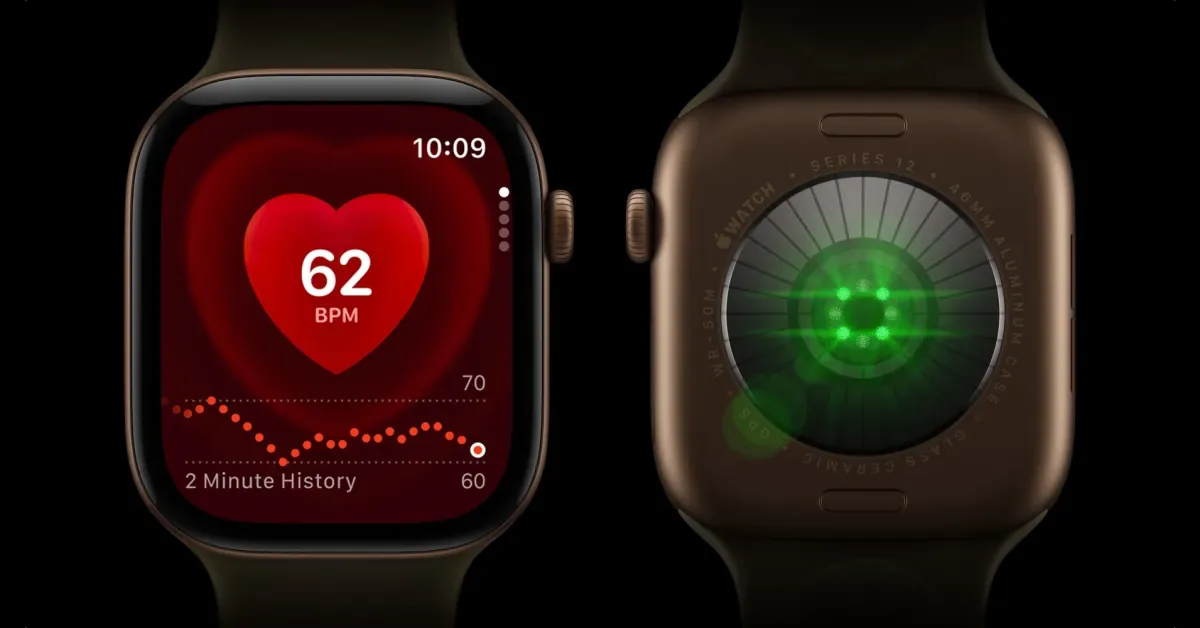
Apple has published data supporting its claim that the new Health Sensing System in the Apple Watch Series 12 and Apple Watch Ultra 4 provides the most accurate heart rate monitoring available in a wearable device. The company's new study directly compares the heart rate sensing capabilities of its latest smartwatches against other prominent wearables, including smart rings and fitness bands.
The Health Sensing System represents a significant advancement for the Apple Watch lineup. Introduced with the Series 12 and Ultra 4 models, this system integrates updated electrical and optical heart sensors, advanced signal processing algorithms, and new features like Recovery HRV and the Readiness app. Apple states these components work in tandem to deliver enhanced health and fitness insights to users.
Comparative Accuracy Study Details
According to Apple's nine-page research document, the study was conducted across five locations in the United States and Malaysia during July and August 2026. A total of 1,460 adults participated, with 1,254 providing sufficient paired measurements for the final analysis. Participants wore an Apple Watch Series 12 on one wrist and a competing device on the other. For reference, a Polar H10 ECG chest strap was utilized.
The comparison included several top-tier devices: the Garmin Forerunner 970, Google Pixel Watch 4, Huawei Watch 5, Samsung Galaxy Watch 8, and the WHOOP 5. Additionally, participants wore an Oura Ring 5 on an index finger, following the manufacturer's specific usage instructions. The testing protocols were comprehensive, encompassing a variety of physical activities such as outdoor running, treadmill interval training, cycling, high-intensity interval training, and strength training. Researchers also monitored heart rate during more passive, everyday activities, including periods of rest, desk work, meal preparation, and general walking. These diverse scenarios were designed to challenge the sensors, replicating conditions like rapid wrist movements, fluctuating heart rates, and the common issue of "cadence lock," where an optical sensor might misinterpret a runner's stride rhythm as a pulse.
The results indicated that the Apple Watch Series 12 demonstrated statistically superior overall accuracy compared to every tested competitor. This advantage was observed across both strenuous workout periods and calmer daily life scenarios. In a total of 159 individual activity and measurement comparisons, the Apple Watch achieved statistically better accuracy in 139 instances, highlighting a significant performance edge for Apple's latest wearable technology.
This rigorous testing and the resulting data are critical for Apple as it aims to solidify its position in the increasingly competitive health tech market. By providing verifiable evidence of improved accuracy, Apple can bolster user confidence in the Apple Watch's ability to provide reliable health metrics. Such advancements are key differentiators, especially as consumers rely more heavily on wearable devices for personal health monitoring and fitness tracking. The focus on the heart rate monitoring system, in particular, underscores Apple's commitment to developing sophisticated health features that go beyond basic step counting.