
Framework Laptop 13 Pro Review: Top Upgradeable Linux Laptop
Framework's new Laptop 13 Pro boasts a CNC aluminum chassis, larger battery, and support for LPCAMM2 memory, delivering a significant hardware upgrade for Linux users.

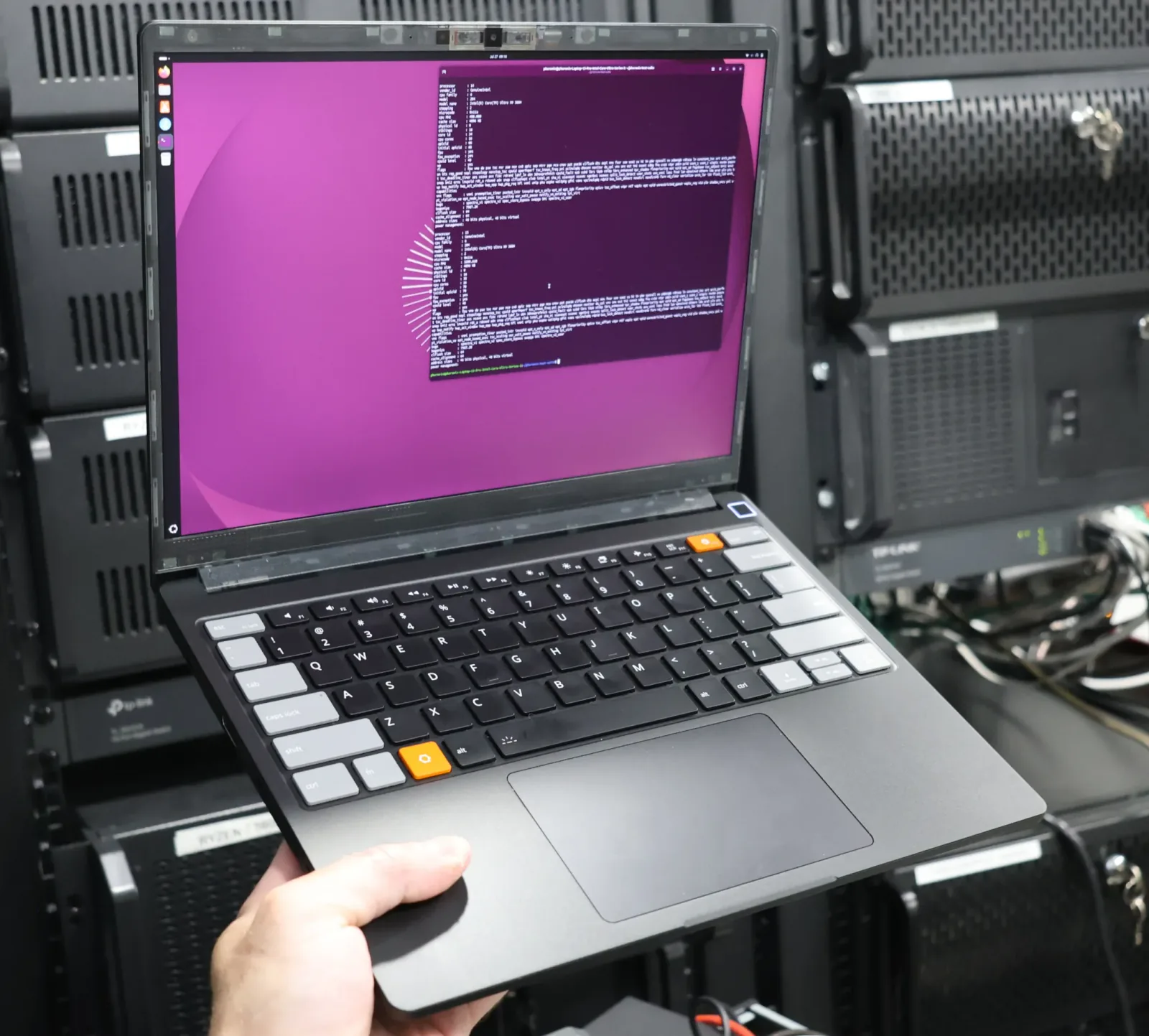
The Framework Laptop 13 Pro, a significant overhaul of the company's modular and upgradeable laptop line, has arrived, promising enhanced performance and build quality. This latest iteration features a larger 74Wh battery, support for LPCAMM2 memory, a fully CNC-milled aluminum chassis, a new haptic touchpad, and a power-optimized touch display. When paired with the efficient Intel Core Ultra Series 3 "Panther Lake" SoCs, the Laptop 13 Pro presents a compelling hardware package, according to initial reviews.
Framework Computer recently provided a review unit of the Framework Laptop 13 Pro. While testing has been limited to about a week, the hardware advancements are immediately apparent compared to previous generations. The new CNC aluminum chassis offers a premium feel, reminiscent of older ThinkPad models or Apple's MacBook Pro. Machined from 6063 aluminum, it maintains the external dimensions of prior Framework Laptop 13 models while weighing a mere 1.4 kilograms. As is characteristic of Framework Computer products, open-source CAD files for the hardware designs are publicly available, reinforcing the company's commitment to openness.
The fundamental upgradeability that defines Framework laptops remains intact, but the hardware quality has been elevated by the new chassis manufacturing. The improved display is another notable quality-of-life enhancement. For memory, the new Panther Lake mainboard supports LPCAMM2, with available configurations of 16GB, 32GB, and 64GB operating at 7467 MT/s speeds. A key aspect of Framework's design philosophy is cross-generation compatibility. The new Panther Lake-based mainboard, along with the display kit and other components, adhere to the form factors and interfaces of earlier units. This allows users to upgrade older laptops with newer components without necessarily purchasing the entire new chassis, or conversely, to upgrade the chassis while retaining existing hardware until prices for memory and storage decrease.
Performance and Battery Life Expectations
Framework Computer claims up to 20 hours of battery life for the Laptop 13 Pro, attributed to the combination of the new 74 Wh battery, the power-optimized display, and the low-power consumption of Intel Panther Lake SoCs. While specific battery benchmarks can vary widely based on user workflows, initial testing indicates that the Framework Laptop 13 Pro demonstrably lasts several hours longer than previous models equipped with Ryzen AI 9 HX 370 or Ryzen 7 7840U processors.
The assembly process for the Framework Laptop 13 Pro mirrors the straightforward DIY experience of prior models. Setup was seamless, with no reported issues. Framework Computer continues its support for LVFS/Fwupd, simplifying system and component firmware updates. The laptop is engineered with strong Linux compatibility in mind. Modern Linux distributions such as Ubuntu 26.04 LTS, Fedora Workstation 44, and Arch Linux are expected to provide an excellent out-of-the-box experience. Testing primarily utilized Ubuntu 26.04 LTS with the Linux 7.0 kernel, where the Panther Lake SoC, including its Arc B390 integrated graphics, the new display kit, and the haptic touchpad, all functioned correctly.
A minor inconvenience was encountered when using an alternative 150W USB-C charger. The Core Ultra X9 388H SoC's power draw was capped at 6W, resulting in significantly reduced performance. This issue did not occur with the official Framework USB-C charger. While this specific USB-C charger anomaly is noteworthy, it is expected that Framework Computer may address such compatibility nuances with future firmware updates. Aside from this charger issue, the Framework Laptop 13 Pro performed smoothly and rapidly on Linux, showcasing the advancements in its design and components.