
Seagate FireCuda Forge Hybrid Drive Combines HDD and SSD Storage
Seagate has announced the FireCuda Forge, a new hybrid storage drive combining traditional HDD capacity with user-supplied SSD speed.

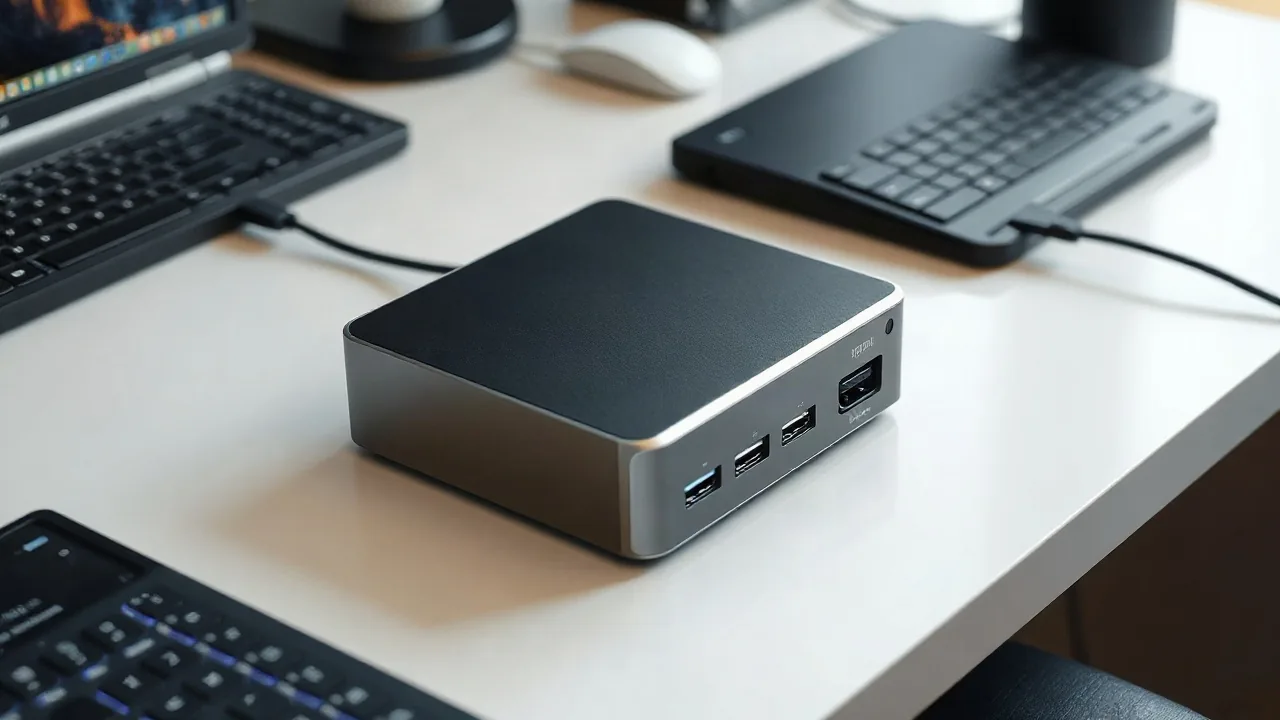
Seagate has announced the launch of the new FireCuda Forge line of storage drives, bringing back hybrid storage by combining the high capacity of a traditional plattered HDD with the speed of a user-supplied solid-state drive. The new hybrid storage solution is powered and managed by the Alkemi intelligent storage platform, which is Seagate’s first to utilize the system. The drives are available in 8TB and 20TB configurations, priced at $699 and $899 respectively, though neither option includes the required SSD.
Users are required to supply their own SSD with specific restrictions, needing compatibility with M.2 2280 NVMe drives that are PCIe Gen3 or higher. The maximum supported NVMe capacity is 1TB, which serves as the data limit for the fast side of the hybrid setup. The NVMe requires minimum speeds of 2,400MB/s read and 2,000MB/s write, and a unit with DRAM cache is recommended. The combined system claims 2,500MB/s read and 2,000MB/s write speeds, along with USB4 and support for Windows 11 and macOS 26+. Storage pricing across the industry has faced significant inflation amid the AI boom, with solid-state drives and mechanical drives alike seeing substantial price increases over recent years.
Alkemi Intelligent Storage Platform and Past Hybrid Approaches
Hybrid storage drives had largely fallen out of fashion since the early to mid-2010s, a period when Apple introduced its own hybrid solution with the Mac mini’s Fusion Drive. Past hybrid systems like Apple’s Fusion Drive faced fragility issues, as recovery became difficult if one of the two drives experienced a physical failure since the remaining working drive depended on the broken drive’s data. According to Seagate’s press release, the Alkemi intelligent storage platform takes a different approach by managing the storage pool directly from the enclosure. Seagate states that “Alkemi learns and adapts over time to keep high-demand content fast and accessible on a user’s SSD, while the HDD provides space for growing libraries. Behind the scenes, Alkemi manages data placement, giving users the simplicity of a single storage drive.”
Despite the launch, the product data sheet and announcements do not address how the Alkemi platform manages data between the two drives or whether one drive going down results in failure for the whole system. There is also no mention of how the system distributes data on first boot or how it handles drive failure and repair, leaving users with questions similar to those raised during previous hybrid storage eras.