
August Solar & Lunar Eclipses: What to Expect This Season
An "eclipse season" begins this week, offering two major celestial events: a total solar eclipse on August 12 and a deep partial lunar eclipse on August 27-28.

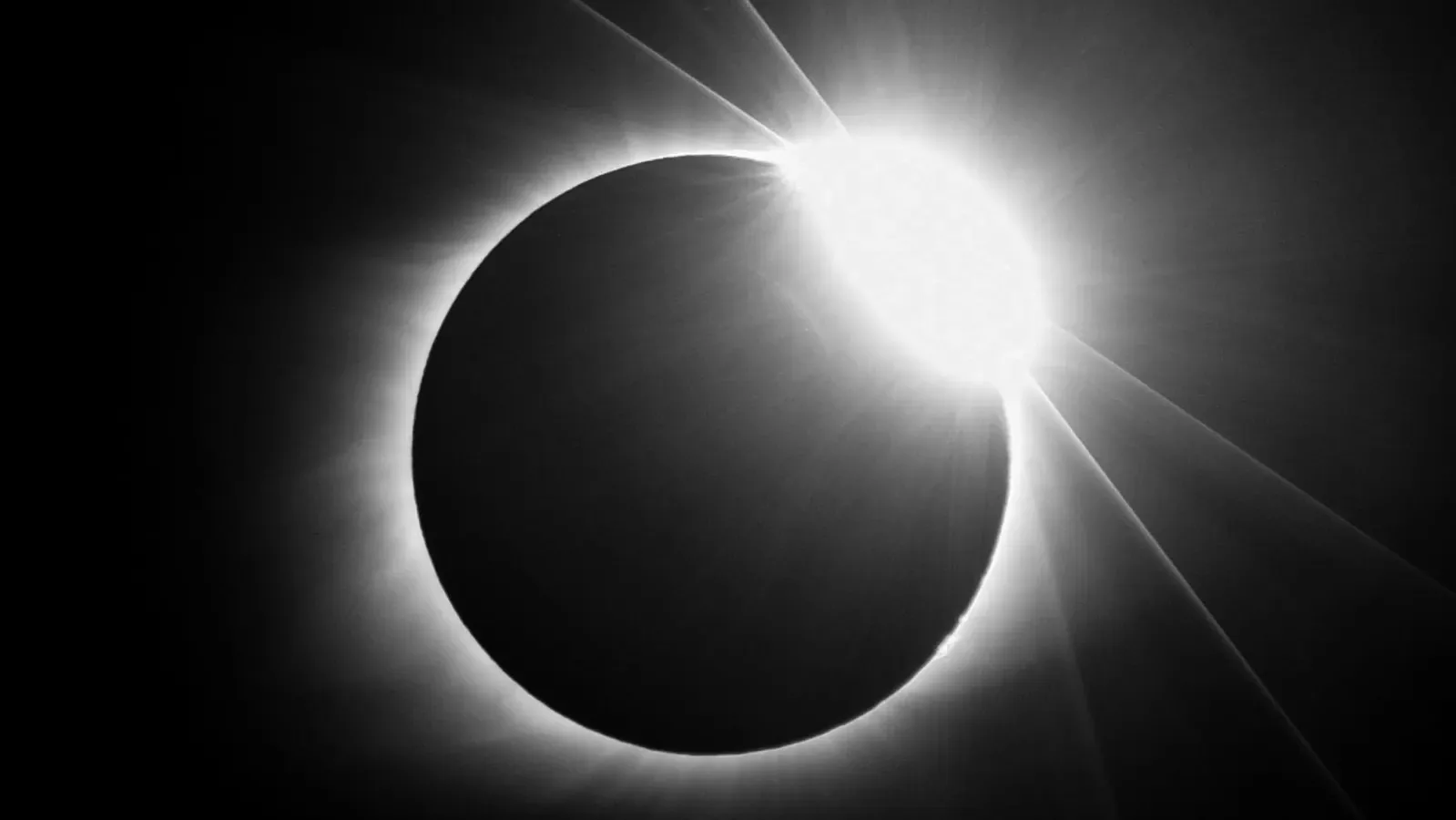
An "eclipse season" commenced on Monday, July 27, ushering in a period where the Earth, moon, and sun align with remarkable precision, creating opportunities for eclipses. This celestial window, extending through August 31, promises two of the year's most significant astronomical spectacles: a total solar eclipse on August 12 and a profoundly deep partial lunar eclipse on August 27-28.
While eclipses might appear spontaneous, they are intrinsically linked to these predictable seasons, which occur approximately every six months. This recurring alignment is crucial for understanding the mechanics of solar and lunar eclipses. The current new moon, occurring this week, is a key player in the lunar cycle that will culminate in August's total solar eclipse. Typically, new moons do not result in eclipses because the moon's orbital path is tilted by about five degrees relative to Earth's orbit around the sun. Consequently, a new moon often appears slightly above or below the sun from our perspective.
Eclipses become possible only during an eclipse season, when the sun's apparent position in the sky brings it into close proximity with one of the two points where the moon's orbit intersects Earth's orbital plane – these are known as the lunar nodes. A new moon occurring near one of these nodes can trigger a solar eclipse. Approximately two weeks later, as the Earth completes its orbit and the moon reaches the opposite node, a full moon can cause a lunar eclipse. This predictable sequence ensures that eclipses often appear in pairs.
August's Celestial Doubleheader
The first major event is the total solar eclipse scheduled for August 12. This rare phenomenon will briefly cast a shadow of daytime darkness over parts of Greenland, Iceland, and northern Spain. Observers situated within the path of totality will witness the sun's corona, its ethereal outer atmosphere, encircling the silhouetted moon – an awe-inspiring natural display. Totality during this event is expected to last up to 2 minutes and 18 seconds. This follows the dramatic total solar eclipse witnessed across North America on April 8, 2024.
Following the solar event, the same orbital configuration will produce a lunar eclipse roughly two weeks later. This occurs when the Earth positions itself directly between the sun and the full moon, casting its shadow upon the lunar surface. While typically one solar and one lunar eclipse mark an eclipse season, occasionally, three can occur, as predicted for January 2028 with a sequence of partial lunar, annular solar, and another partial lunar eclipse.
While the August 12 total solar eclipse has garnered significant attention, the subsequent lunar eclipse on August 27-28 is poised to be equally remarkable, albeit less anticipated. During this event, an estimated 96% of the Sturgeon Moon will traverse Earth's darkest shadow, the umbra. Only a slender sliver will remain exposed to direct sunlight, while the rest of the moon will be illuminated by sunlight filtered through Earth's atmosphere, casting it in hues of orange, copper, and deep red. Although technically classified as a partial lunar eclipse, its magnitude will closely resemble a total lunar eclipse, often called a "blood moon." This event is anticipated to be the most striking lunar eclipse visible globally until a total lunar eclipse on December 31, 2028. The eclipse will be observable across North America, South America, Europe, and Africa, with observers in the Americas expected to have the clearest views as the phenomenon unfolds overnight with the moon high in the sky. The partial phase of this deep lunar eclipse is projected to last approximately 3 hours and 27 minutes.