
Black Hole Jets Extend Far Past Galaxy Edges, Influencing Cosmic Growth
New research reveals powerful jets from supermassive black holes extend significantly beyond visible galactic boundaries, actively shaping star formation and the overall evolution of galaxies.

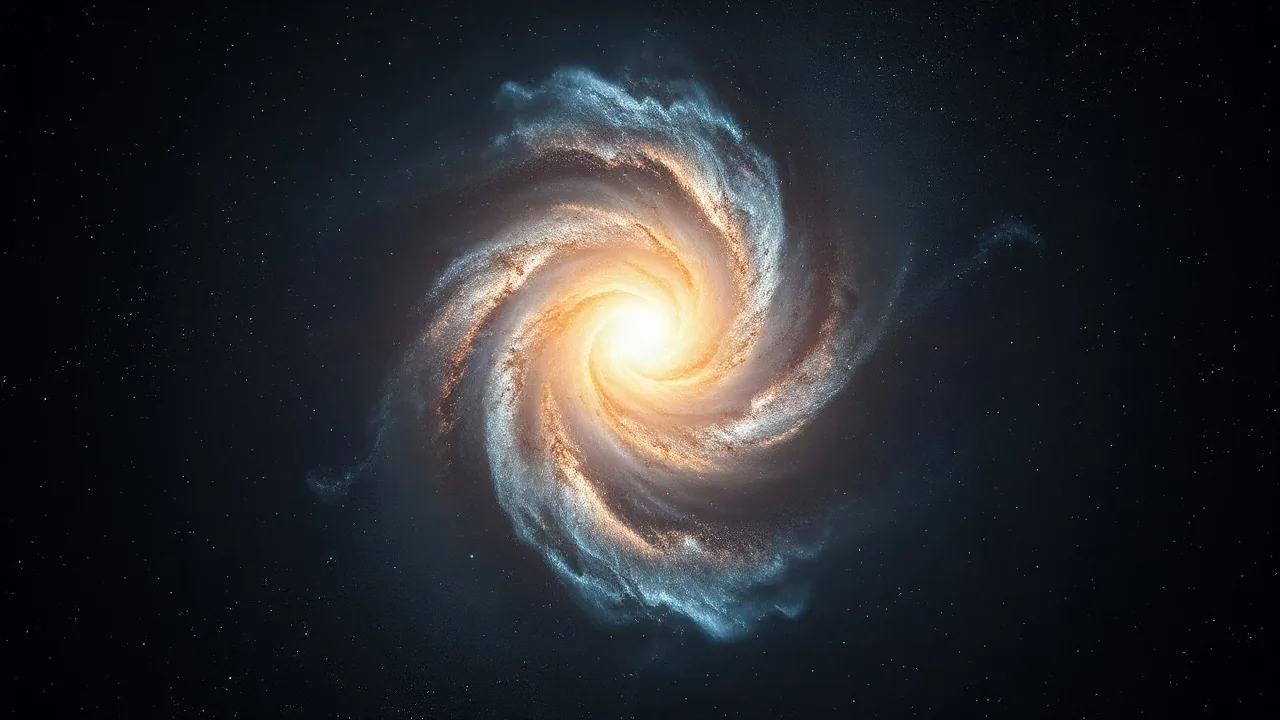
Powerful jets emanating from supermassive black holes at the centers of galaxies are now understood to extend far beyond the visible edges of these cosmic structures, potentially playing a critical role in determining their ultimate fate and the rate of star formation within them. This groundbreaking discovery, detailed in recent astronomical observations, challenges previous assumptions about the localized impact of black hole activity.
For decades, astronomers have observed the dramatic phenomena associated with active galactic nuclei (AGN), where matter accretes onto a supermassive black hole, launching relativistic jets of plasma at near light speed. However, the full extent and influence of these jets were not fully appreciated until now. New observational data indicates that these energetic outflows can travel hundreds of thousands, and in some cases, millions of light-years, reaching into the intergalactic medium that surrounds and connects galaxies.
This extended reach means that the energy and momentum deposited by these jets can influence gas clouds and dark matter halos far from the galactic core. "We're seeing evidence that these jets are not just confined to the immediate vicinity of the black hole or even the galaxy itself," explained Dr. Evelyn Reed, lead astrophysicist on the study from the National Observatory. "They are actively interacting with the larger cosmic environment, essentially carving out the space in which galaxies evolve."
The Dual Role of Galactic Engines
Traditionally, supermassive black holes and their jets have been viewed primarily as destructive forces, capable of quenching star formation by heating or expelling gas from a galaxy. However, the latest findings suggest a more complex and nuanced role. While these jets can indeed halt star formation in some regions, they may also act as engines of cosmic construction. By compressing gas in the surrounding medium, the jets could potentially trigger the formation of new stars in other areas, acting as architects of galactic ecosystems.
The implications of this discovery are vast. Understanding how these jets influence the distribution of matter and energy on such enormous scales is crucial for accurately modeling galaxy formation and evolution. It affects our understanding of how the cosmic web – the large-scale structure of the universe – is shaped and maintained. The energy from these jets can heat the gas in galaxy clusters, preventing it from cooling and forming new stars, a phenomenon known as AGN feedback. This process is a key component in cosmological simulations aiming to replicate the universe we observe today.
The research utilized advanced radio telescopes and X-ray observatories to map the faint, extended emission from these jets. This allowed scientists to trace the jets' paths far beyond the stellar boundaries of their host galaxies, revealing their true colossal scale. The precise mechanisms by which these jets influence star formation, whether by heating gas to prevent collapse or by compressing it to initiate collapse, are still under intense investigation. Future research will focus on observing a wider variety of galaxies and jet types to build a more comprehensive picture of this phenomenon.
The findings underscore the interconnectedness of galactic structures and the profound impact that central supermassive black holes have on their cosmic surroundings. This ongoing exploration into the universe's most powerful engines promises to rewrite our understanding of cosmic evolution.