
China's Chang'e-7 Lunar Mission Postponed Amid Unspecified Issues
China has abruptly postponed its highly anticipated Chang'e-7 lunar mission, which aimed to explore the moon's south pole for water ice. The launch window this year has been closed due to unspecified conditions.

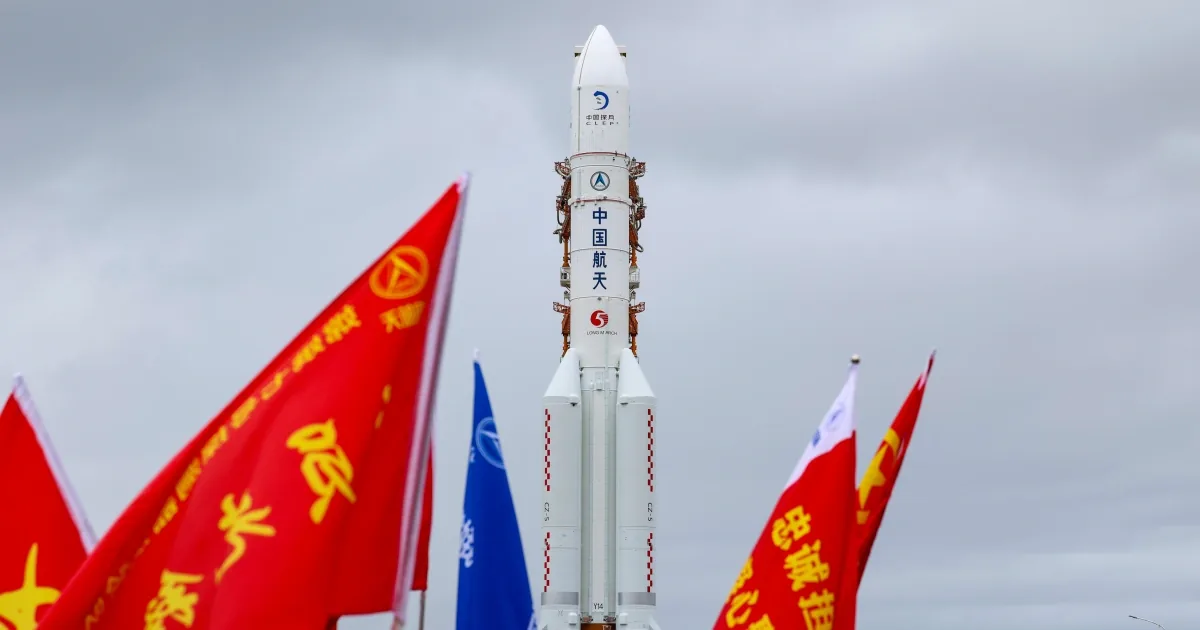
China announced Sunday that it is indefinitely postponing its ambitious Chang'e-7 lunar mission, a critical step in the nation's lunar exploration program. The spacecraft, originally slated for liftoff in the coming days from the Wenchang Space Launch Site on Hainan island, will not proceed as planned. The China National Space Administration (CNSA) cited that current launch conditions do not meet requirements, effectively closing the planned window for 2026. Officials stated the decision followed a "comprehensive assessment" prioritizing "prudence, reliability and absolute mission success," though specific reasons for the delay remain undisclosed.
The Chang'e-7 mission is the seventh in China's esteemed lunar exploration program and represents a significant undertaking. Its primary objectives included pioneering technological breakthroughs, particularly in identifying and characterizing water ice deposits. The mission was designed to focus its exploration on the moon's permanently shadowed craters, regions believed to hold valuable scientific insights and potential resources. Environmental and resource surveys of the lunar south pole were also key components of the ambitious itinerary.
Unforeseen Challenges Halt Progress
The abrupt halt to preparations at the Wenchang launch site has left many observers speculating about the exact nature of the problem. While the CNSA has offered a general statement regarding launch conditions, the lack of specific details has fueled conjecture within the space exploration community. Such postponements, especially close to a scheduled launch, can often stem from technical anomalies discovered during final checks, issues with ground support equipment, or even external factors like weather or orbital traffic. The program's emphasis on "absolute mission success" suggests a cautious approach to avoiding potential failures, a stance that has characterized China's steady progress in space over the past decade.
China's lunar ambitions have been steadily growing, with previous Chang'e missions achieving significant milestones. Chang'e 4 notably achieved the first-ever soft landing on the far side of the Moon in 2019. The nation's long-term strategy includes establishing a lunar research base, and missions like Chang'e-7 are crucial for gathering the data needed to support such endeavors. The potential presence of water ice at the lunar poles is of immense interest globally, not only for scientific understanding but also for its potential as a resource for future human presence, such as producing rocket fuel or life support.
This delay, while a setback, underscores the inherent complexities and rigorous demands of deep space missions. The CNSA's commitment to thorough evaluation and risk mitigation is paramount for ensuring the safety and success of its astronauts and its increasingly sophisticated robotic explorers. The agency has not provided a revised launch date, indicating that considerable work may be required before Chang'e-7 can safely depart. The international space community will be closely watching for further updates as China continues its determined push into lunar exploration.