
Colorado night skies to feature meteor showers and supermoon in November
Colorado's night skies will feature multiple meteor showers, a supermoon, and the return of winter constellations this November.

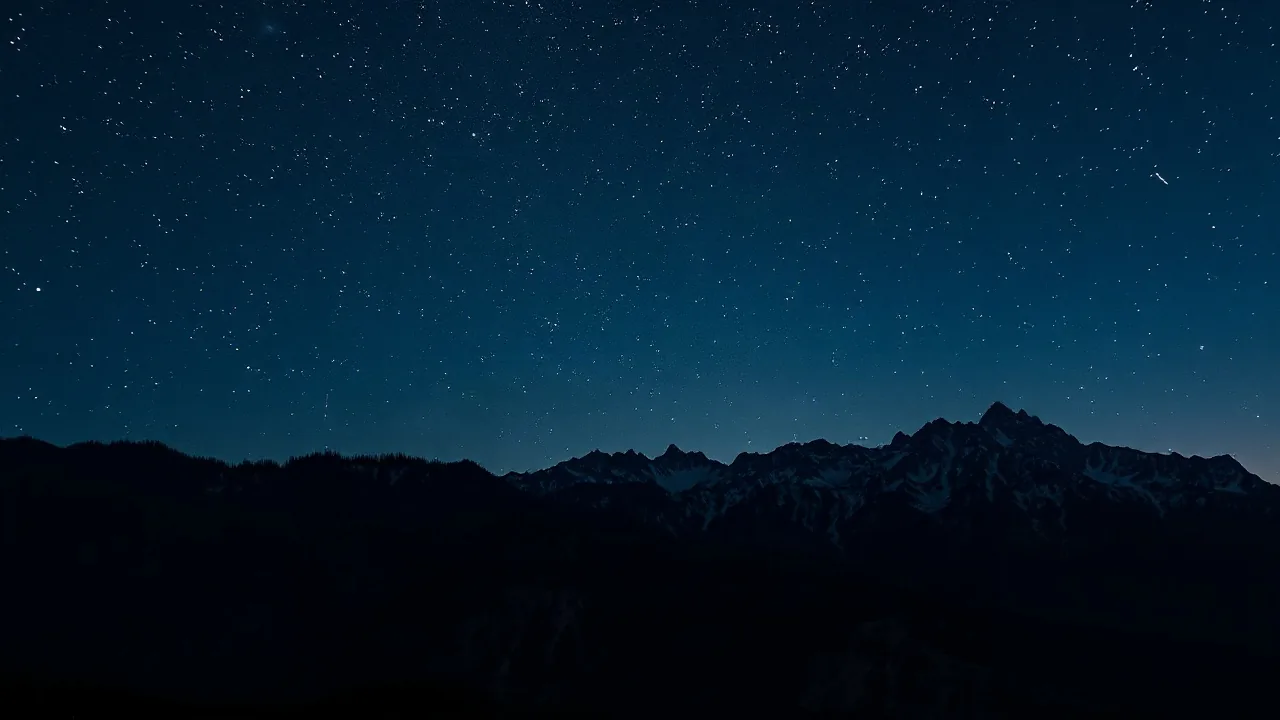
Colorado night skies are set to deliver a busy schedule of astronomical events this November, featuring multiple meteor showers, a supermoon, and the return of winter constellations. With the end of daylight saving time bringing earlier dusk hours, stargazers across the state have more accessible evening viewing times without having to stay up until midnight, according to Mark Laurin, an astronomy guide, Denver Astronomical Society member, Keystone Science School adjunct instructor, and mentor for Dark Sky Colorado.
“Now the sun sets around 5 p.m. local time, giving darkness sooner; ergo, more time for stargazing,” Laurin wrote in his stargazing blog. “The spectacular winter constellations begin to rise in the east at a more reasonable hour. Yippee!”
Colorado features numerous mountain communities with tall peaks that help block light pollution, creating prime opportunities for astronomy enthusiasts. Dark Sky International officially recognizes over 20 locations in the state—including towns such as Frisco, Breckenridge, Old Snowmass, Ridgway, Westcliffe, and Silver Cliff, alongside various state and national parks—for their superior stargazing conditions. To enjoy the view, Laurin recommends dressing warmly in a down jacket with the hood up, bringing a chair and a hot drink like cocoa, finding a dark location away from light pollution, and leaving phones put away to let eyes adjust.
“Put your down jacket on and pull the hood up over your head. Step outside and look up,” Laurin said. “Connect with this wonderfully expanding universe above you, around you and in you. You’ll be thankful that you did.”
November Meteor Showers and Celestial Highlights
The month features four distinct meteor showers, starting with the Northern Taurid Meteor Shower, which Laurin describes as a “can’t miss celestial event” for the year. Peaking on the night of November 12, this shower offers shooting stars from sunset through sunrise. Because the peak coincides with an early-setting crescent moon, meteors should shine brightly against the dark sky. Viewers can locate the radiant point after 11 p.m. by finding Aldebaran, the brightest star on the eastern horizon within the constellation Taurus. “Get ready,” Laurin said. “This will be a good meteor shower to view.”
Three additional meteor showers arrive later in the month, though moonlight may create interference. The Leonid Meteor Shower peaks on November 17 with an expected 10 to 15 meteors per hour, though a two-thirds full moon may obscure fainter shooting stars. The Alpha-Monocerotids Meteor Shower peaks on the night of November 21 into the early morning of November 22 around 4 a.m., presenting an ambiguous display with meteors appearing in bursts while the moon is more than 90% full. Finally, the November Orionid Meteor Shower peaks on November 28, offering three to five meteors per hour near the constellation Orion, though moonlight will also be bright.
In addition to shooting stars, a supermoon known traditionally as the Beaver Moon will rise on the night of November 24, appearing about 7% larger than normal. According to the National Aeronautics and Space Administration, supermoons occur when a full moon is at or near its closest point to Earth in its oval-shaped orbit, typically happening three to four times a year. Stargazers can also spot the Pleiades open star cluster, also called the Seven Sisters or informally the “mini dipper,” located in the constellation Taurus. Stargazers can locate the cluster by scanning the east-northeast horizon for a dim smudge roughly the size of a full moon.