
Giant Dinosaur Eggs Found at High Latitudes Reveal Incubation Strategy
Fossilized titanosaur eggs discovered in Argentina challenge previous assumptions about dinosaur nesting habits. The findings suggest these enormous creatures reproduced and incubated eggs in colder, high-latitude regions.

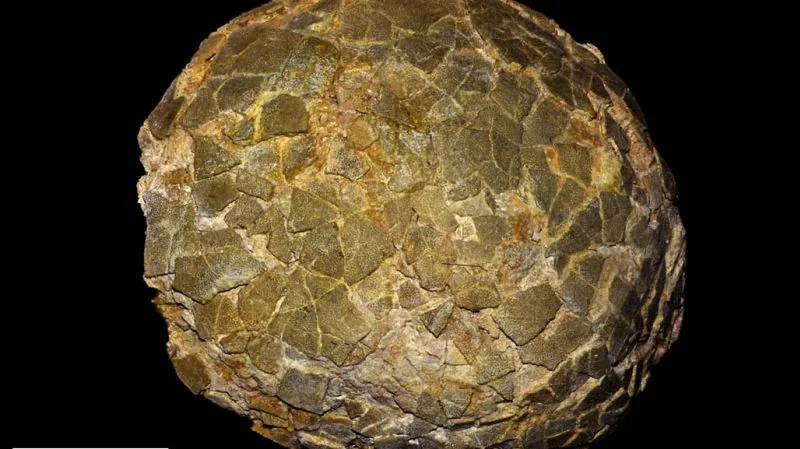
A remarkable discovery of fossilized eggs in Argentina is reshaping our understanding of the largest dinosaurs to have ever roamed the Earth. Scientists have unearthed a trove of titanosaur eggs and eggshells dating back 68 million years, providing compelling evidence that these massive herbivores reproduced and developed clever strategies to incubate their young in high-latitude regions, far from the equator. This finding challenges the long-held belief that such dinosaurs exclusively nested in warmer, lower-latitude areas.
For years, paleontologists primarily found dinosaur eggs and eggshells closer to the equator, where warmer ambient temperatures would have naturally aided incubation. Titanosaurs, a group of long-necked, plant-eating sauropods known for their immense size, are believed to have lived in herds and undertaken extensive migrations. While their fossilized bones have been found across vast geographical ranges, including Antarctica, Mongolia, and Texas, direct evidence of their nesting habits in cooler climates remained elusive until now.
Darla Zelenitsky, a paleontologist and associate professor at the University of Calgary in Alberta, who is a senior author on the new study published in the journal Royal Society Open Science, explained the significance of the find. "They clearly spent time in higher latitude areas, but until now it wasn’t known whether they were also nesting there," Zelenitsky stated. She noted that unlike many smaller dinosaur species and modern birds, titanosaurs likely did not brood their eggs. "Their huge size 'would have turned the nest into one giant omelette,'" she commented, suggesting that the parent dinosaurs likely left their eggs to hatch independently.
Nest Mounds and Porous Shells: A Strategy for Survival
The challenge for titanosaurs nesting at higher latitudes, where sunlight is less abundant, was ensuring their eggs received enough warmth to develop. The new research proposes that these dinosaurs employed an ingenious method: constructing mound nests from vegetation and soil. The decomposition of organic matter within these mounds would have generated significant heat, providing the necessary incubation temperature. "The most likely scenario is that these titanosaurs laid their eggs in mound nests made of vegetation and soil, where incubation heat came mostly from rotting plant material," Zelenitsky elaborated.
The composition of titanosaur eggshells also played a crucial role. "Their eggshells were very porous, which means if the eggs were left out in the open, they would lose water, dry out, and the embryos would die. Buried in sand, soil, or vegetation, the nest would stay humid or damp enough for the eggs to survive," she added, highlighting the importance of the protective nest structure for moisture retention.
The discovery comprises 255 eggshell fragments found in the Chorrillo Formation in southern Argentina. The site, located approximately 200 miles (322 kilometers) north of the Strait of Magellan, yielded specimens from both 2020 and 2024, dating back 68 million years to the Late Cretaceous period. At that time, the region was situated between 55 and 60 degrees south latitude. These findings represent the highest-latitude nesting environment ever identified for sauropods globally and the southernmost definitive evidence of dinosaur eggs found to date. This new evidence indicates that these colossal creatures were capable of completing their reproductive cycle even in regions with less consistent warmth and sunlight.
Steve Brusatte, a professor of paleontology and evolution at the University of Edinburgh, who was not involved in the research, emphasized the importance of this specific discovery. "What is particularly important about this new discovery, though, is that these dinosaur eggs belonged to titanosaurs, giant potbellied long-necked dinosaurs," Brusatte remarked. "Some of the very largest animals in Earth’s history were laying eggs and hatching their babies at high latitudes in the Cretaceous, which is a new fact about dinosaur biology and behaviour that makes us better appreciate their adaptability and resiliency." The presence of eggs, rather than just bones, strongly suggests that these dinosaurs not only visited but also reproduced in these higher latitudes, potentially spending significant portions of their life cycle there.
Paul Upchurch, a professor of paleobiology at University College London, concurred that the discovery alters previous hypotheses. "Sauropod remains are rare at high latitudes, and it had been thought that the giants moved to these areas during warm summers before returning closer to the equator," Upchurch explained. "Now that we have eggs from a high latitude, this suggests that they might have stayed there all year, or at least were able to go through their reproductive cycle during the warm part of the year at those high latitudes." This behavior would indicate a more permanent presence in these environments than previously assumed.
Titanosaurs are recognized as the largest land animals ever known, with some species estimated to have weighed up to 75,000 kilograms. The fragility of eggshells typically leads to poor fossilization, making dinosaur eggs a rare find. While the exact species of titanosaur remains unidentified, teeth found at the same site belong to colossosaurian dinosaurs, a group that includes some of the largest titanosaurs. If these eggs belonged to colossosaurians, it suggests that the hatchlings had access to abundant food resources in the region to support their eventual massive growth. The nests themselves, described as mounds roughly the size of picnic tables, would have been substantial structures, indicating that these communal nesting sites likely made a noticeable impact on the landscape.