
Eta Aquarid Meteor Shower Peaks Tonight: How to Watch
The Eta Aquarid meteor shower reaches its peak on the night of May 5-6. Viewers in the Southern Hemisphere can expect up to 50 meteors per hour, while those in the Northern Hemisphere may see about 10.

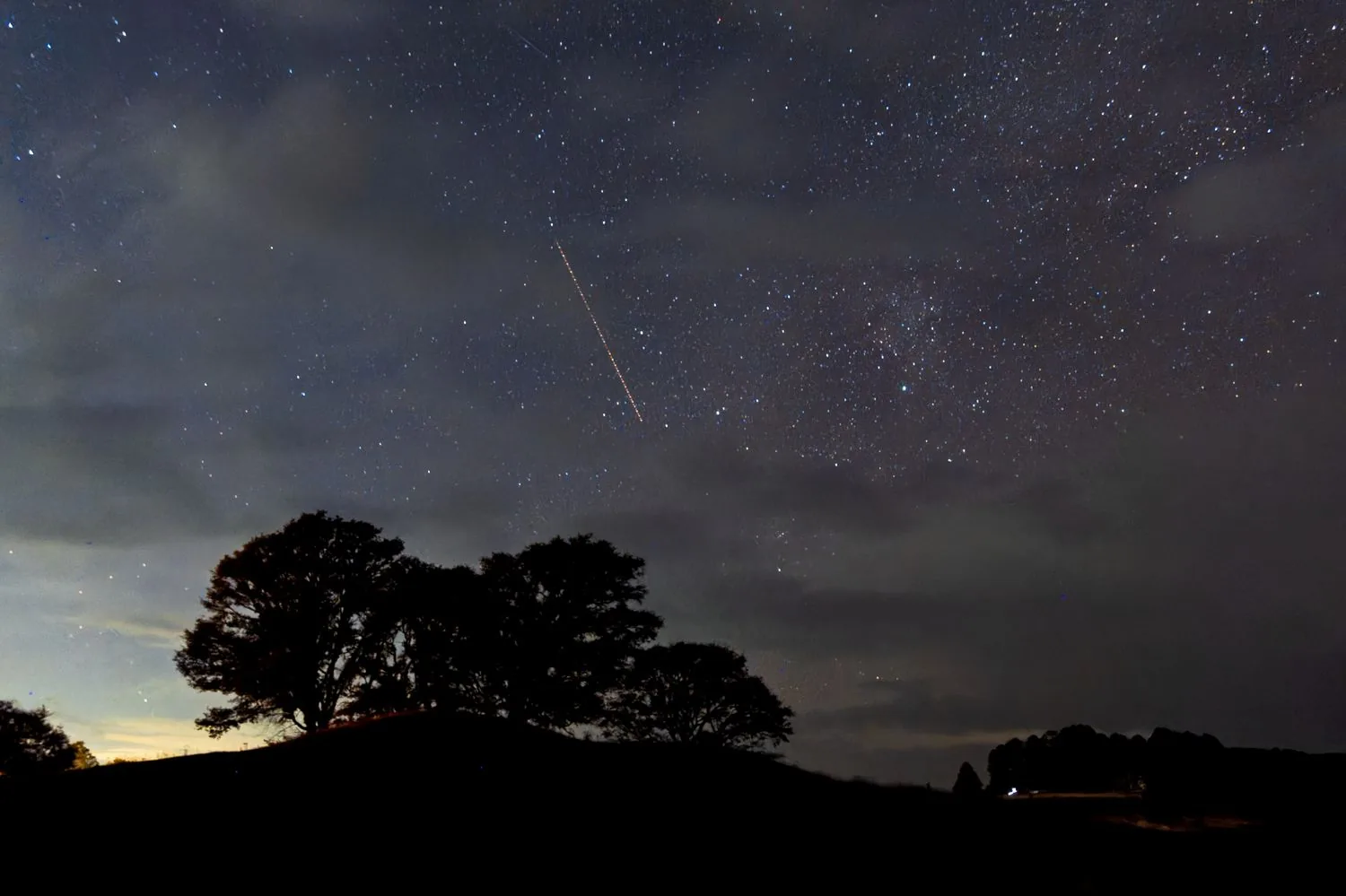
Stargazers are in for a celestial treat as the Eta Aquarid meteor shower peaks tonight, May 5, extending into the early morning hours of May 6. This annual event, active since April 19 and concluding May 28, offers a dazzling display for those with clear skies. Viewers in the Southern Hemisphere are forecast to witness up to 50 meteors per hour, whereas those in the Northern Hemisphere can anticipate around 10 meteors per hour, according to NASA.
The difference in visibility is due to the radiant of the shower, the apparent point of origin for the meteors. Located near Eta Aquarii, a bright star in the Aquarius constellation, the radiant is positioned higher in the sky for observers in the Southern Hemisphere. This astronomical alignment allows for a more direct viewing angle of the debris trails.
The Eta Aquarids are a product of Earth's passage through the cosmic dust and debris trail left behind by none other than Halley's comet. As these particles, often no larger than grains of sand, enter Earth's atmosphere at speeds approaching 40.7 miles per second, they ignite and burn up, creating the brilliant streaks of light we know as shooting stars. NASA notes that these meteors can leave behind glowing trails, known as "trains," that persist for several seconds to minutes.
Northern Hemisphere Viewing Nuances
For those in the Northern Hemisphere, the Eta Aquarids often present a unique phenomenon called "Earthgrazers." These are meteors that appear to skim along the horizon, appearing to travel parallel to the Earth's surface. While less frequent than the more direct overhead meteors seen in the south, Earthgrazers can offer a particularly memorable visual experience, painting long, luminous arcs across the sky.
To maximize the chances of viewing the meteor shower, experts advise finding a location far from city lights and light pollution. It is recommended to allow your eyes at least 30 minutes to fully adjust to the darkness. Once acclimated, orient yourself to look towards the east, where the radiant is typically most prominent during the peak hours. Patience is key, as the most spectacular moments can be fleeting.
This event offers a fantastic opportunity to connect with the cosmos and appreciate the enduring legacy of Halley's comet, which last visited the inner solar system in 1986. While the comet itself is not directly visible during the shower, its icy remnants continue to grace our night skies annually, reminding us of the vastness and dynamic nature of our solar system. The Eta Aquarid meteor shower serves as a celestial marker, highlighting Earth's journey through space.