
New Super-Earth Found 25 Light-Years Away: GJ 3378b Offers Habitable Zone Hope
Astronomers have refined the mass and orbit of exoplanet GJ 3378b, now considered a potentially habitable super-Earth just 25 light-years away. The discovery raises hopes for finding liquid water, though atmospheric habitability remains uncertain.

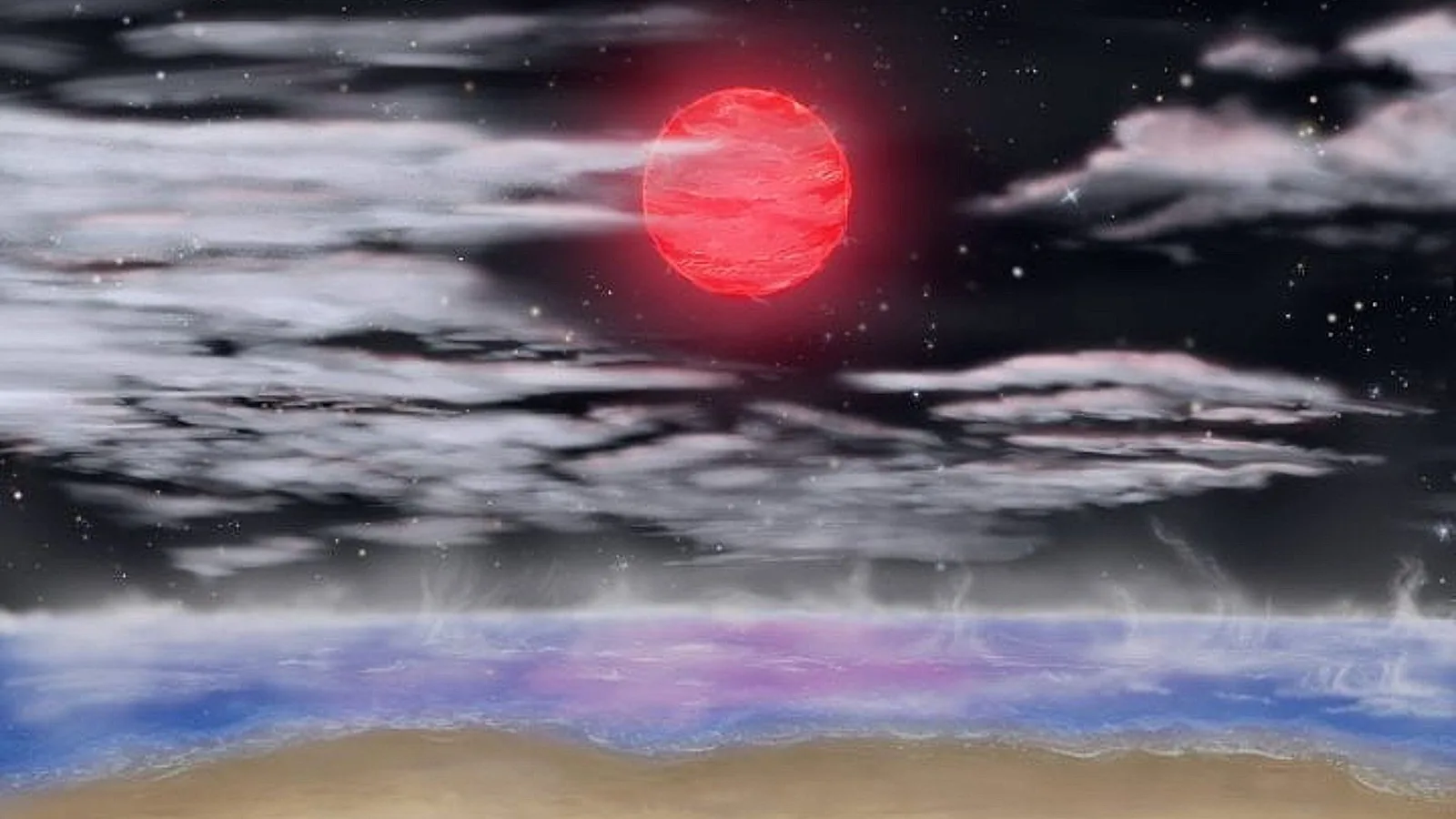
Astronomers have revised findings for GJ 3378b, a rocky world orbiting a red dwarf star 25 light-years from Earth, identifying it as a potentially habitable super-Earth located within its star's habitable zone. The planet's mass has been re-evaluated to 2.3 times that of Earth, and its orbital period adjusted to 21 days. These adjustments place GJ 3378b in a prime position where surface temperatures could support liquid water, provided an atmosphere is present.
"This one's exciting," stated Paul Robertson of the University of California, Irvine, highlighting the planet's proximity. "It's one of our closest cosmic neighbors. Twenty-five light years sounds like a long way, but the Milky Way is about 100,000 light years across, so in that respect it's our next-door neighbor." Initially discovered in 2024 by French astronomers using the Canada–France–Hawaii Telescope, the planet's characteristics were recently re-analyzed by American astronomers, including Robertson's team. This re-evaluation suggests the world may be far more Earth-like than previously understood.
The precise nature of GJ 3378b remains a subject of ongoing scientific inquiry. Current data confirms only its mass and orbital period, leaving open the possibility of it being an airless, cratered body or a world boasting land, sea, clouds, and potentially life. Unlike many exoplanet discoveries, GJ 3378b was not detected via transit – the method where a planet passes in front of its star, causing a dip in light. Instead, its presence was inferred from the gravitational influence it exerts on its host star, causing a detectable wobble. This wobble is observed through shifts in the star's light spectrum, revealing the planet's orbital dynamics.
Challenges of Red Dwarf Habitability
A significant challenge for GJ 3378b's habitability is the nature of its host star, a red dwarf. These stars are known for emitting powerful stellar winds and bursts of radiation that can strip away planetary atmospheres. While GJ 3378b receives approximately 90% of the radiation Earth receives from the Sun, placing it in an optimal temperature range, the intense stellar activity poses a critical question: Does the planet possess an atmosphere to shield its surface? "This super-Earth gets about 90% of the radiation from its host star that Earth gets from its sun, so it's right in the sweet spot," explained Robertson. Yet, the constant barrage of radiation from red dwarfs presents a considerable obstacle for the long-term survival of any atmosphere.
Answering the question of GJ 3378b's atmosphere may require future observational capabilities. Current methods, such as transit spectroscopy used by the James Webb Space Telescope to study atmospheres around other red dwarf planets like those in the TRAPPIST-1 system, are not applicable here because GJ 3378b does not transit its star. Astronomers must await the launch of NASA's Habitable Worlds Observatory, anticipated in the 2040s, which is designed to directly characterize atmospheres of exoplanets. Despite these limitations, there is optimism. GJ 3378b is situated on the fringe of the zone most heavily impacted by stellar radiation, suggesting it might have narrowly avoided the most severe atmospheric stripping. If so, future observations could reveal not only an atmosphere but potentially biosignatures – indicators of life.
The search for potentially habitable worlds around nearby stars is a crucial step in the broader quest to understand humanity's place in the universe. "The ultimate goal is biosignatures," said Michael Endl, an astronomer at the University of Texas at Austin. "We really want to know, are we alone in the universe? We are still in the reconnaissance phase of our solar neighborhood, trying to find the planets around the nearest stars because those will be the easiest ones to detect a biosignature on." The discovery and re-evaluation of GJ 3378b underscore the rapid advancements in exoplanet detection and characterization, bringing scientists closer to identifying potentially life-supporting environments beyond our solar system. "This planet brings us one step closer to knowing all of our neighbors and, ultimately, which might be hospitable for life."