
Astronauts Complete Historic ISS Spacewalk to Replace Antenna
Astronauts Sophie Adenot and Anil Menon conducted a nearly 7-hour spacewalk on the ISS to remove a critical, malfunctioning antenna. Adenot made history as the first French woman to perform an extravehicular activity.

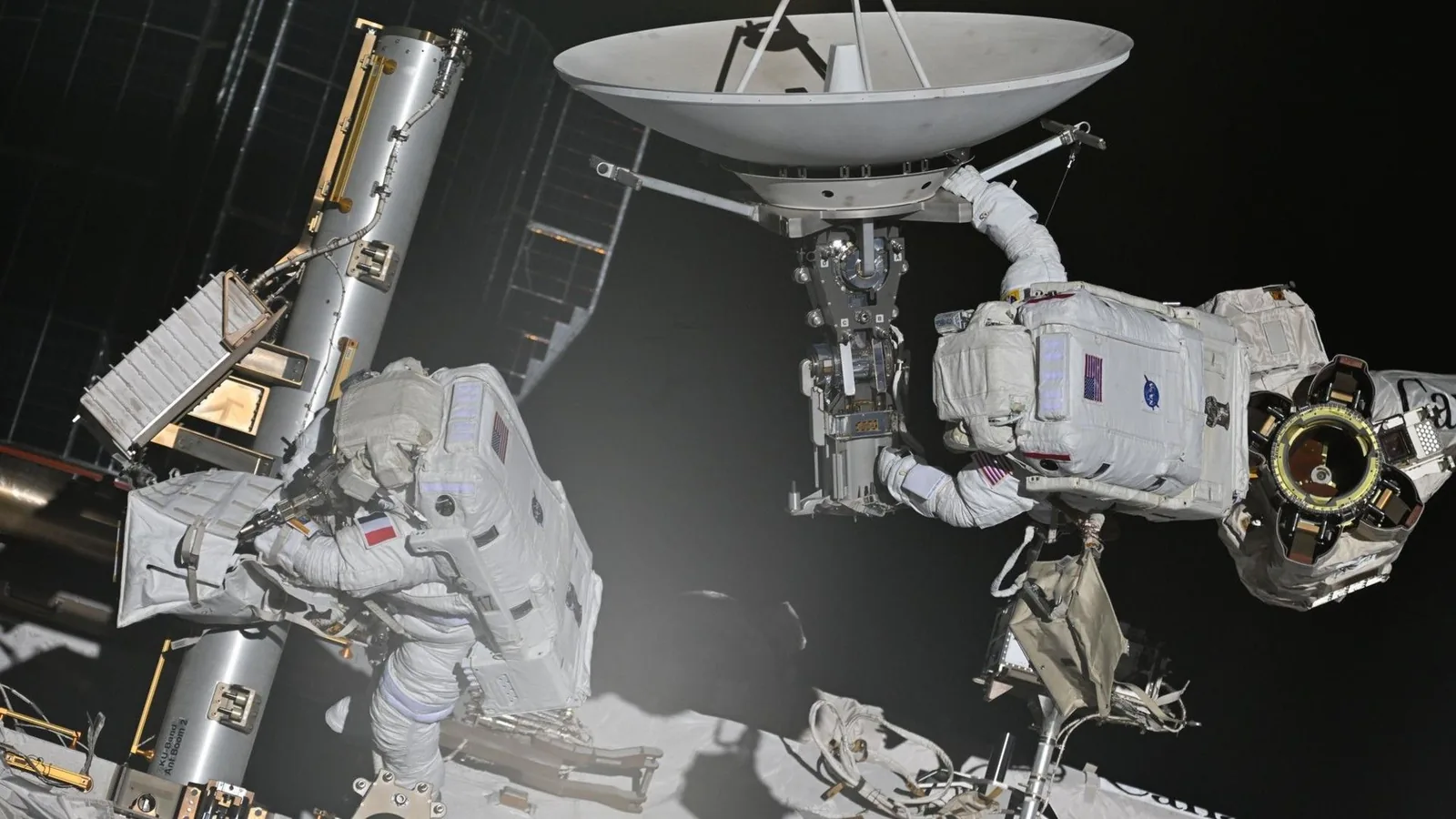
Two astronauts aboard the International Space Station (ISS) completed a historic spacewalk on August 18, 2026, dedicating over six hours to removing a crucial, non-functioning antenna. European Space Agency astronaut Sophie Adenot, making her first-ever spacewalk, became the first French woman to perform an extravehicular activity (EVA). NASA astronaut Anil Menon also participated in the demanding six-hour, 23-minute mission.
The mission focused on removing a "Space-to-Ground" antenna that had been malfunctioning for months. While the astronauts successfully detached the faulty equipment, they did not have sufficient time to install a replacement during this outing. The temporary measure of a secondary antenna has been in place, but a permanent fix is vital for efficient communication between the ISS and Mission Control on Earth.
Context and Importance of the Repair
Venturing into the vacuum of space for complex repairs is an extraordinary feat. The spacewalk, a physically and technically demanding task, underscores the ingenuity and resilience required for maintaining an orbiting laboratory. The antenna in question is essential for transmitting critical information quickly back to Earth, ensuring the safety and operational efficiency of the crew. "This antenna is a primary link for us to send vital data back to Mission Control," stated a NASA spokesperson, emphasizing the necessity of the repair. The successful removal of the old antenna is a significant step toward restoring full communication capabilities, a cornerstone of any long-duration space mission. The European Space Agency lauded Adenot's historic achievement, highlighting the increasing diversity in space exploration.
Astronauts must perform intricate maneuvers while wearing bulky spacesuits, often in challenging lighting conditions and with the constant risk of micrometeoroid impacts. Every tool must be secured, and every movement precisely calculated to avoid damage to the station or injury to themselves. The timeline for such EVAs is meticulously planned, with any deviation requiring immediate assessment and potential mission adjustment. Adenot's pioneering EVA, alongside Menon's expertise, showcases the collaborative international spirit that defines the ISS program.
The complexity of space station maintenance requires highly specialized training and equipment. The astronauts utilized advanced tools designed for the unique environment of space, where gravity is absent and temperatures fluctuate dramatically. The failed antenna's role in data transmission makes its repair a high priority, impacting everything from scientific experiments to the crew's well-being. The temporary solution is functional but not ideal for the consistent, high-volume data flow necessary for current space research and station operations. The NASA and ESA partnership continues to push the boundaries of human spaceflight, with events like this spacewalk representing both challenges and triumphs.
The successful removal of the antenna marks progress, even without immediate replacement. Future EVAs will focus on installing the new unit, restoring the ISS to its full operational capacity. This mission serves as a powerful reminder of the ongoing dedication and skill involved in sustaining humanity's presence in orbit and the continuous pursuit of technological advancement in space exploration.