
UK Science Funding Cuts Threaten Iconic Jodrell Bank Observatory
Jodrell Bank Observatory faces an uncertain future as UK Research and Innovation reduces science funding. The iconic Lovell Telescope and the e-MERLIN radio telescope array are among the projects impacted by the cuts.

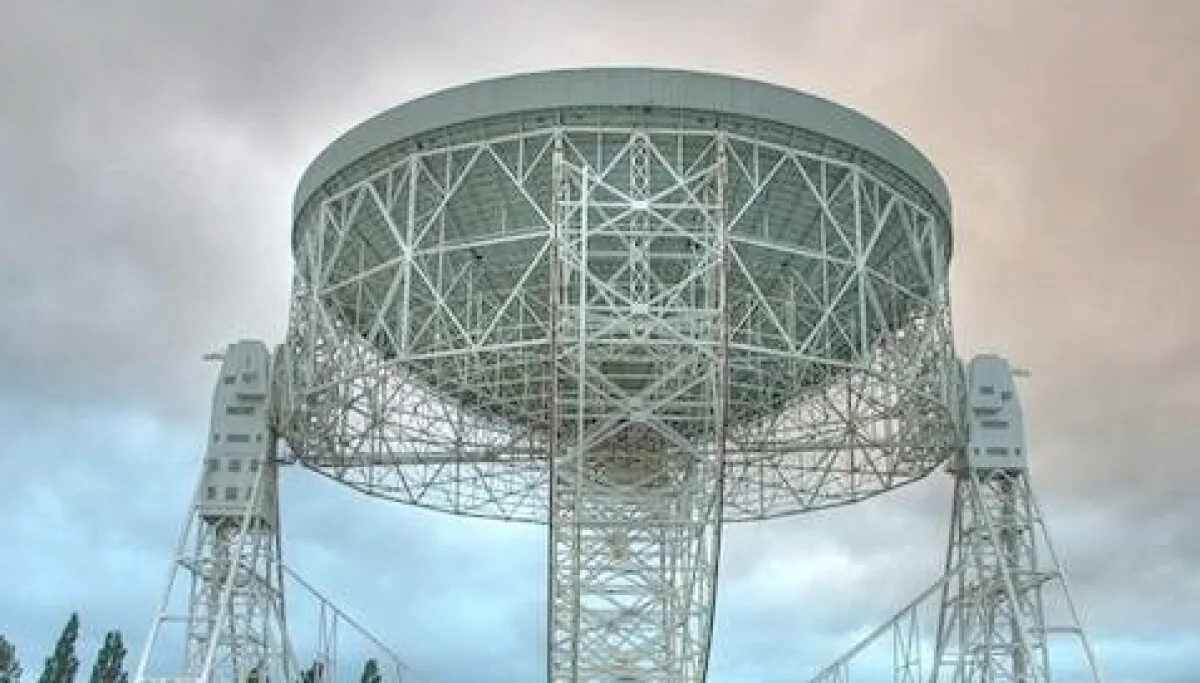
Jodrell Bank Observatory, a renowned center for astronomical research in the UK, is facing significant challenges due to recent decisions regarding national science funding. UK Research and Innovation (UKRI) has announced a reduction in the Particle Physics, Astronomy and Nuclear Physics (PPAN) science budget, which is set to decrease by 2.7 percent over the next four years. This financial squeeze, compounded by rising operational costs, has led to inevitable budget cuts, placing the historic Jodrell Bank facility and its prominent instruments at risk.
Professor Michele Dougherty, Executive Chair of the Science and Technology Facilities Council, acknowledged the difficult situation, stating that it necessitates "some tough, but necessary, decisions." One of the immediate casualties of these austerity measures is the e-MERLIN project, an array of radio telescopes spread across England and operated from Jodrell Bank. This network includes the iconic Lovell Telescope, a 250-foot-diameter steerable dish that has been a landmark of radio astronomy for decades.
The implications of these funding cuts have drawn sharp criticism from the scientific community. Professor Jim Wild, President of the Royal Astronomical Society, described the news as "devastating for UK astronomy." He emphasized the critical role of technological innovation for the nation's future, warning that "discarding unique, globally significant observatories threatens both our scientific future and the inspiration of future generations of astronomers." Other impacted programs include the withdrawal of future UK funding for the James Clerk Maxwell Telescope in Hawaii and a reduction in funding for the Birmingham Solar Oscillations Network (BiSON), which has long studied the Sun.
Context of Scientific Investment
The decision to reduce funding for major astronomical projects comes at a time when global investment in science and technology is increasingly vital for economic competitiveness and addressing complex global challenges. Observatories like Jodrell Bank are not just scientific instruments; they are hubs for innovation, training, and public engagement. The potential loss or degradation of such facilities could have long-term repercussions on the UK's standing in scientific research and its ability to foster a new generation of scientists and engineers. The historical significance of Jodrell Bank, particularly the Lovell Telescope, which will celebrate its 70th anniversary next year, adds a layer of cultural loss to the potential scientific setback.
A spokesperson for Jodrell Bank expressed concern over the cuts to e-MERLIN's funding but stressed the observatory's continued importance. "While these cuts to e-Merlin's funding are significant, Jodrell Bank remains a major scientific, cultural and economic centre nationally and for the local area," the spokesperson stated. "We will be working with colleagues from The University of Manchester and other partners to secure the future of the Lovell Telescope and e-MERLIN." Local Member of Parliament Tim Roca also indicated a commitment to protecting the facility, noting that while funding for e-MERLIN astronomy is secured until 2028, efforts will be made to advocate for its continued support.
Professor Brian Cox, a prominent physicist from The University of Manchester, attributed the current predicament to "many bad legacy decisions taken by UKRI hastily and without proper consultation." He pointed to the recent dissolution of the Department for Science, Innovation and Technology (DSIT), which previously sponsored UKRI, suggesting that governmental restructuring may have contributed to the oversight. As the budget for e-MERLIN extends only to 2028, the urgency to find alternative funding sources or secure long-term commitments is paramount. The prospect of the iconic Grade I-listed Lovell Telescope falling into disrepair serves as a stark symbol of the potential consequences of current funding policies on national scientific heritage.