
Space Mirror Test Lights Up California Sky, Sparks Criticism
A US startup's test of orbital mirrors designed to reflect sunlight back to Earth has ignited controversy. The demonstration, intended to preview a potential future lighting system, has raised concerns among astronomers and emergency responders.

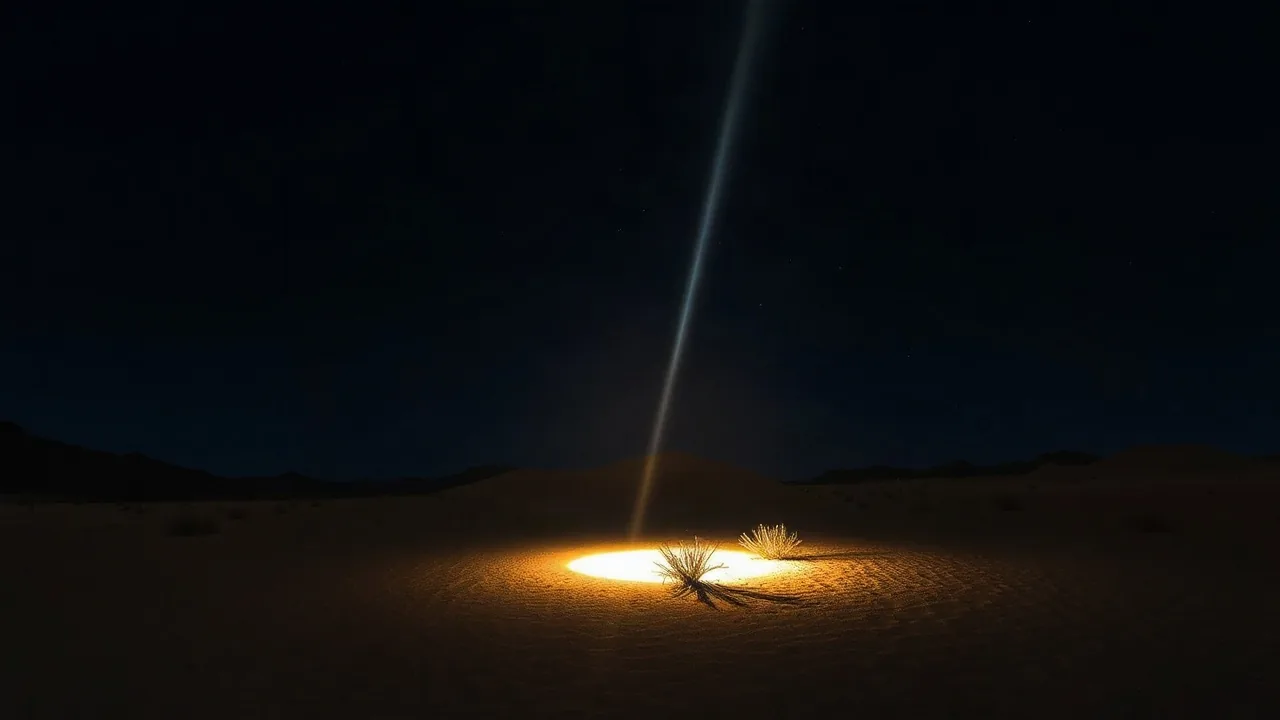
A US-based startup conducted a demonstration flight over California's Mojave Desert on October 25, 2026, testing a system of orbital mirrors intended to reflect sunlight back to Earth for illumination after dark. The test, carried out by Solestial, involved a small payload designed to simulate the reflection capabilities of larger future satellite arrays. While the company aims to provide a novel lighting solution for remote areas or disaster zones, the brief but intense flash of light visible from the ground has drawn significant criticism.
Astronomers expressed immediate concern, fearing that such a system could interfere with delicate astronomical observations. The light pollution generated by orbiting mirrors could potentially saturate sensitive telescopes, making it difficult to study faint celestial objects or conduct crucial research. Dr. Evelyn Reed, an astrophysicist at the Griffith Observatory, stated, "Any persistent or unpredictable light source in the night sky is a concern for ground-based astronomy. We need to understand the precise nature of these reflections and their potential impact on our ability to observe the universe."
Concerns Over Safety and Interference
Beyond the astronomical community, the test also raised alarms for emergency services and the public. Rescuers in the Mount Whitney area reported being momentarily bewildered by the unexpected brilliance, initially mistaking it for an unexplained phenomenon. DarkSky International, an advocacy group dedicated to preserving dark skies, issued a statement calling the demonstration a "blatant disregard for the natural night environment." The organization emphasized the potential for confusion and disruption, particularly for aviation and nighttime operations.
The Solestial demonstration is a precursor to the company's larger ambitions. The startup envisions a constellation of satellites equipped with large, deployable mirrors that could precisely direct sunlight to specific locations on Earth. Potential applications include illuminating disaster-stricken areas where power grids are down, providing light for nighttime construction projects, or even offering ambient lighting for rural communities. The company maintains that the system can be controlled to minimize unwanted light spillage and that its operations would be carefully managed to avoid astronomical interference.
However, the October 25th test has highlighted the significant challenges in balancing technological innovation with environmental and scientific preservation. Critics argue that the current regulatory framework may not be adequate to govern such nascent space-based lighting technologies. The long-term implications for nocturnal ecosystems, human sleep patterns, and our relationship with the night sky remain largely unexamined. Solestial has stated it will continue to engage with stakeholders and address concerns as it moves forward with its development plans.