
Largest Digital Camera Begins 10-Year Universe Survey
The Vera C. Rubin Observatory's groundbreaking digital camera has started a decade-long mission to map the universe in unprecedented detail. The telescope will survey the southern sky, capturing billions of stars and galaxies.

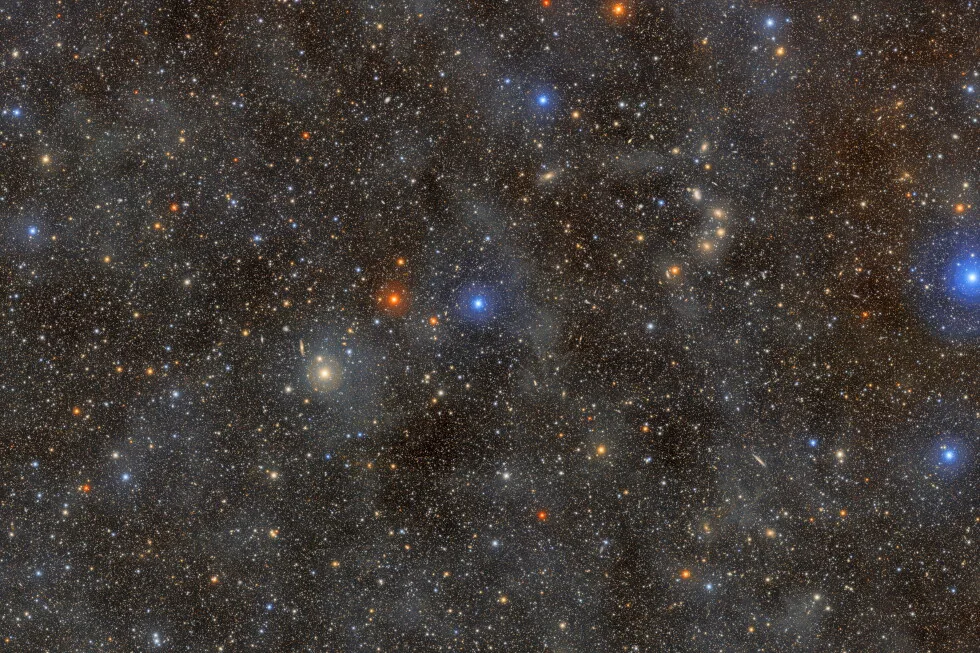
The largest digital camera ever constructed has officially commenced its ambitious 10-year mission to survey the cosmos, promising to unveil unseen corners of the universe with unprecedented depth and detail. The Vera C. Rubin Observatory, perched atop a Chilean mountaintop, will dedicate itself to capturing vast swathes of the southern sky, collecting hundreds of images each night.
Researchers anticipate that the data gathered by the Rubin Observatory will enable a more comprehensive census of the universe, meticulously mapping billions of stars within our own Milky Way galaxy and countless more galaxies beyond. Its rapid imaging capabilities and repeated observations of the same celestial regions will allow scientists to detect fainter objects that have previously eluded detection.
"We're going to see large numbers of scientists across the world working with this data set, studying the universe in a way that they haven’t been able to before," stated Phil Marshall, the observatory’s deputy director of operations. While the observatory released its initial striking images of the Trifid and Lagoon nebulas last year, these were test runs. A light-year, the distance light travels in one year, spans nearly 6 trillion miles (9.7 trillion kilometers).
New Depths of Cosmic Understanding
Since those preliminary image releases, scientists have meticulously tuned the observatory's sophisticated equipment. This fine-tuning ensures the camera is optimized for the exacting depth and accuracy required for the full decade-long survey. The data collected is expected to provide crucial insights into how galaxies have formed and clustered over billions of years, and shed light on the very origins of the universe.
Funded through a significant collaboration between the U.S. National Science Foundation and the U.S. Department of Energy, the observatory bears the name of astronomer Vera Rubin. Dr. Rubin's pioneering work provided the first compelling evidence for the existence of dark matter, a mysterious substance believed to permeate the universe. The ongoing survey holds the potential to yield vital clues not only about dark matter but also about dark energy, another enigmatic force shaping the cosmos.
The Vera C. Rubin Observatory's work represents a monumental leap forward in astronomical observation. Its advanced technology and extensive survey plan are poised to revolutionize our understanding of the universe, from its most distant galaxies to the fundamental forces that govern its evolution. The coming decade promises a flood of new discoveries as astronomers globally engage with this unparalleled dataset.