
Mercury, Venus, Jupiter Align: 5-Night Planet Parade Begins June 11
Skygazers can witness a rare celestial event as Mercury joins Venus and Jupiter for a five-night "planet parade." The alignment begins Thursday, June 11, 2026.

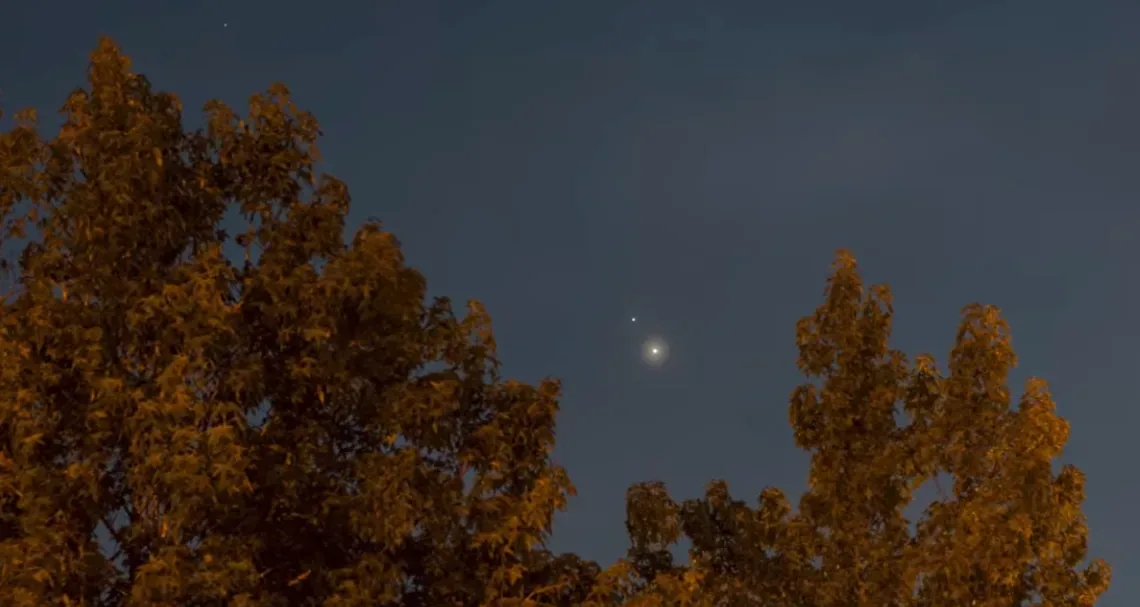
Stargazers across the Northern Hemisphere, including the United States, have a rare celestial spectacle to anticipate as three planets align in the night sky. Mercury will join the already visible Venus and Jupiter for a five-night "planet parade," beginning Thursday, June 11, and continuing through Monday, June 15, 2026. NASA advises looking west shortly after sunset to catch the alignment.
This cosmic gathering, unofficially termed a "planet parade," occurs when planets appear to line up along the ecliptic, the plane of Earth's orbit around the sun. While planetary alignments themselves are not uncommon, observing multiple planets together in this manner is an exciting event for skywatchers. Venus and Jupiter have already been in a close celestial dance, known as a conjunction, since June 9. The addition of Mercury, the innermost planet, makes this particular event a notable one.
Mercury, known for its swift orbit of 88 days around the sun, is often challenging to spot from Earth due to its proximity to the sun. Its appearance alongside the brighter Venus and the prominent Jupiter offers a unique viewing opportunity. The planet parade will be visible each night until June 15, with observers encouraged to find locations with minimal light pollution and an unobstructed view of the western horizon.
Catching the Cosmic Show
To best witness this astronomical event, observers in the United States should direct their gaze westward after the sun has set. Mercury, being the lowest of the three planets in the sky and closer to the horizon, may be the most challenging to spot. "You will need a clear view to the west to catch it in the glow of twilight," NASA stated in a recent skywatching guide. The best viewing conditions will be found away from city lights, in areas designated as dark sky communities, where light pollution is minimized.
While Mercury, Venus, and Jupiter are all visible to the naked eye, telescopes can enhance the viewing experience, offering a closer look at these celestial neighbors. These three planets are among the five planets in our solar system that can be seen without optical aid, alongside Mars and Saturn. The current phase of the moon, a waning crescent leading up to a new moon on June 14, will not significantly obscure the planetary view, ensuring the planets remain the stars of the show.
The alignment highlights the dynamic nature of our solar system and provides a tangible connection to the cosmos for the public. Such events serve as a reminder of the vastness of space and the predictable, yet awe-inspiring, movements of celestial bodies. This particular gathering of Mercury, Venus, and Jupiter offers a chance for amateur astronomers and casual observers alike to connect with the universe. The celestial event is a testament to the ongoing interest in space exploration and astronomical phenomena that capture the public's imagination.